


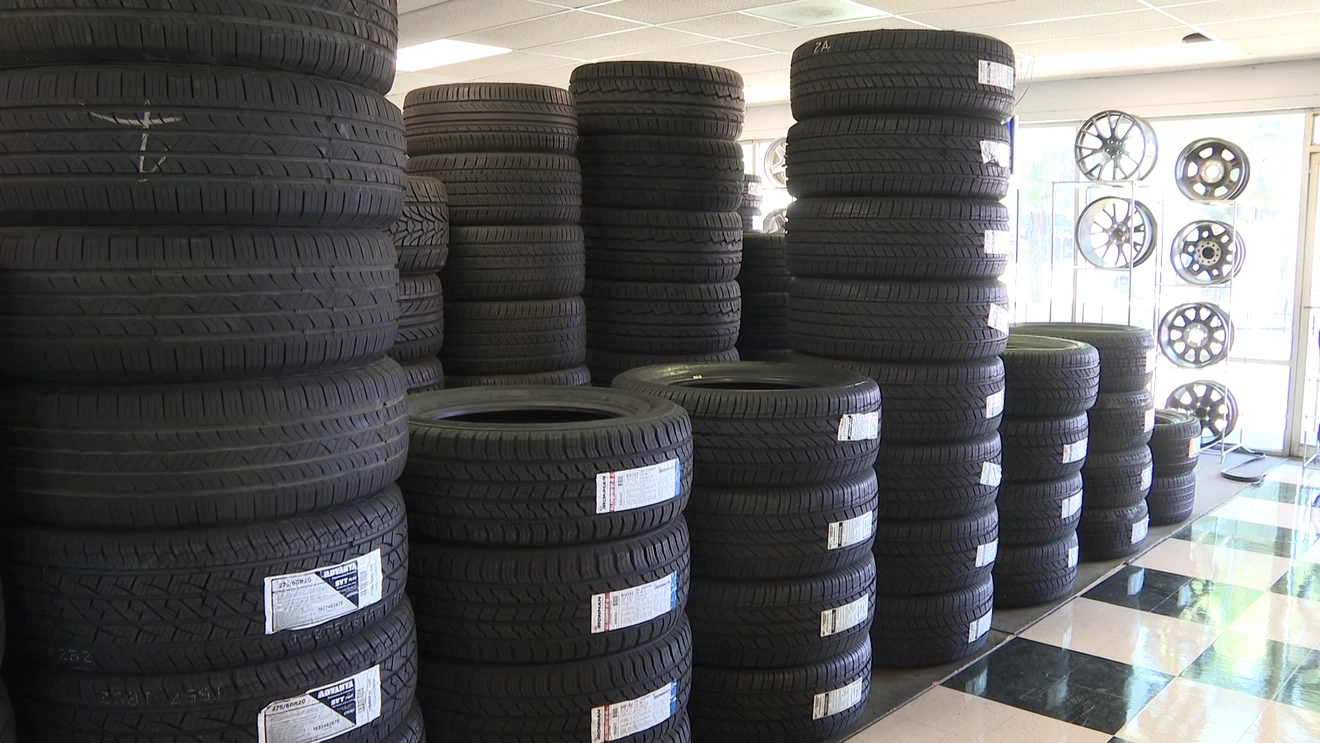
California Energy Commission Approves 2029 Tire Rule Amid Cost and Choice Concerns
California is asking tire makers to reduce energy losses without sacrificing the qualities drivers notice most: grip, service life, price and model choice. The California Energy Commission has approved the nation’s first efficiency standards for replacement tires, with the first requirements taking effect in 2029.
The rule covers replacement tires for passenger vehicles and light-duty trucks, including many pickups, vans and service vehicles. Tires manufactured on or after January 1, 2029, will face an initial rolling-resistance limit, followed by a tighter requirement for tires manufactured from January 1, 2033. The practical consequence is that affected replacement tires must comply to remain eligible for sale in California.
Efficiency is only one part of tire performance
Rolling resistance is energy lost as a tire repeatedly deforms while moving. Rubber does not return all the energy used to compress and flex it, so part of that energy becomes heat. Reducing the loss can lower fuel consumption in combustion vehicles and extend driving range in electric vehicles.
The potential benefit is measurable but not enormous for any single vehicle. The National Highway Traffic Safety Administration estimates that a 10% reduction in tire rolling resistance produces roughly a 1% to 2% improvement in fuel economy. Across California’s vehicle fleet, however, small individual gains can add up. The commission projects nearly $1 billion in annual gasoline and electricity savings once the program is operating at scale.
Tire design is a multi-variable optimization problem, not a single efficiency score. The tread contributes substantially to rolling resistance because it contains viscoelastic rubber that bends and recovers as the contact patch moves. That same tread also influences wet and dry traction, wear, handling and noise. Compounds, tread depth, internal construction and sidewall stiffness can improve one characteristic while placing pressure on another.
California’s program therefore includes a minimum wet-braking requirement intended to prevent efficiency gains from being purchased through unacceptable stopping performance. The commission says its laboratory testing and industry-data review found the standards feasible without adverse effects on safety, tire life or other characteristics. It also says compliant replacement tires are already sold by multiple manufacturers.
Dunlop Tires North America CEO Darren Thomas disputes that assurance, raising concerns about traction and tread life in real-world conditions. Tire-industry representatives also claim that as many as 70% of models currently offered in California could be excluded and that a replacement set could cost hundreds of dollars more. Those are industry projections, not independently established outcomes, and the available information does not provide the underlying model-by-model analysis or cost calculations.
Cost estimates diverge sharply
The commission’s estimate is much lower than the industry warning. It projects an incremental cost of $1.50 per tire during the 2029-2033 phase and $6.50 per tire from 2033 onward. For a typical gasoline passenger car, it estimates $179 in lifetime fuel savings from a set of compliant tires, compared with $26 in added cost under the second-phase assumptions.
That disagreement matters because tire access is highly vehicle-specific. A driver does not buy from the entire statewide catalog; the usable choices must match the vehicle’s required size, load rating and application. A broad market can therefore coexist with limited options for an older vehicle, an unusual wheel size or a specialized operating need.
The regulation addresses that problem partly through categories and exceptions. Specialty competition tires, large off-road tires and certain winter-performance products are among the carve-outs identified by the commission. The program also recognizes categories such as long-life and ultra-high-performance tires, where a uniform benchmark could otherwise obscure different engineering priorities.
Inflation remains essential, but it is a separate control
Thomas argues that correct tire inflation could achieve the same efficiency objective through driver education. Inflation pressure unquestionably affects rolling resistance, durability and safety. NHTSA advises monthly cold-pressure checks because dashboard pressure-monitoring systems generally warn only after a tire becomes significantly underinflated.
But maintenance and product standards act at different points in the system. Proper inflation keeps a given tire near its intended operating condition; a rolling-resistance requirement changes the baseline performance of the replacement tire itself. The available material does not establish that inflation education would produce the same fleet-wide savings as the adopted standard, so the two measures should be viewed as potentially complementary rather than demonstrated substitutes.
The first meaningful test arrives in 2029, when compliant products must begin reaching California buyers. Model availability, retail pricing, wet-braking compliance and tread life will then provide the practical measures of whether the state’s efficiency gains were achieved without narrowing access or shifting costs beyond its projections.
| More aerospace and engineering stories, right in your MSN feed. Follow AMI on MSN |
By Thomas Caldwell — AMI’s senior editor for mechanical and mobility engineering, covering vehicle electronics, systems integration, electrification, chassis systems, propulsion, and safety policy.



