Italian Probe Finds Ryanair 737 Airstair Fall Rate At Least Doubled
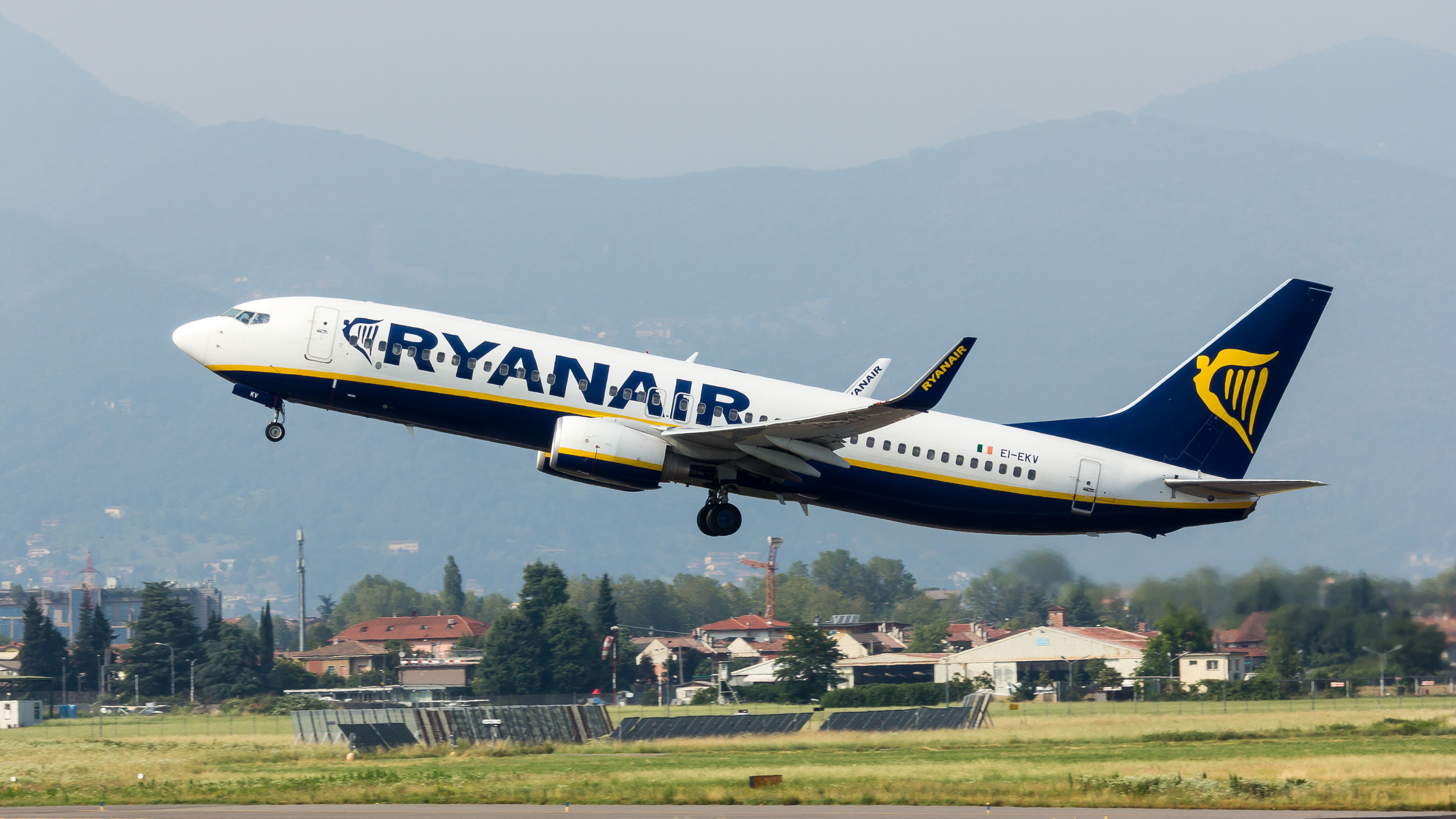
Ryanair’s built-in Boeing 737 stairs give the airline operational independence from airport equipment, but Italian investigators found a significant safety tradeoff: the reported passenger-fall rate was at least twice that associated with airport-provided stairs. The finding does not establish that Boeing’s equipment is defective or that stair geometry caused every occurrence.

Italy’s aviation accident investigation authority, ANSV, published its final report on August 31, 2026, after examining 104 falls during boarding and disembarkation at Italian airports from 2023 through 2025. Eighty-five about 82% involved integrated stairs on Ryanair-operated 737s. Ryanair accounted for approximately 26% to 27% of passengers using Italian airports over the period, although ANSV stressed that the absolute number of falls remained small relative to the airline’s passenger volume.
Built-in and airport stairs are substantially different systems
The optional 737 airstair retracts beneath the aircraft’s forward-left passenger door. It allows an airline to board or unload passengers without waiting for a mobile staircase or positioning the aircraft at a boarding bridge. ANSV said Ryanair was the only airline systematically using these integrated stairs in Italy during the period examined.
That convenience comes in a narrower package. The integrated stairway is approximately 61 to 62 centimeters wide, with 12 steps, an inclination of about 35 degrees, a step rise near 20 centimeters and a tread depth of roughly 25 centimeters. The first step also differs in shape from the others.
By comparison, the EN 12312-1:2024 standard specifies a minimum width of 100 centimeters for the airport passenger stairs it covers. That standard applies to ground-support equipment such as self-propelled, pedestrian-controlled and powered towable stairs, rather than stairs incorporated into an aircraft.
The width difference matters from a human-factors perspective because passengers must coordinate balance, handrail use and luggage within the available space. A narrower passage can leave less lateral room to recover from a misstep or maneuver baggage, but the occurrence statistics alone cannot isolate width or any other geometric feature as the cause of an individual fall.
Certification and ground-equipment rules do not align neatly
The comparison also exposes a standards boundary. The Irish Air Accident Investigation Unit found no dedicated European aircraft-certification specifications governing integrated stair design under the applicable large-aircraft rules. An aviation safety study commissioned by the European Union Aviation Safety Agency in 2009 had identified the absence of specific regulations addressing integrated-step height, angle, slip resistance and handrails.
That does not mean the stairs escaped certification or are inherently unsafe. It means integrated aircraft stairs and airport ground stairs are governed through different regulatory frameworks, with no direct requirement that their dimensions match. The Italian investigation treated the built-in stairs’ width, geometry and irregular first step as possible contributors in multiple cases, not as proof of a design defect.
A Spanish investigation into an October 2024 fall at Alicante went further in that individual case, identifying integrated-stair geometry as the probable cause and issuing four recommendations to Boeing, Ryanair and European regulators. ANSV issued no additional recommendation because it substantially agreed with recommendations already made by Spanish and Irish investigators.
Passenger behavior remains part of the risk system
The Italian findings also resist a design-only explanation. Individual investigated cases involved passengers not using the handrails, carrying luggage in both hands, being inattentive or having consumed alcohol. Three Ryanair 737-800 falls investigated in Italy during 2025 resulted in serious injuries, but ANSV did not attribute every fall to the same mechanism.
Data provided through the Irish accredited representative identified 489 passenger stair falls across Ryanair’s network since 2021, including 360 involving integrated aircraft stairs. Those totals reinforce the need to examine the boarding system as a combination of hardware, procedures and passenger behavior, but they do not by themselves provide exposure-adjusted rates for every airport, aircraft or stair type.
Ryanair changed its procedures before the Italian report was published. On July 23, 2026, it began requiring cabin crews to repeat handrail reminders while passengers disembark, supplementing the existing announcement that all passengers should use the handrail. Relevant-language announcements are to be used where possible. On August 21, the airline also added a dedicated disembarkation module to recurrent cabin-crew training.
Those measures target the part of the safety chain that can be changed immediately without redesigning aircraft hardware. The unresolved engineering-policy question is whether reminders and training can sufficiently reduce the disparity, or whether future standards should address the dimensional gap between integrated aircraft stairs and the much wider stairs airports normally provide.
| More aerospace and engineering stories, right in your MSN feed. Follow AMI on MSN |
By Thomas Caldwell — AMI’s senior editor for mechanical and mobility engineering, covering vehicle electronics, systems integration, electrification, chassis systems, propulsion, and safety policy.