


Experts Say Navy Could Study Ford-Class Changes Without Building Them
Defense experts believe the U.S. Navy could complete studies or limited redesign work on two requested Ford-class carrier changes moving the command tower and replacing electromagnetic launch systems without actually incorporating either change into a ship. That is expert analysis reported by The Hill, not an announced Navy strategy.

The reason is timing. With carrier design and construction spread across years, experts say implementation decisions could potentially be deferred beyond President Donald Trump’s term, which ends in January 2029. The service could therefore examine options, produce engineering work and formally respond to the administration while leaving later leaders to decide whether the changes proceed into production.
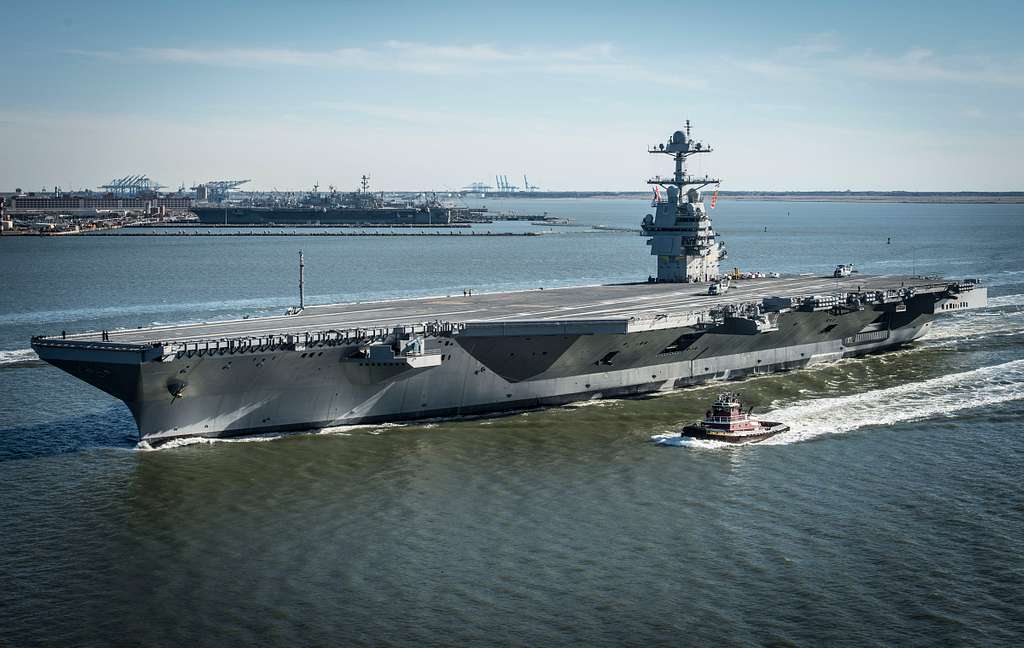
That distinction between studying a change and cutting steel around it is central to understanding the review. A Navy official said Trump instructed the service to “implement design changes to our future aircraft carriers” and that the Navy had begun developing options to meet his intent. But no final decision to move the Ford class’s island, the tower that supports command and flight-deck management, has been reported.
Bryan Clark, a senior fellow at the Hudson Institute, described one possible path in which the Navy conducts studies and perhaps some redesign work but does not put the changes into ships. In his assessment, construction timing could allow the service to wait until Trump is out of office and then decline to implement them. Brent Sadler, a Heritage Foundation naval-warfare researcher and Navy veteran, offered a different possible outcome: engineers and aviators could persuade the administration to retain the existing island position and current launch equipment.
A study can satisfy a request without settling procurement
For a program as large as a nuclear-powered aircraft carrier, an engineering review is consequential but not equivalent to an approved production change. A study can define feasibility, estimate cost, examine operational effects and identify which designs or components would need revision. Physical implementation would require a further commitment of money, engineering capacity and construction time.
That creates room for procedural compliance without immediate hardware changes. It also creates uncertainty. The Navy could spend public money and scarce engineering labor developing alternatives that are never built. Retired Adm. Gary Roughead, a former chief of naval operations, warned that design effort devoted to the carrier changes would detract from other shipbuilding initiatives and engineering problems already competing for attention.
The fairness question for taxpayers is therefore broader than whether a redesign ultimately costs billions. Even a proposal that stops at the study stage consumes technical staff, management attention and time. If the work identifies a demonstrated operational benefit, that expense could support a defensible acquisition decision. If the principal driver remains appearance, the Navy would need to explain what mission improvement taxpayers and sailors receive for that effort.
Two changes, two different formal tracks
The island review and the launch-system direction should not be treated as one approved redesign package. The Navy is internally assessing whether to move the island closer to the middle of future Ford-class ships. Separately, a national security memorandum directed the Navy to develop a return to steam-powered catapults on future carriers. The memorandum did not address island location.
That separation matters because each change can reach a different outcome. The Navy could reject or defer the island move while continuing to evaluate steam launch equipment, or it could preserve the electromagnetic system while studying a revised flight-deck arrangement. A common political impetus does not eliminate the need for separate engineering, cost and production judgments.
The existing island position was selected as part of a flight-deck layout intended to improve aircraft movement and sortie generation. Former Navy secretary strategist Hunter Stires said that sortie generation translates directly into carrier combat power. Analysts have also identified effects involving deck airflow, weight and stability, but those technical questions remain matters for the Navy’s assessment rather than proof that a particular decision has been made.
Cost estimates remain similarly unsettled. A person familiar with an earlier study told The Washington Post that moving the island could add billions of dollars and significantly delay the program. The underlying study, detailed estimate and construction schedule have not been publicly provided, so that figure should be treated as attributed rather than an official current estimate.
For sailors, the relevant standard is whether any change improves flight operations, reliability or fleet availability enough to justify disruption. For taxpayers, it is whether the Navy establishes that benefit before committing to production rather than after redesign costs accumulate.
The next decisive evidence will not be another expression of preference. It will be a released review result, an official cost estimate, a contract change or a construction milestone showing that the Navy has crossed from studying these carrier changes to building them.
| More aerospace and engineering stories, right in your MSN feed. Follow AMI on MSN |
By David Whitaker — Associate editor for AMI’s aerospace and drone systems desk, translating flight systems, aircraft programs, spaceflight, and UAV developments into accessible technical stories.


