Audi Delays Electric A4 Until March 2029 as Volkswagen Platform Lags
Audi’s electric A4 will not enter production before March 2029, extending the wait for a battery-powered version of the company’s familiar midsize model. Audi CEO Gernot Döllner confirmed the revised timing, which is approximately nine months later than the mid-2028 target he announced in October 2025. Reporting on the revised schedule indicates that production could slip further, to late April or early May 2029.

The delay is principally linked to development problems involving Volkswagen Group’s Scalable Systems Platform, known as SSP. Volkswagen reportedly changed the platform’s low-voltage electrical architecture from a conventional 12-volt arrangement to a 48-volt configuration during development. That decision required revisions across engineering programs and supplier development work, adding several months to the schedule.
Döllner characterized the disruption as part of the normal challenge of developing a new vehicle rather than a fundamental change to the A4 E-Tron program. Even so, the timing illustrates the wider consequences of modifying a shared architecture after vehicle and supplier programs are underway. A platform-level decision does not remain confined to one component or one model: interfaces, power-distribution hardware, control electronics, validation plans and supplier deliverables may all need to be reconciled with the revised design.
Why the electrical change matters
The reported move to 48 volts concerns the vehicle’s low-voltage network, which supports computers, controllers and other equipment; it should not be confused with the much higher-voltage system used for electric propulsion and battery charging. Raising voltage allows a given amount of power to be delivered at lower current. That can help reduce conductor demands and support higher-power electrical loads, although the practical result depends on the final system design.
STMicroelectronics, which supplies components for both 12- and 48-volt automotive systems, says optimized 48-volt distribution can cut current by as much as 75 percent. Its overview of 48-volt zonal architectures also identifies the associated integration work: power switches, protection devices, controllers, diagnostics, communications and voltage conversion must operate as a coordinated system.
Those benefits therefore come with a development cost. Suppliers accustomed to established 12-volt products may need different components, prototypes and validation processes. Vehicle engineers must also ensure that 48-volt equipment can coexist with any retained 12-volt loads through appropriate conversion and distribution hardware. Making that choice early can shape a platform efficiently; making it after programs have advanced can create schedule pressure across multiple teams.
A shared platform spreads the schedule risk
Volkswagen announced SSP in 2021 as a long-term successor to its existing MEB and PPE electric-vehicle platforms. The architecture has not yet entered series production. If its first production application arrives in spring 2029, SSP would be roughly three years behind Volkswagen’s original 2026 target.
The group has also reduced the planned number of SSP variants from eight to four, describing the move as strategic consolidation. Fewer variants and more common parts can reduce duplication over the platform’s life, but greater commonality also increases the number of programs that depend on core architectural decisions being completed and validated on time.
That dependency is why the A4 delay may extend beyond Audi. Electric versions of the Volkswagen Golf and T-Roc could reportedly move toward 2030, while vehicles using technology associated with Volkswagen’s Rivian partnership are reportedly expected only near the end of the decade. Those are possible program effects, not confirmed production schedules.
Until SSP vehicles arrive, Audi’s existing electric models based on MEB and PPE are likely to remain central to its lineup. The Q4 E-Tron uses MEB, while the A6 E-Tron and Q6 E-Tron use PPE, giving Audi established architectures to carry its electric range while SSP development continues.
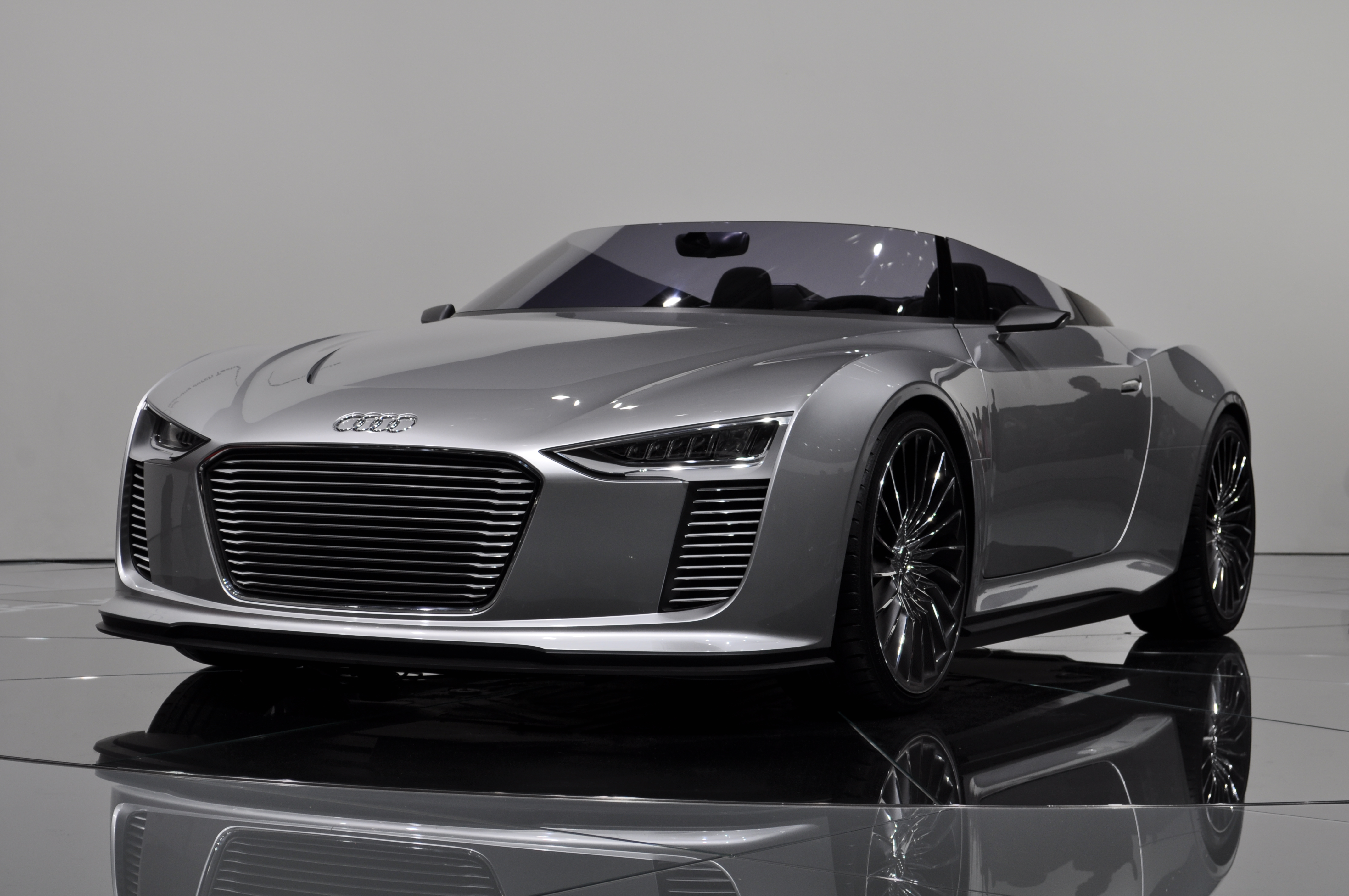
The delayed model is expected to draw design cues from Audi’s Concept C and has been reported in saloon and Avant forms, although those details should not be treated as finalized specifications. Its arrival would also revive the A4 name after Audi discontinued the combustion-engined A4 in 2024 and replaced it with the A5. For now, the firm milestone is narrower: production of the electric A4 will begin no earlier than March 2029, and the shared platform intended to underpin it remains the critical schedule constraint.
| More aerospace and engineering stories, right in your MSN feed. Follow AMI on MSN |
By Thomas Caldwell — AMI’s senior editor for mechanical and mobility engineering, covering vehicle electronics, systems integration, electrification, chassis systems, propulsion, and safety policy.