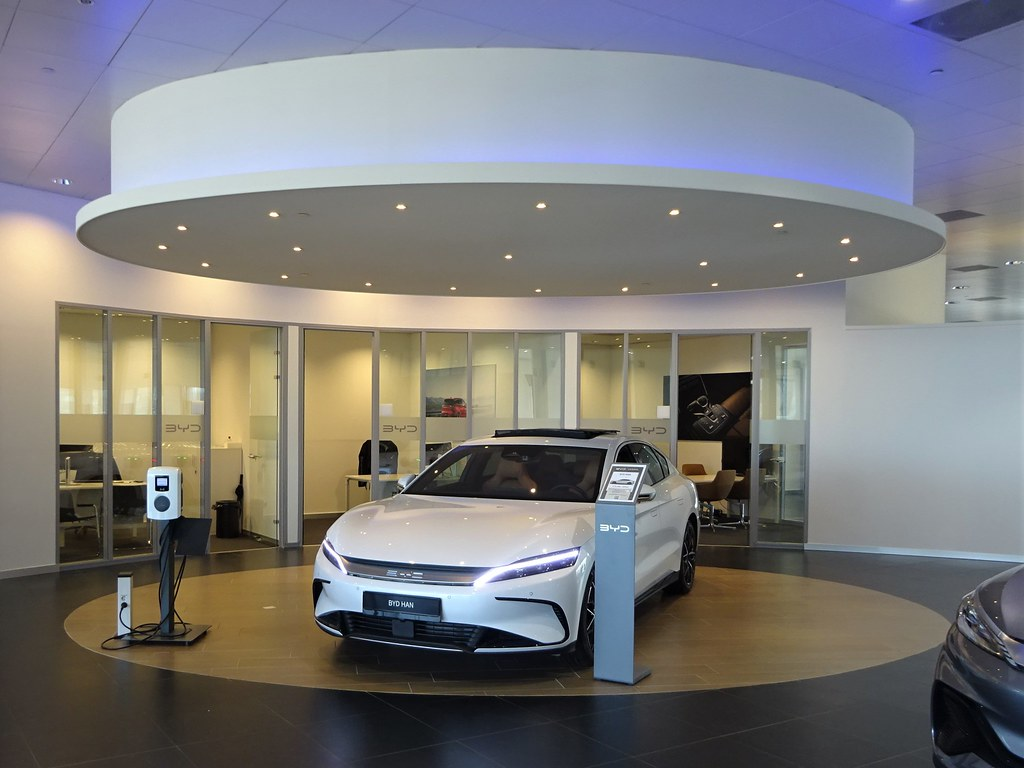
BYD Recalls 183,211 Qin and Tang Cars as Brake Lights May Stay On
183,211 vehicles are covered by BYD’s latest safety recall in China, all because a relatively small brake-pedal stopper pad may deteriorate and produce the wrong signal to surrounding drivers. The campaign affects Qin and Tang series vehicles produced between 2014 and 2022, according to the recall announced by China’s State Administration for Market Regulation on September 18.

The identified defect does not concern the lamps themselves. A batch of stopper pads may crack or detach over time, the regulator said. In extreme cases, the resulting condition could leave the brake lights illuminated even when the driver is not pressing the brake pedal. The incorrect brake-light indication could mislead other road users and create a safety risk.
A small component can corrupt an important signal
Brake lights form a basic communication system between vehicles. Their purpose is to give following drivers an immediate indication that the vehicle ahead is slowing or that its driver has applied the brakes. If those lights remain on continuously, the signal no longer reliably distinguishes braking from normal driving.
That distinction explains why a stopper pad can trigger a large safety campaign despite its modest size. The pad is part of the physical pedal interface associated with brake-light operation. Its deterioration can therefore affect what nearby drivers see, even though the recall description does not state that braking force itself is lost.
The documented hazard is a false or persistent visual warning, not a confirmed loss of the vehicle’s ability to slow. That boundary is important: a brake-light fault and a braking-system failure have different direct consequences. The regulator identified the potential for misleading other road users, but no crashes or injuries were reported in the available recall information.
An eight-year production span expands the repair task
The affected production period runs from 2014 through 2022. Covering vehicles built across eight calendar years turns a small-component defect into a substantial service operation. Authorized dealers must have the correct replacement parts, identify covered vehicles and complete repairs across both the Qin and Tang families.
BYD said authorized dealers will replace the affected component free of charge. A physical replacement directly addresses the component identified in the recall: the stopper pad that may crack or detach after extended use. The available information does not provide a detailed recall schedule, owner-notification process, affected variant list or vehicle identification number ranges.
Those missing details matter to individual owners. A broad production span does not necessarily mean every Qin or Tang built during those years is included, because the regulator tied the problem to an affected batch of components. Owners will need formal coverage information rather than relying only on a vehicle’s nameplate or production year.
The scale comes from repetition, not component complexity
This campaign illustrates a recurring systems-integration issue in mass-produced vehicles: component importance is not proportional to component size. A simple mechanical interface can sit at the boundary between driver input and an externally visible safety signal. When that interface is repeated across a high-volume product family, one manufacturing defect can require more than 180,000 dealer interventions.
The repair also shows why recalls involving inexpensive-looking parts can still be operationally demanding. The component cost is only one element. Manufacturers and dealers must trace the affected population, communicate with owners, supply replacement parts and document completed work. The eight-year production window may also include vehicles with different ages and service histories, although no variant-specific breakdown has been released.
A separate recall announced for 686 Nio Firefly vehicles concerns a steering-system wiring-harness defect and possible loss of power-steering assistance in extreme cases. It is not part of BYD’s campaign and involves a different manufacturer, component, remedy and potential consequence.
For BYD owners, the next practical milestone is the release of detailed eligibility and notification information. Until those particulars are established, the confirmed scope remains 183,211 Qin and Tang vehicles and the required remedy remains replacement of a small pedal-interface part whose failure can leave a crucial road signal permanently illuminated.
| More aerospace and engineering stories, right in your MSN feed. Follow AMI on MSN |
By Thomas Caldwell — AMI’s senior editor for mechanical and mobility engineering, covering vehicle electronics, systems integration, electrification, chassis systems, propulsion, and safety policy.