NATS Links Software Defect to UK Restrictions and 2,000-Plus Cancellations
A defect in National Air Traffic Services software corrupted flight-processing data, forced protective restrictions across the UK and contributed to more than 2,000 flight cancellations on September 8, 2026. The initiating event took place within a millisecond, but its effects lasted for days as airlines repositioned aircraft and crews and rebooked disrupted passengers.

The finding is preliminary. In its initial account of the incident, NATS traced the problem to a small part of the National Airspace System, which supports UK airspace management. Temporary mitigation is in place, but a permanent software fix still must complete safety testing before deployment.
How a local defect produced national restrictions
The affected software allocates identification codes used to associate aircraft with their flight information on radar. These codes are normally assigned automatically, but the system also processes manual requests. According to NATS, a valid manual request was paused when a higher-priority message arrived. When processing resumed, a previously unknown defect caused it to resume incorrectly, producing corrupted output that affected later flight-data updates.
The millisecond figure describes the narrow timing of the initiating event, not the duration of the failure or the operational response. That distinction matters. In a safety-critical network, even a brief processing error can leave persistent information in an invalid or uncertain state. Restoring service then requires more than clearing an error notification: engineers and controllers must establish that the data, connected systems and operational picture are synchronized again.
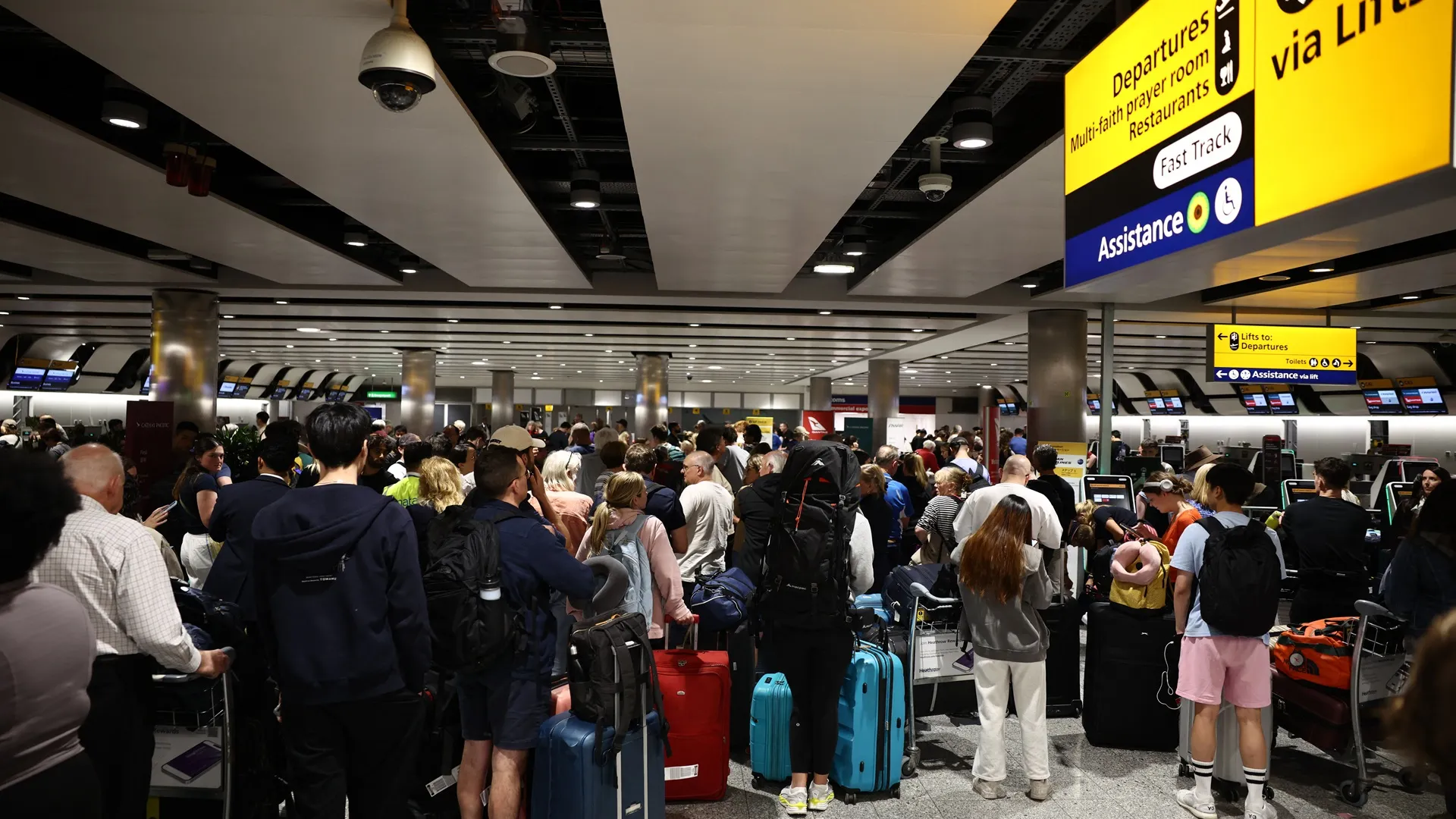
The defect directly affected higher-level traffic handled by the London Area Control center, rather than every part of UK airspace. Nevertheless, restrictions were imposed nationally so the underlying airspace-management system could be restarted and flight data reloaded. Restrictions remained in place for about six hours. NATS returned to normal operations that evening, but the passenger backlog took more than two days to clear.
This difference between fault location and operational reach is central to the incident. The restrictions were not evidence that the defect had simultaneously disabled every control center. They reflected the broader dependence on shared flight data and the need to limit traffic while the system was stabilized through a controlled recovery.
Protection worked, but resilience remains under review
Reduced information and automation increase controller workload, particularly when tasks normally coordinated by computer systems must be handled through fallback procedures. Restricting traffic is therefore a protective measure: it reduces the volume controllers must manage while technical confidence is restored. NATS reported that controllers retained communication and radar monitoring and that aircraft remained safely separated.
The preliminary findings say the disruption was “not caused by any incorrect actions” by military or civil operators. They also report no evidence at this stage of sabotage, a hostile actor or cyber-related activity. NATS says the event was unrelated to its August 2023 outage and a separate earlier radar problem, so those incidents should not be treated as one continuous failure mechanism.
Those exclusions narrow the investigation, but they do not settle the broader engineering questions. The outstanding issue is not simply whether technicians can patch the defective code. An independent review must examine why the defect was not identified before it reached service, whether existing testing and monitoring were adequate, and whether recovery arrangements sufficiently limit the consequences of corrupted data.
The UK government has asked the Civil Aviation Authority to check NATS’ findings and examine resilience, future investment and regulatory accountability. That review is separate from NATS’ continuing investigation. Until both are complete, the age and development history of the defective code, the adequacy of earlier assurance work and the full implications for system architecture remain unresolved.
Passenger assistance still applies
For passengers, the likely legal classification creates a second distinction. The CAA considers delays and cancellations directly caused by the outage and its knock-on effects likely to qualify as “extraordinary circumstances.” That generally means affected passengers are unlikely to receive statutory cash compensation, although the regulator says individual cases remain dependent on their facts.
Extraordinary circumstances do not eliminate airline obligations. Under the CAA’s passenger-rights guidance, airlines must offer passengers with canceled flights a refund or rerouting. They must also provide appropriate meals, refreshments and accommodation during qualifying delays. When an airline cannot arrange that care directly, the CAA expects reasonable passenger expenses to be reimbursed.
NATS has put mitigation in place to support faster recovery if a related problem recurs. The more consequential milestone, however, will be completion of safety testing for the permanent fix and an independent explanation of how one localized software defect was able to require six hours of nationwide restrictions.
| More aerospace and engineering stories, right in your MSN feed. Follow AMI on MSN |
By Thomas Caldwell — AMI’s senior editor for mechanical and mobility engineering, covering vehicle electronics, systems integration, electrification, chassis systems, propulsion, and safety policy.