Qatar-Gifted 747 Adds $45.3 Million Training Cost as Lawmakers Move to Block Transfer
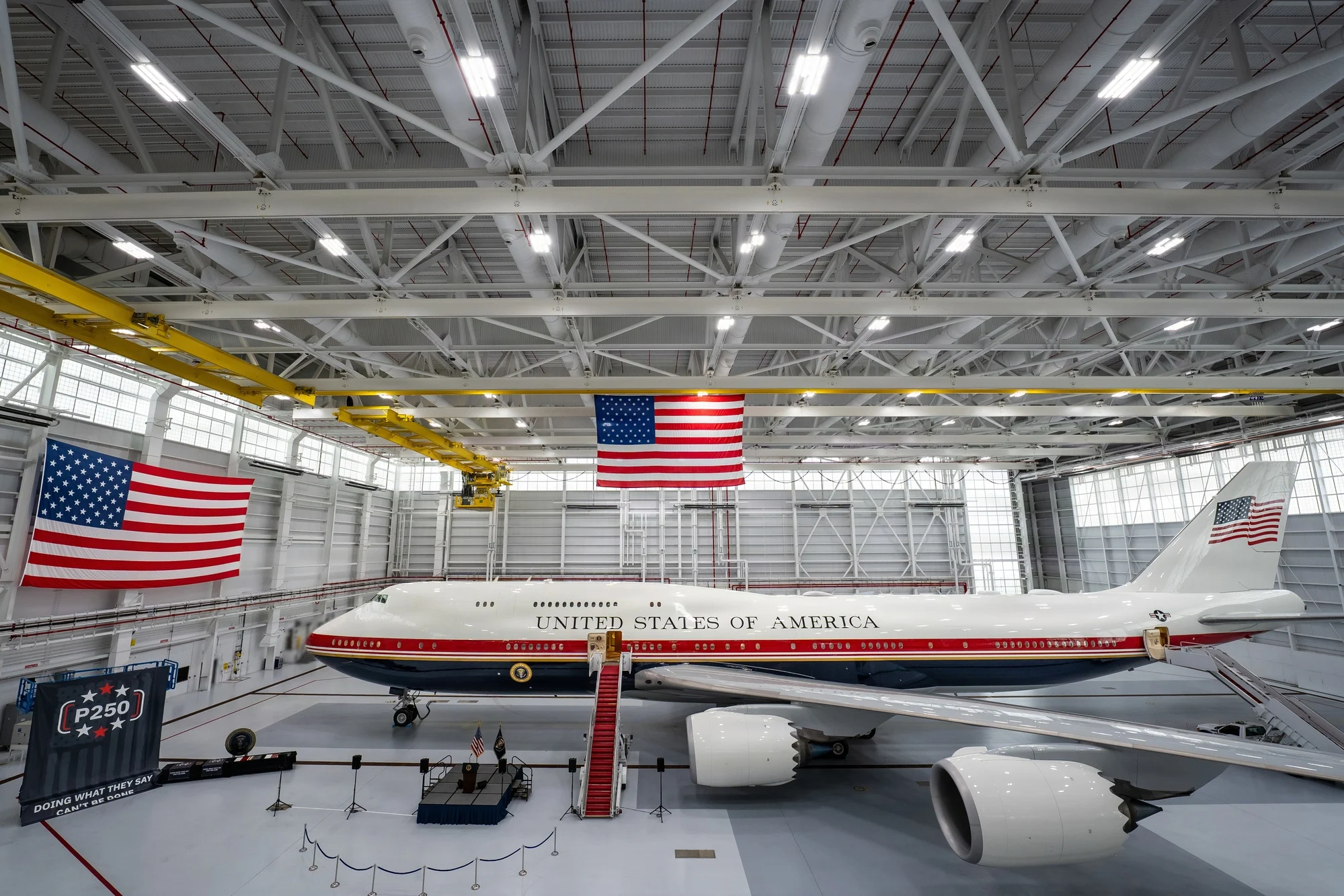
The Qatar-gifted Boeing 747 is generating another major taxpayer expense: Rep. Joe Courtney said the Air Force recently announced a $45.3 million pilot-simulator training contract for the aircraft. Courtney, the senior House lawmaker overseeing Air Force executive-airlift programs on the Seapower and Projection Forces Subcommittee, disclosed the contract while arguing that the government should preserve the value of the hundreds of millions of dollars already committed to converting and supporting the jet.
Courtney and House Armed Services Committee ranking member Adam Smith have now introduced legislation that would prohibit using fiscal 2027 funds to transfer the 747 out of Air Force possession. Their proposal follows approximately $400 million in reported conversion spending and President Donald Trump’s statement that the aircraft will “probably go to the museum.” Together, the training contract and proposed restriction sharpen the central procurement question: How long will the Air Force operate this aircraft after paying to modify it and train its crews?
The proposed Safeguarding Taxpayer Investment for Executive Airlift Act does not resolve the aircraft’s long-term mission. It instead places a funding barrier in front of a transfer during fiscal 2027. The measure has been introduced, but the available information does not establish that it has passed either chamber or become law.
Training spending implies an operating commitment
A simulator-training contract is not simply another physical modification to an airframe. It supports the people and procedures needed to operate a distinct aircraft safely and consistently. That matters because training infrastructure usually makes the most economic sense when it serves a defined operational period rather than a brief or uncertain assignment.
The $45.3 million figure therefore exposes a mismatch between what the government is buying and what it has publicly explained. The Air Force is funding a dedicated training program, yet the aircraft’s expected service period, remaining conversion schedule and ultimate disposition have not been publicly defined. Trump’s museum statement adds urgency because an early transfer could limit the operational value recovered from that support investment.
The disclosed figures now include roughly $400 million in retrofit work plus the newly cited $45.3 million training contract. Additional modification costs remain undisclosed, so those amounts do not represent a confirmed final program total. Nor has the administration released a schedule defining when further work will be completed.
That missing baseline prevents a straightforward lifecycle-cost assessment. To judge whether the bridge aircraft is economical, taxpayers would need to know its planned service duration, anticipated mission frequency, remaining conversion work and continuing training and maintenance burden. None of those questions can be answered merely by pointing to the jet’s comparatively low flight time or its successful entry into presidential service.
Conversion scope remains the central unknown
Presidential transport conversion is more than a cabin refurbishment, but the exact configuration of this 747 has not been publicly established. The White House has described it as state of the art and fitted with high-level security protocols. A senior administration official also said the government maintains a safe, secure and reliable presidential-transport capability while declining to discuss specific upgrades.
Those statements establish the administration’s position, not a publicly documented inventory of the aircraft’s systems or the work that remains. Trump previously said the jet would be sent away to be “maxed out,” while the cost and timing of further modifications have not been disclosed. That leaves an important distinction unresolved: whether the aircraft is intended for a bounded bridge role or will receive investment approaching a longer-lived presidential platform.
The aircraft has already entered broader international use, including a trip to Ireland. A security concern during an earlier visit to Turkey had prompted officials to use another aircraft for the president’s departure, but publicly available information does not establish the gifted 747’s precise protective configuration or connect that episode to a confirmed technical deficiency. Claims about vulnerabilities and political criticism should not be treated as engineering findings without a disclosed assessment.
The delayed replacement fleet complicates the decision
The bridge aircraft exists alongside Boeing’s work on two permanent replacement presidential 747s under a 2017 Air Force contract. It remains unclear whether those aircraft will be ready before January 2029, and the Government Accountability Office estimates their enhancement costs now exceed $5.6 billion.
That delay could support keeping the gifted aircraft in Air Force service, but it does not by itself establish how the jet should be configured or how long it should remain. The relevant comparison is not simply a donated airplane versus two expensive replacements. It is the full cost of converting, training for, maintaining and operating a third presidential 747 against the operational coverage it provides while the permanent fleet remains delayed.
Courtney and Smith’s bill would preserve Air Force possession for fiscal 2027, not supply that missing service plan. The next consequential disclosure is therefore not another trip: it is a defined operating horizon showing whether the new $45.3 million training system supports years of government service or an aircraft still headed toward an early museum transfer.
| More aerospace and engineering stories, right in your MSN feed. Follow AMI on MSN |
By David Whitaker — Associate editor for AMI’s aerospace and drone systems desk, translating flight systems, aircraft programs, spaceflight, and UAV developments into accessible technical stories.