Marine One Radio Trouble Recurs After FAA Move, Forcing Helicopter Relay
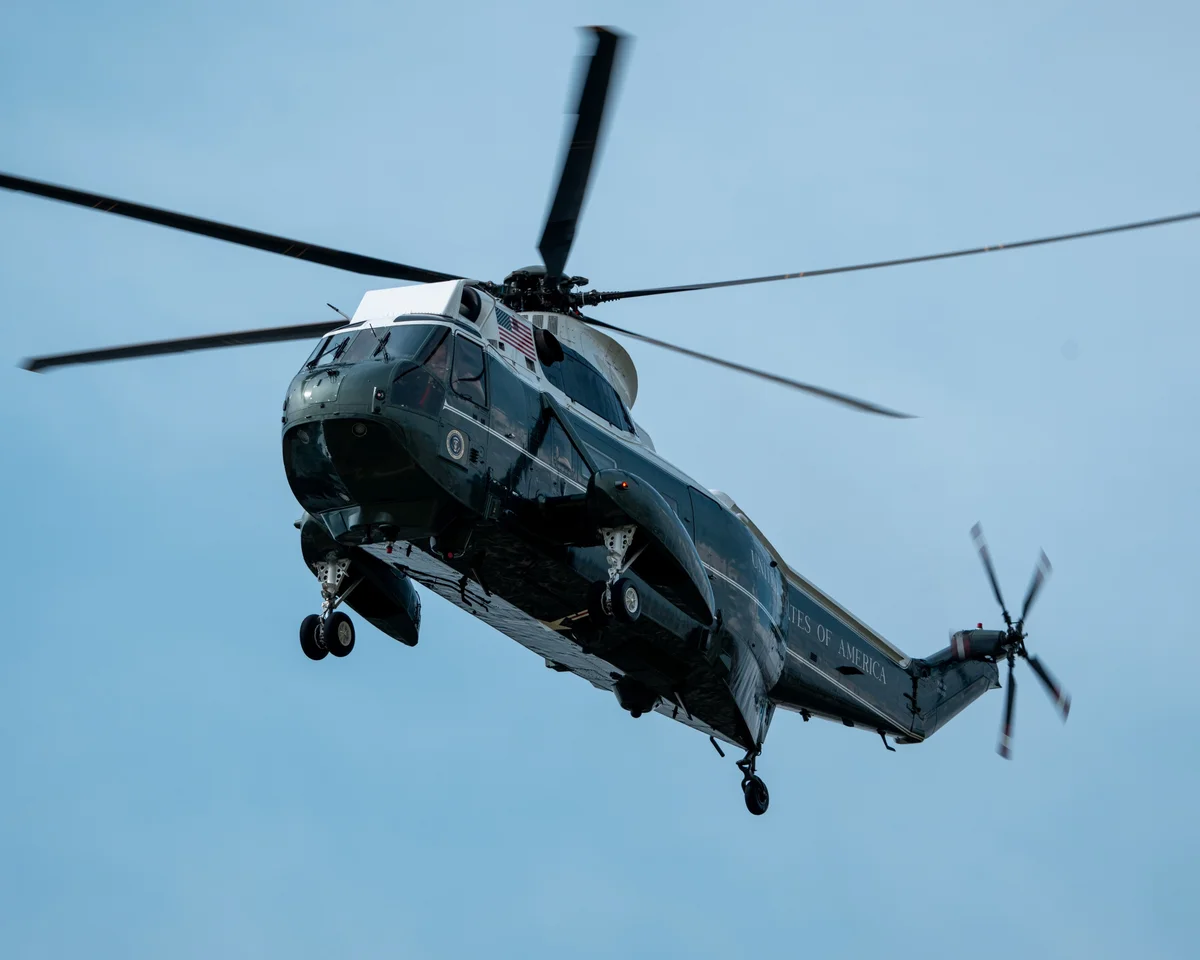
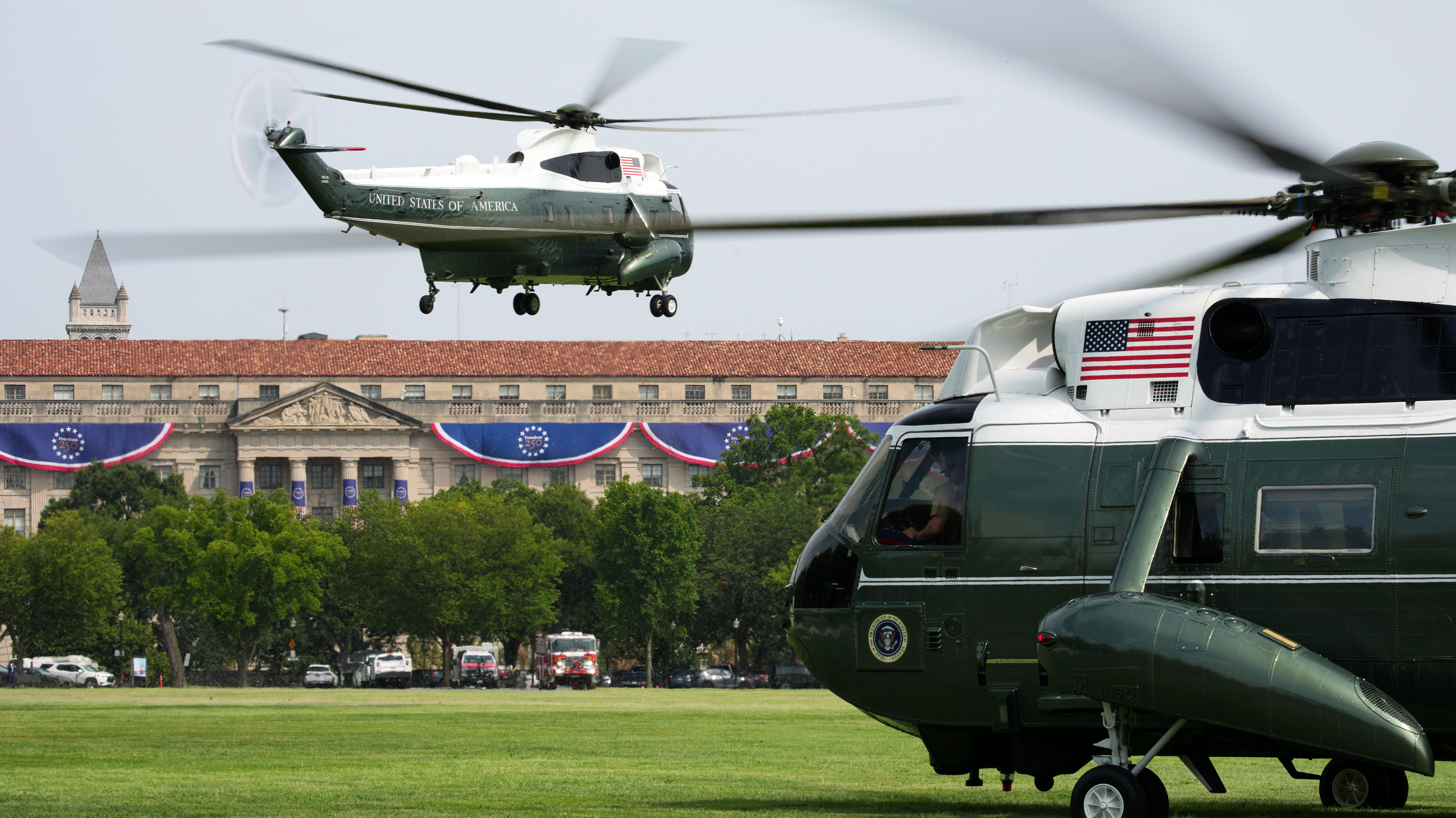
Reagan National Airport controllers again failed to hear Marine One’s required three-minute departure warning from the Ellipse after the Federal Aviation Administration had relocated an antenna in response to an Aug. 4 incident. The recurrence indicates that changing the radio hardware did not eliminate the operational need for a dependable backup communications path.

This time, that backup worked before departure. A U.S. Park Police helicopter, Eagle II, relayed Marine One’s warning to the controller, who acknowledged it and then asked nearby aircraft for continued help if they heard the presidential helicopter. The FAA said the warning was delivered by alternate means and positive contact was established with Marine One before takeoff.
A radio fix is not the same as guaranteed coverage
Aviation radio links generally depend on sufficiently clear line of sight between antennas. Moving a receiver can improve coverage from a particular operating location, but a successful post-installation test does not establish that every later transmission will be received under every operating condition. Aircraft position, antenna orientation and the surrounding physical environment can all define the practical coverage boundary, although officials have not identified what caused the later communication difficulty.
That distinction matters because the three-minute call is not merely informational. It initiates coordination between a presidential helicopter movement and commercial operations at Ronald Reagan Washington National Airport. When the primary radio path does not deliver the warning, controllers may not have the cue needed to manage airport traffic around the helicopter’s departure.
The later event therefore tested two different parts of the system. Direct reception again proved unreliable at a consequential moment, but an aircraft already in the area heard Marine One and passed the message to the tower. The controller’s request for additional relay help from a nearby medical helicopter further shows that the operation was relying on airborne participants to maintain the information path until direct contact was restored.
That is useful redundancy, but it is not equivalent to a dedicated backup channel. A nearby aircraft may not always be present, monitoring the relevant frequency or positioned to hear both sides. Its crew also has its own flight responsibilities. The successful relay prevented the warning from remaining unheard during this departure, yet the episode leaves an important systems question unresolved: whether the alternate path is formally defined and consistently available, or whether success depends on whichever aircraft happen to be nearby.
The August incident gives the recurrence its significance
On Aug. 4, Marine One’s crew tried at least twice to provide the same three-minute warning before departing the temporary Ellipse site. According to the National Transportation Safety Board’s preliminary findings, one transmission was not received and another was broken and unreadable. Commercial traffic continued, and a passenger jet departed while Marine One was nearby, producing a momentary loss of required separation.
FAA technicians subsequently determined that there was not adequate line of sight between the radio equipment and the Ellipse, where Marine One was operating temporarily during White House construction. The agency relocated an antenna to improve communications and reviewed the procedures involved. Tests after the move reportedly showed the radios working well, but the later failure to hear the warning demonstrates the limit of treating a successful test as proof of complete operational coverage.
The NTSB investigation remains ongoing, and its preliminary work does not establish a final cause or assign fault. Nor has the FAA publicly identified the precise mechanism behind the later recurrence. It would therefore be premature to conclude that the moved antenna itself failed, that the original line-of-sight problem persisted unchanged or that either the Marine One crew or the controller caused the communication gap.
The confirmed difference is procedural outcome. On Aug. 4, the warning did not reach the tower before departure and the attempted alternate relay was unsuccessful. During the later movement, Eagle II delivered the warning, the controller acknowledged it, and direct contact followed before Marine One lifted off. The antenna relocation may remain part of the solution, but the second event shows why safety-critical coordination also needs a backup path that does not depend on the primary link working as expected.
| More aerospace and engineering stories, right in your MSN feed. Follow AMI on MSN |
By Thomas Caldwell — AMI’s senior editor for mechanical and mobility engineering, covering vehicle electronics, systems integration, electrification, chassis systems, propulsion, and safety policy.