Ukrainian Drone Strikes Push Russian Fuel Imports to Record 172,000 Tonnes
Russia imported a record 172,000 tonnes of refined fuel in August 2026, more than seven times its previous monthly high. The shipments included products from South Korea and gasoline refined in India from Russian crude a striking reversal for a country long known as one of the world’s largest exporters of petroleum products.
The imports came as refinery throughput remained depressed, domestic fuel needs took priority and seaborne oil-product exports fell sharply. According to the Centre for Research on Energy and Clean Air’s August analysis, oil-product export volumes declined 21% from July, while related revenue fell 32% to its lowest level since Russia’s full-scale invasion of Ukraine began.
A reversal driven by processing, not crude supply
The central constraint is Russia’s ability to convert crude oil into finished gasoline, diesel and other usable products. A country can remain a major crude producer while becoming short of particular fuels if refinery operations are disrupted. That distinction explains why Russia could export crude to India and then import gasoline made from Russian feedstock.
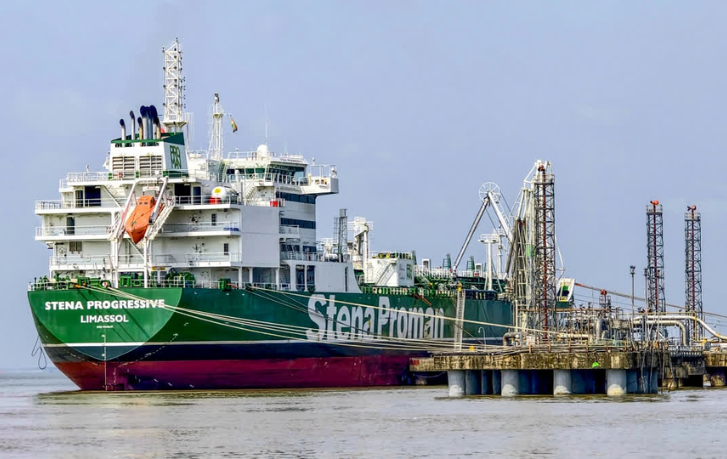
India supplied 70% of Russia’s August oil-product imports and 94% of its gasoline imports, according to the research group. That included 120,000 tonnes of gasoline loaded at the Vadinar refinery, which processed only Russian crude during the first eight months of 2026. South Korea supplied another 18,000 tonnes of oil products, mostly gasoil.
The volumes do not replace Russia’s entire refining system, nor do they mean the country has stopped exporting every petroleum product. They show something narrower but consequential: sustained processing disruption has forced a major exporter to purchase selected fuels abroad at the same time that it is curbing outbound product flows to protect domestic availability.
Imports buy supply at a logistical cost
Imported fuel provides a buffer, but it purchases that resilience with longer supply chains and added transport costs. Refining crude abroad and returning the finished product requires overseas processing capacity, shipping and additional handling that would be unnecessary if domestic refineries were operating normally.
That makes the import figure more significant than its absolute scale might suggest. Russia averaged less than 5,000 tonnes of seaborne refined-product imports per month from 2023 through 2025, and no imported cargoes were unloaded at Russian ports during 13 of those 36 months. August’s total was also three times the volume imported during all of 2025.
Gasoline accounted for 74% of August imports, compared with only 6% from 2023 through 2025. The change indicates that the response was aimed at a specific domestic product shortage rather than a general shortage of hydrocarbons.
Repeated strikes create a readiness problem
Public statements cited by Bloomberg indicated that Ukraine struck Russian refineries at least 21 times during August. EA Analytics estimated average refining at about 3.8 million barrels per day, compared with a typical summer range of 5.3 million to 5.5 million. Those estimates cannot independently establish the condition of every facility, but they align with the turn toward imports and reduced exports.
At the campaign level, repeated long-range drone attacks impose demands beyond repairing damaged equipment. Russia must allocate detection, air-defense and security resources across a geographically dispersed industrial network while refiners manage inspections, restoration work and production schedules. The public data do not establish how those resources are distributed or how effective individual defenses have been, so facility-level conclusions would be speculative.
The broader industrial issue is cumulative availability. Even where repairs restore some processing, recurring interruptions can prevent the network from returning to stable output. The International Energy Agency said in September that Russia’s refiners had delayed maintenance, returned mothballed units to service and accelerated repairs, but it expected throughput to average about 4 million barrels per day for the rest of 2026 and through 2027.
Domestic supply now competes with export commitments
Reduced refining forces a choice among domestic consumers, inventories and exports. Diesel previously destined for foreign buyers has been retained inside Russia, while gasoline and diesel export restrictions have been used to protect supply. Reported gas-station lines in Moscow and other areas show how an industrial processing constraint can reach ordinary motorists rather than remaining an abstract measure of refinery capacity.
The next test is whether throughput can recover while drone attacks continue. Imports can cover selected shortfalls, but August’s record shows their boundary: Russia is paying additional logistical costs to obtain finished fuel while exporting less of the product output that once defined its role in global energy markets.
| More aerospace and engineering stories, right in your MSN feed. Follow AMI on MSN |
By Stephen Wallace — Editor for AMI’s aerospace integration and unmanned mobility coverage, focused on drone manufacturing, VTOL systems, autonomous networks, and air-ground mobility links.