Marine One Encounter Met Radar Standard Despite Unheard Departure Warning
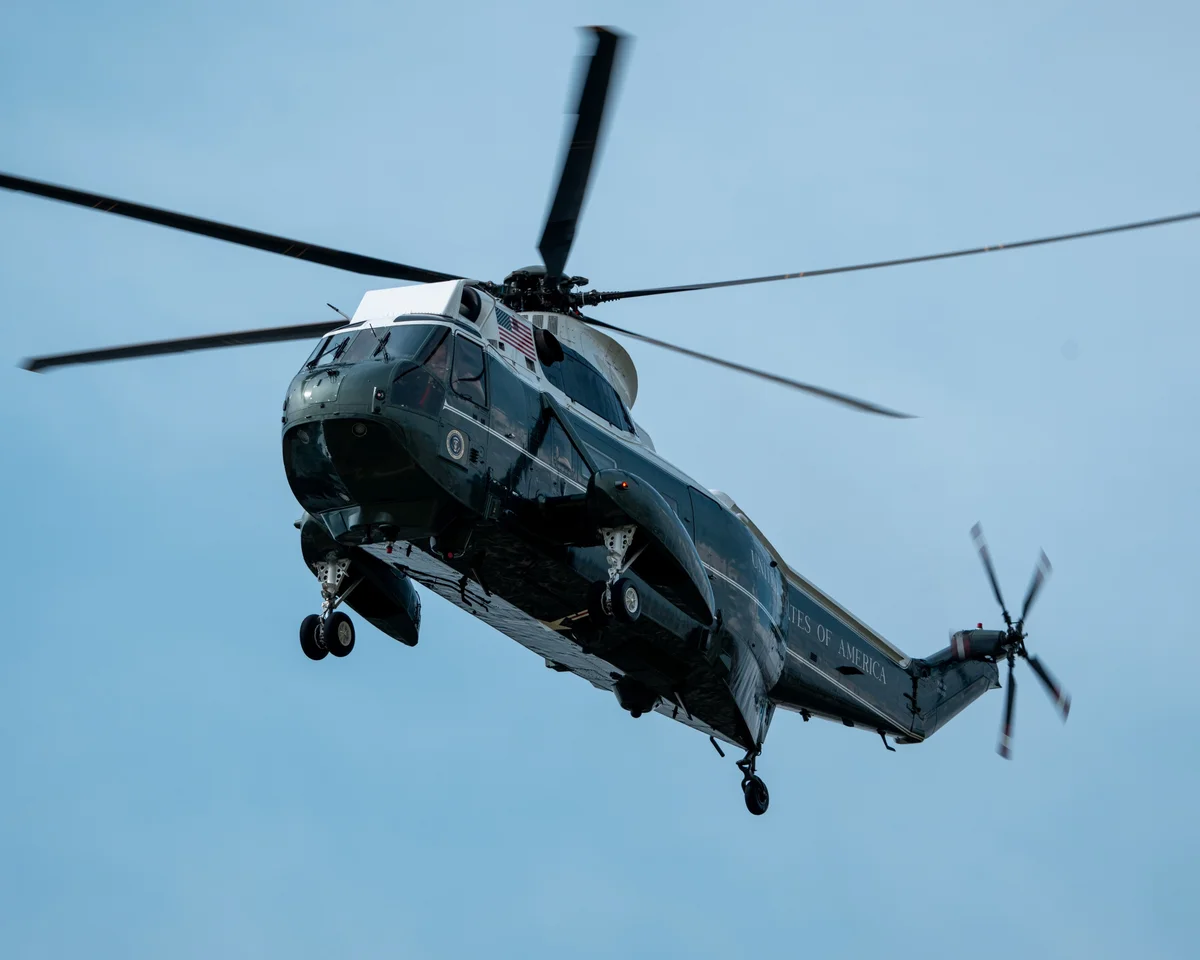
The estimated spacing between Marine One and a departing Envoy Air passenger jet met the applicable Class B radar-separation standard, according to the National Transportation Safety Board’s preliminary findings. The aircraft came within 0.82 nautical miles laterally and 700 feet vertically near Ronald Reagan Washington National Airport on Aug. 4.

That compliance does not erase the coordination failure. Marine One transmitted the required three-minute departure warning, but Reagan National controllers did not hear it. The radio-coverage gap therefore allowed the helicopter and airliner to operate at the same time even though a special advance-notification procedure was intended to keep potentially conflicting movements apart.
The distinction is central to understanding the incident. Radar-separation standards and the three-minute warning were separate safety barriers serving related but different purposes. The first defined acceptable spacing as the aircraft moved through controlled airspace. The second was supposed to give controllers enough advance notice to prevent conflicting airport and helicopter operations from developing in the first place.
Minimum separation was maintained, but an earlier barrier failed
The NTSB’s separation finding means the reported 0.82-nautical-mile lateral and 700-foot vertical spacing should not be described as a violation of the applicable Class B radar minimum. It also means the closest-distance number, considered alone, does not establish that controllers lost legally required radar separation.
Operationally, however, the encounter progressed farther than the advance-warning arrangement was designed to permit. Controllers cleared the Envoy Air jet for takeoff without having received an understandable notice that Marine One was about to depart the Ellipse with the president aboard. The airline crew subsequently received a traffic alert from its collision-avoidance system but did not see the helicopter. Marine One’s pilots saw the jet and paused their movement while it climbed away. Controllers also directed another aircraft to discontinue its landing and circle the airport.
Those responses show why compliance at the closest point and successful coordination are not interchangeable findings. A layered aviation-safety system can preserve its final spacing requirement after an earlier preventive layer has already failed. Traffic alerts, pilot observations and controller instructions can help manage the resulting situation, but their availability does not demonstrate that the planned departure-coordination process worked.
The event also illustrates an important human-factors boundary: a procedure dependent on a radio call cannot protect the operation if the intended controller never receives an intelligible transmission. Marine One’s pilot made the standard “three minutes to lift” call, but the official tower recording did not capture that warning. From the controller’s perspective, the information needed to hold the airliner was absent.
The investigation still has unresolved questions
There had been earlier discussions about missed Marine One departure notices, and a backup plan called for relaying the warning through the helicopter facility at Joint Base Anacostia-Bolling. That relay attempt also failed on Aug. 4. The preliminary information does not establish a final probable cause or assign fault, and the NTSB investigation remains open.
The immediate technical response addressed radio coverage. Marine One was temporarily operating from the Ellipse during White House helipad construction, and Federal Aviation Administration technicians found inadequate line of sight between that departure point and the existing receiver location. The FAA moved the receiver to the top of the Reagan National tower; follow-up checks with two helicopters found no communication deficiencies.
Those tests confirm that the relocated equipment worked under the checked conditions, but they do not yet establish its long-term reliability across every relevant operating condition. A later Marine One departure briefly required help from a support helicopter when a controller could not hear Marine One, although the cause of that separate episode was not determined.
The final investigation will therefore need to resolve more than the closest-distance measurement. The documented spacing met the applicable radar standard, but the three-minute warning and its backup relay did not deliver the information controllers needed. That difference between maintaining a minimum and preventing the encounter from developing is the central safety issue still under examination.
| More aerospace and engineering stories, right in your MSN feed. Follow AMI on MSN |
By Thomas Caldwell — AMI’s senior editor for mechanical and mobility engineering, covering vehicle electronics, systems integration, electrification, chassis systems, propulsion, and safety policy.