USS Abraham Lincoln Heads Home After Deployment Reaches 302 Days
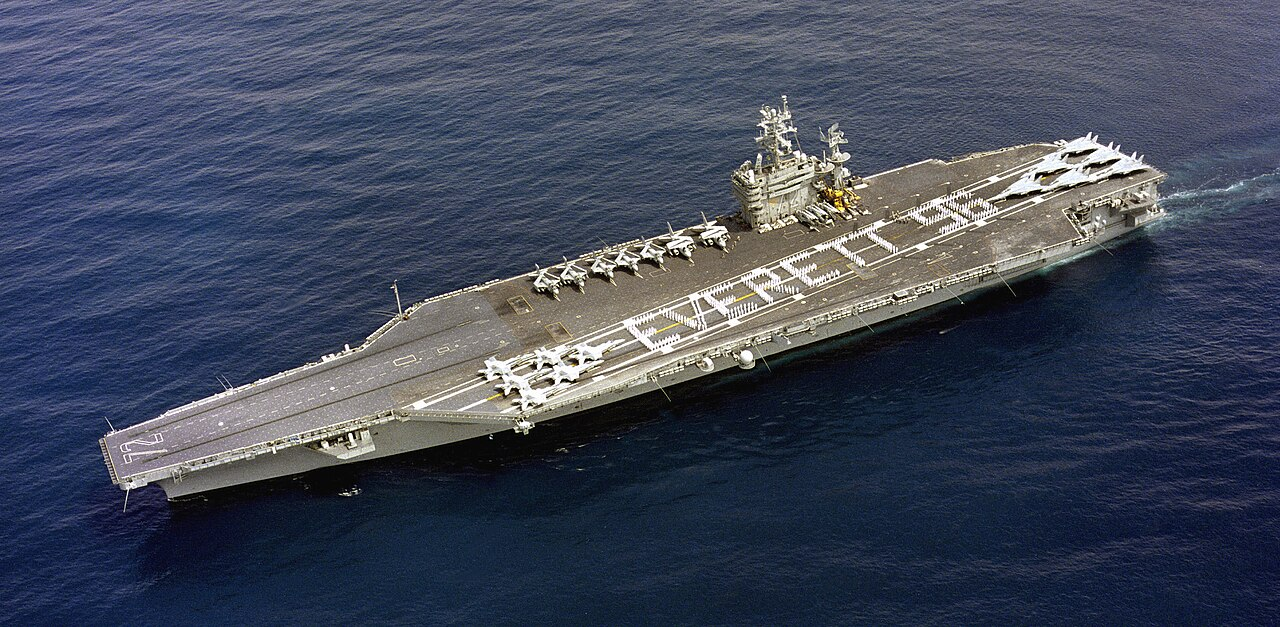
USS Abraham Lincoln has reached 302 deployment days, making its current cruise the second-longest U.S. aircraft-carrier deployment since the Cold War. The Nimitz-class carrier is now on the final leg of its return to the West Coast and is expected to arrive there in early October, according to USNI News.

USS George Washington reached the U.S. Central Command area on Aug. 19 to relieve Lincoln. That handoff closes the operational assignment for one carrier, but it opens a substantial recovery period for its crew and equipment after 208 uninterrupted days at sea, followed by only brief respite in Thailand and a one-day logistics stop in Guam.
The relief answers the immediate question of when Lincoln could begin its trip home. It does not resolve the larger fleet problem exposed by the deployment: keeping a carrier on station requires another carrier, air wing and supporting ships to be ready to take over, while the returning force must restore people and machinery after an unusually demanding cruise.
A port call is more than time off
Lincoln’s five-day visit to Thailand in early September was its first regular port call in nearly nine months. Its subsequent Guam stop allowed stores, mail and equipment to come aboard and gave personnel limited access to services on the base. The ship departed after one day.
These stops matter because replenishment at sea and time in port solve different problems. Underway logistics can deliver fuel, food, parts and other supplies without removing a carrier from its assignment. A port visit adds access to shore support and gives the crew a break from the uninterrupted operating rhythm aboard a ship that runs aviation, propulsion, maintenance and hotel services around the clock.
Navy leaders have acknowledged that the resupply system required adjustment during Lincoln’s deployment. Chief of Naval Operations Adm. Daryl Caudle said the service had to establish a more systematic logistics flow for parts and supplies moving from several regions to ships in the Arabian Sea. He said that process had improved and described a logistics chain built to sustain two carrier strike groups on station.
That is an important improvement, but logistics capacity does not erase accumulated wear. Every additional day underway adds operating hours to aircraft, support equipment and shipboard systems. It also consumes spares and compresses work that cannot be completed until the carrier enters a maintenance period. The precise maintenance impact on Lincoln has not been publicly detailed, so its post-deployment workload should not be assumed from deployment length alone.
The comparison shows where the burden lands
USS Gerald R. Ford completed a 326-day deployment in May, the longest carrier deployment since the Cold War. During that cruise, Ford traveled more than 57,713 nautical miles, completed 23 replenishments at sea and supported 12,200 flight launches across four fleet areas. Those figures illustrate the industrial scale of sustaining a carrier for nearly a year.
Yet total days deployed do not fully describe the burden on a crew. Ford’s schedule included several port visits, while Lincoln experienced a 208-day uninterrupted stretch at sea. Caudle said port calls made Ford’s experience better for its sailors, identifying the opportunity to reset not a major difference in the operational workload as the central distinction.
Ford also shows how deployment extensions can follow a ship home. The carrier entered a planned maintenance availability in July. A Navy official previously told lawmakers that each additional 30 days deployed could add 6 percent to maintenance, although the shipyard still expects to complete Ford’s planned work in six months. That estimate was made for Ford and is not a confirmed forecast for Lincoln, but it demonstrates why deployment length becomes a shipyard and readiness issue rather than merely a calendar statistic.
The rotation continues
George Washington’s arrival provided the replacement that allowed Lincoln to leave. The pressure now moves to the next stages of the carrier rotation. Navy leaders have said USS Theodore Roosevelt personnel and their families are being told to plan for an eight-month deployment when that strike group eventually relieves George Washington.
That advance notice addresses one source of strain: extensions announced in small increments leave sailors and families without a reliable endpoint. It does not create more carriers or shorten the maintenance and training needed between cruises. Sustained presence therefore depends on synchronizing deployments, shipyard work, air-wing readiness and crew recovery across the force.
Lincoln’s return will end an exceptional 302-day absence, but the replacement cycle shows why its deployment is not an isolated endurance record. George Washington is now carrying the mission, Theodore Roosevelt is being prepared for a long follow-on assignment, and Lincoln’s crew and equipment still face the recovery work that begins only after the carrier reaches home.
| More aerospace and engineering stories, right in your MSN feed. Follow AMI on MSN |
By David Whitaker — Associate editor for AMI’s aerospace and drone systems desk, translating flight systems, aircraft programs, spaceflight, and UAV developments into accessible technical stories.