Broken Blade Caused WestJet Dash 8-400 Fire, Safety Board Finds
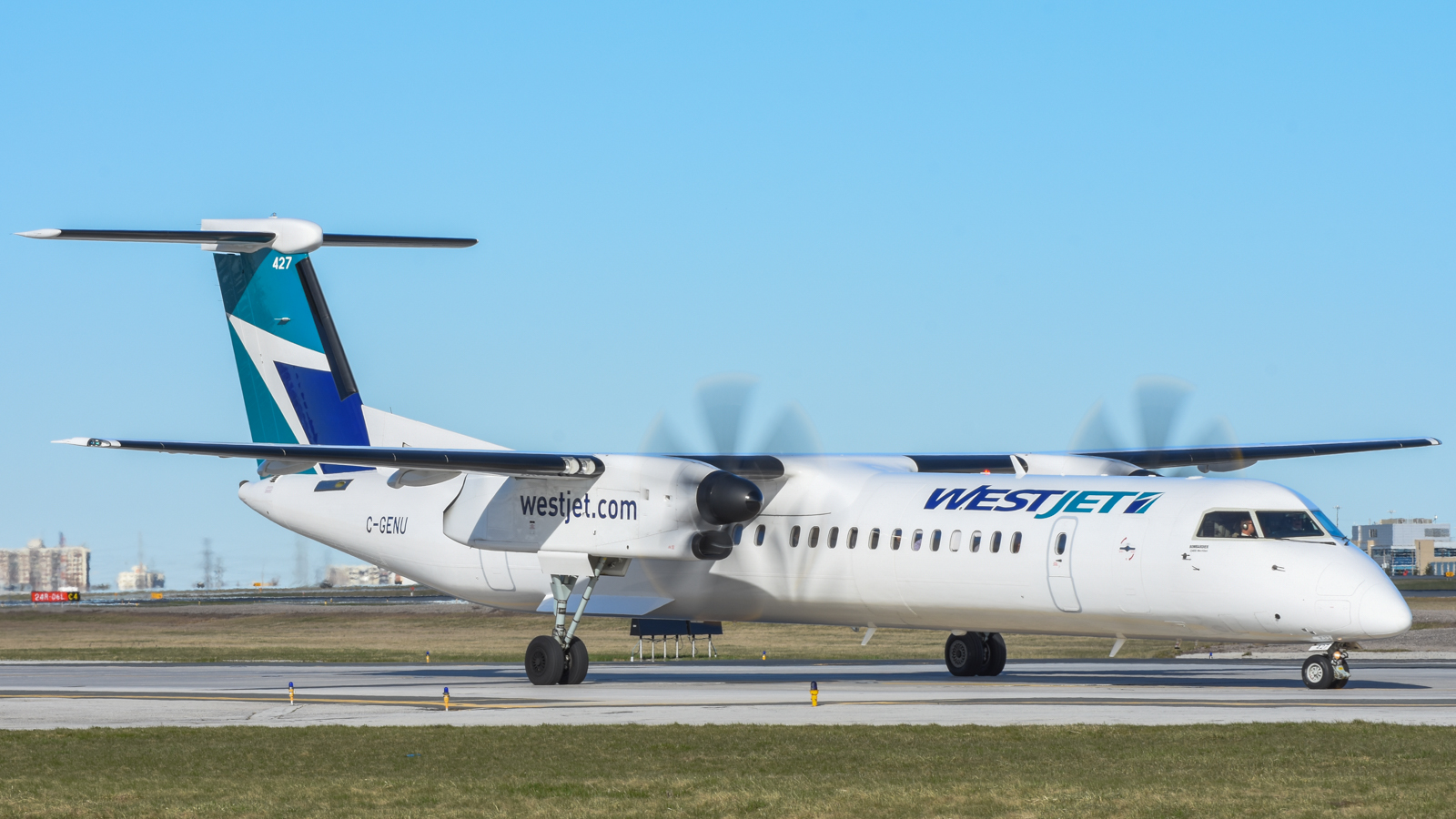
Canada’s Transportation Safety Board has connected a fractured compressor rotor blade to the engine failure and fire that forced a WestJet De Havilland Dash 8-400 to shut down one engine and divert. The March 3, 2023, flight was carrying 74 passengers and four crew members from Kamloops to Calgary when an engine-fire warning appeared after the aircraft entered cruise.

According to the newly released finding, the affected engine experienced a “surge” and loss of power, followed by a fire in its exhaust duct. The crew declared an emergency, shut down that engine and diverted to Kelowna, British Columbia. The aircraft landed safely while operating on its remaining engine.
The significant new information is not simply that an engine stopped working. Investigators traced the event to a broken rotor blade in the engine compressor and documented a sequence in which the resulting surge and power loss prompted the engine control system to increase fuel flow, setting off the exhaust-duct fire. That finding links a failed rotating component to both the loss of useful engine power and the cockpit fire warning that drove the crew’s response.
What the finding establishes
A compressor depends on rows of rotating blades to move and compress air through the engine. A fractured blade can disturb that airflow, and the safety board determined that a surge occurred in this incident. The report’s finding is specific to this event: a compressor rotor blade fractured, the engine surged and lost power, and a subsequent fire developed in the exhaust duct.
That sequence also explains why shutting down the affected engine was central to containing the immediate operational hazard. The crew did not continue toward Calgary after the warning. It declared an emergency, secured the engine and selected Kelowna as the diversion airport. The safe landing on the other engine demonstrated the aircraft’s ability to complete the diversion after losing one of its two powerplants, but it does not make the initiating mechanical failure insignificant.
For passengers and operators, the practical consequence was a flight that could no longer continue as planned and had to rely on its remaining engine. The event involved 78 people, but no injuries are identified in the available account. The incident aircraft was a turboprop Dash 8-400 not a Boeing 737 Max or another WestJet jet type.
Inspections widened the significance beyond one engine
The response extended beyond examination of the incident engine. Pratt & Whitney Canada, De Havilland Aircraft and WestJet Encore implemented inspections intended to reduce the risk of rotor-blade failures, according to a published account of the safety board’s findings. WestJet’s subsequent inspection work identified two other engines with fractured compressor rotor blades.
That discovery matters because it moves the issue beyond an isolated in-flight symptom. Finding similar damage elsewhere can help an operator define an inspection population and detect deterioration before another blade failure produces an operational event. It does not, by itself, establish that every fracture had the same origin, severity or likelihood of causing an in-flight shutdown.
Important causal questions remain open
The short public account does not identify the blade material, the precise compressor stage, the manufacturing history or the fracture mechanism. It also does not state whether investigators attributed the break to fatigue, a production defect, environmental damage, foreign-object damage or another process. Assigning any of those mechanisms without the detailed investigation record would go beyond the confirmed finding.
Nor does the available information define the inspection method, intervals, engine population or completion status. It does not identify a regulatory directive or describe whether aviation authorities required action beyond the inspections adopted by the manufacturer and operators. Those distinctions are important: a company inspection program and a mandatory airworthiness measure are not interchangeable.
The investigation therefore answers the first operational question what mechanical failure initiated the surge, power loss and fire but leaves the broader prevention case dependent on further technical detail. The most consequential follow-up is already concrete: inspections found fractured compressor blades in two additional engines, making the scope and results of continued inspection the next safety measure to watch.
| More aerospace and engineering stories, right in your MSN feed. Follow AMI on MSN |
By Thomas Caldwell — AMI’s senior editor for mechanical and mobility engineering, covering vehicle electronics, systems integration, electrification, chassis systems, propulsion, and safety policy.