USS Essex Prints Squall Drone Components and 1,000-Plus Parts at Sea
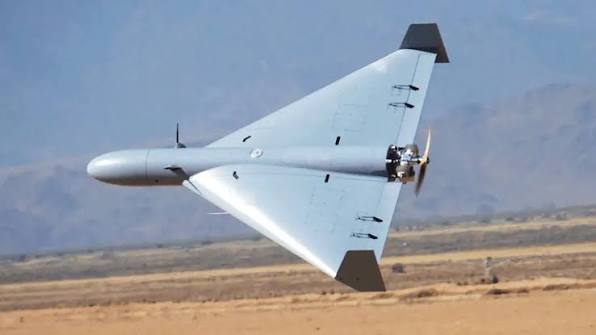
A 3D printer can produce a recognizable component within hours, but that does not automatically make the component durable, approved or economical to use aboard a deployed ship. That tension defined a 2026 demonstration aboard the USS Essex, where Firestorm Labs manufactured Squall drone components at sea while its containerized facility produced more than 1,000 parts across the deployment.

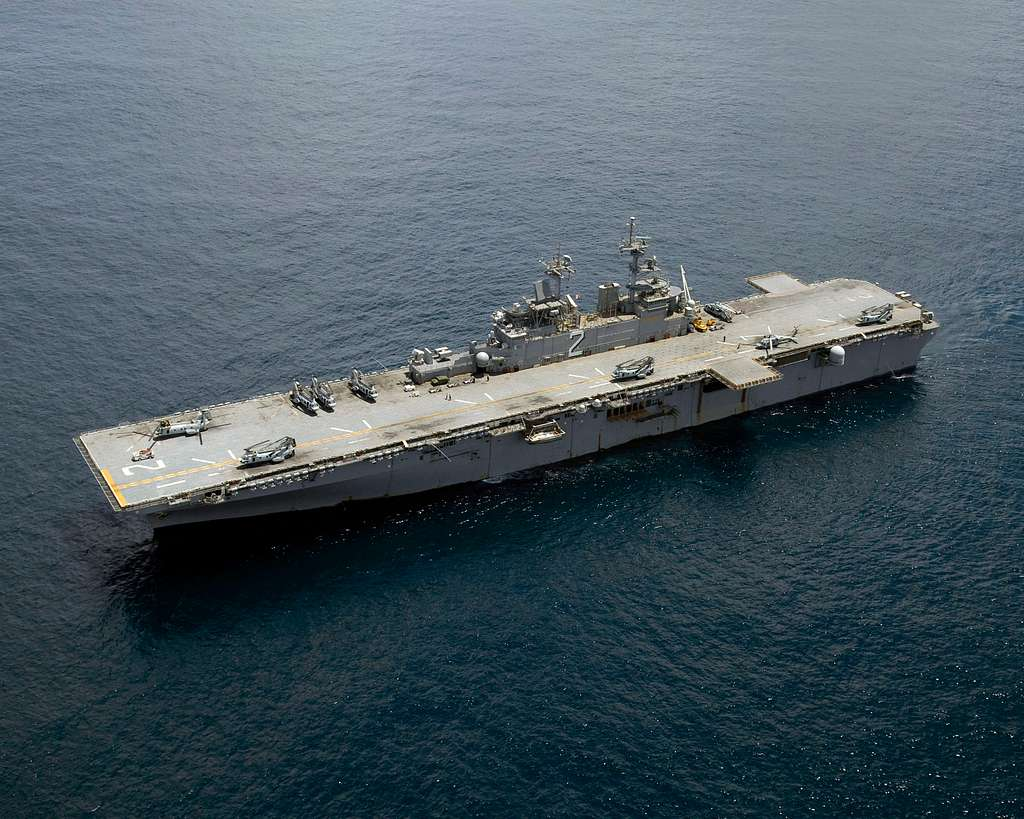
The Squall components were additively manufactured and assembled aboard Essex while the amphibious assault ship was underway to the Rim of the Pacific exercise, known as RIMPAC 2026. The broader output included replacement parts for other shipboard uses. The demonstration showed that selected drone parts and spares can be produced aboard a Navy ship instead of arriving entirely through conventional resupply, but it did not establish how many complete drones were assembled or which components came from elsewhere.
That distinction matters because the logistics problem is larger than the purchase price of a small drone. Delivering equipment to a ship at sea can add substantial cost and delay. A containerized manufacturing cell potentially shortens that chain by carrying machines, digital designs and feedstock rather than every possible finished item.
A printer is only one part of the factory
Firestorm was one of several companies participating in additive-manufacturing demonstrations organized through a Naval Postgraduate School initiative. The Navy described the work as an effort to evaluate a complete shipboard manufacturing workflow, extending beyond the printer to raw material, production, post-processing, inspection and delivery of a usable component.
Those supporting steps determine whether onboard manufacturing becomes a reliable supply capability or remains an impressive demonstration. Ship movement, vibration, heat, limited equipment space, power requirements and safety restrictions create conditions that differ from a controlled factory. Production also has to fit around the operating schedule of a working Navy ship.
Quality control is especially important. A printed object can look complete while still requiring dimensional checks, material verification, finishing or approval before use. Inspection requirements also depend on the consequence of failure: a low-consequence bracket and a safety-critical mechanical component cannot be treated as interchangeable manufacturing jobs.
The Essex result therefore supports a narrow but meaningful conclusion. A containerized system operated at sea and generated substantial physical output, including Squall drone components and more than 1,000 total parts. It does not yet demonstrate that every one of those parts met the same inspection standard, carried the same operational value or would have been more economical than a conventionally supplied replacement.
The unanswered production questions
Several figures would be needed to judge whether the concept is ready to expand. The available information does not quantify production time, material consumption, labor requirements, equipment availability or cost savings. It also does not identify the number of complete Squall drones assembled, the durability of their printed components or the facility’s maximum sustained output.
Those omissions prevent a direct comparison with shore-based manufacturing and ordinary resupply. Printing can avoid waiting for a finished part, but the ship must still carry suitable feedstock, trained operators, inspection equipment and any nonprinted hardware needed for assembly. If those inputs occupy too much space or require specialized support, some of the apparent logistics advantage can narrow.
Production mix matters as well. More than 1,000 parts is a notable deployment total, but the number alone does not reveal whether output consisted mainly of simple, rapidly printed items or included more demanding components. For readiness planning, the decisive measure is not raw part count. It is how often onboard production can provide an approved item faster or more reliably than the existing supply system.
RIMPAC 2026 gave the Navy a setting to test that question under shipboard conditions rather than inside a laboratory. The Essex demonstration confirmed the first essential step: a deployed ship can manufacture selected drone components and replacement parts while underway. Wider adoption will depend on proving the harder steps repeatable quality, sufficient capacity, trained staffing and an economic advantage that survives the constraints of manufacturing at sea.
| More aerospace and engineering stories, right in your MSN feed. Follow AMI on MSN |
By Stephen Wallace — Editor for AMI’s aerospace integration and unmanned mobility coverage, focused on drone manufacturing, VTOL systems, autonomous networks, and air-ground mobility links.