Moldova’s 39 Russian Drone Incursions Expose Its Nationwide Air-Defense Gap
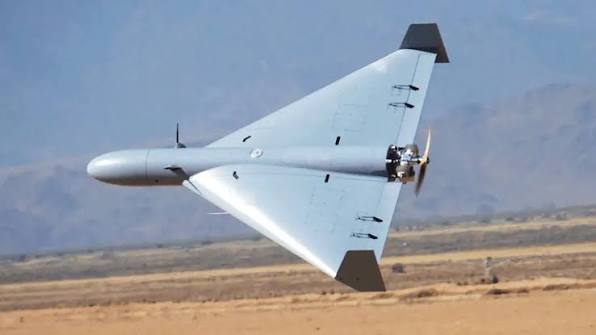
Thirty-nine Russian drone incursions entered Moldovan airspace from the beginning of 2026 through September 22, President Maia Sandu said after a National Security Council meeting. That is more than twice the 17 recorded during all of 2025, but Moldova’s current equipment can mostly protect individual critical-infrastructure sites rather than provide broad interception coverage.
The distinction matters because air defense is not one capability. Surveillance equipment can identify or track an object. A communications network can distribute that information. Electronic-warfare equipment may provide a defensive option in some circumstances, while missiles and guns serve different interception roles. A civilian alert network has another job: warning people and organizations that may be affected. Moldova has elements of this chain, but it has not yet assembled a nationwide system covering detection, interception and public warning.
Sandu said the military has portable anti-aircraft missiles, anti-aircraft machine guns and electronic-warfare equipment. Those systems can contribute to point defense the protection of a particular facility or limited area but point defenses do not automatically create a continuous national shield. Moldova has no interceptors of its own and generally records drones crossing its territory instead of bringing them down.
€120 million is intended to add a missing layer
The European Union has allocated €120 million for a medium-range air-defense system for Moldova. The assistance has entered implementation, with contracting, tendering and procurement expected to follow. No system model or definitive delivery timetable has been announced, so the acquisition should not be treated as an operational capability yet.
A medium-range system is intended to extend defended coverage beyond what isolated site-protection equipment can provide. Even then, one acquisition would not by itself eliminate every readiness gap. Effective coverage depends on sensors, command links, trained personnel, maintenance, ammunition or other effectors, and rules for coordinating decisions in shared airspace. The available information does not establish how those elements will be configured, making claims about future national coverage or performance premature.
Moldova is also pursuing less expensive counter-drone options with international partners. Cost is a material constraint because governments must balance the price of an interception capability against the number, type and frequency of objects it may face. The search for lower-cost options reflects that operating tradeoff, but no equipment identities or performance results have been disclosed.
Tracking, interception and flight safety remain separate problems
Regional threat-data exchange can give Moldovan authorities earlier or more complete awareness of objects moving across borders. Air-surveillance equipment financed through an earlier EU assistance measure has already been delivered and is supporting monitoring. Faster information can help civil and military authorities make decisions, but it does not create an interceptor where none is available.
The operational consequences are already reaching civilian aviation. A drone tracked over Moldova on September 8 led authorities to restrict airspace and delayed seven flights, including Volodymyr Zelenskyy’s departure for King Harald V’s funeral in Norway. That disruption illustrates why detection can still have public value without interception: authorities can move aircraft away from uncertainty. It also shows the cost of the capability gap, because precautionary airspace restrictions transfer delay and disruption to passengers and airport operators.
Energy infrastructure presents a different coverage problem. The National Security Council ordered stronger protection for critical energy facilities, including against drone threats. Concentrating limited defenses around such sites may reduce risk to essential services, but it also underscores the access tradeoff: equipment assigned to a small number of facilities cannot simultaneously provide broad protection for every community, transport route and public asset.
Public warning is its own unfinished layer
Moldova’s planned MD-Alert system is expected to cost €5 million, but Sandu said implementation needs more time. Existing notification mechanisms will remain in use until it becomes operational. That comparatively modest figure beside the €120 million air-defense allocation should not obscure the warning network’s distinct purpose. Interceptors protect airspace or selected assets; alerts distribute actionable public information when a threat or disruption cannot be prevented.
Police found drone wreckage after an explosion near Chișinău on September 18, reinforcing the need for authorities to connect monitoring with timely public communication. The available facts do not establish how the object reached that location or whether any Moldovan system could have intercepted it, so the incident cannot be used as a performance test of equipment now in service.
Moldova’s immediate challenge is therefore broader than purchasing a single battery. The rising incursion count is pressing the government to develop four separate layers at once: regional awareness, local protection, wider interception coverage and public warning. The €120 million procurement could add an important missing layer, but until equipment is selected, delivered and integrated and MD-Alert is operating 39 incursions remain a measure of exposure rather than proof of nationwide defensive control.
| More aerospace and engineering stories, right in your MSN feed. Follow AMI on MSN |
By Stephen Wallace — Editor for AMI’s aerospace integration and unmanned mobility coverage, focused on drone manufacturing, VTOL systems, autonomous networks, and air-ground mobility links.