Saudi East-West Pipeline Restarts, but Full Flow May Take Weeks
Saudi Arabia’s East-West Pipeline is running again after drone damage forced a complete shutdown, but the immediate recovery is only partial. The crude-oil route, which can reroute approximately 4 million barrels per day around the Strait of Hormuz, is operating at a reduced rate while Saudi Aramco works to restore full throughput.

That difference between restart and recovery matters. Reuters reported that a security source expected full resumption could take several weeks, while Aramco had not publicly provided an operational timeline. The pipeline is therefore available again as an export route, but it cannot yet be treated as a fully restored substitute for constrained maritime shipments through the strait.
The system was shut down on September 13 after drone attacks, and crude loadings at the Red Sea port of Yanbu stopped completely. By September 22, the line had progressed from zero flow to reduced-rate operation, and at least one cargo for China was scheduled to load at Yanbu. That scheduled shipment is a concrete sign that the wider pipeline-and-port chain is returning to service, even though its normal capacity remains unavailable.
Why 4 million barrels per day matters
The East-West Pipeline carries crude across Saudi Arabia to the Red Sea, allowing exports to avoid the Strait of Hormuz. Reuters described the approximately 4 million barrels per day that can be rerouted through the system as nearly 4% of global oil supply. That does not mean the entire volume disappeared from the market during the shutdown, but it shows the scale of the logistics option that was temporarily lost.
A pipeline restart also does not instantly restore every part of an export network. Flow must support refinery demand, terminal inventories and tanker-loading schedules. In the near term, the restarted line will supply Aramco’s Red Sea refineries. Trading sources also said tankers were being repositioned to Egypt’s Port Said and Sidi Kerir terminals for ship-to-ship transfers, indicating that operators are adjusting the broader transport chain while Saudi throughput remains constrained.
For oil buyers and refiners, reduced pipeline flow creates a capacity-management problem rather than the simpler question of whether the line is open or closed. Cargo schedules depend on how much crude reaches the coast and when it becomes available. A system can therefore be technically active while still limiting the number, timing or size of export movements it can support.
Repair progress remains difficult to measure
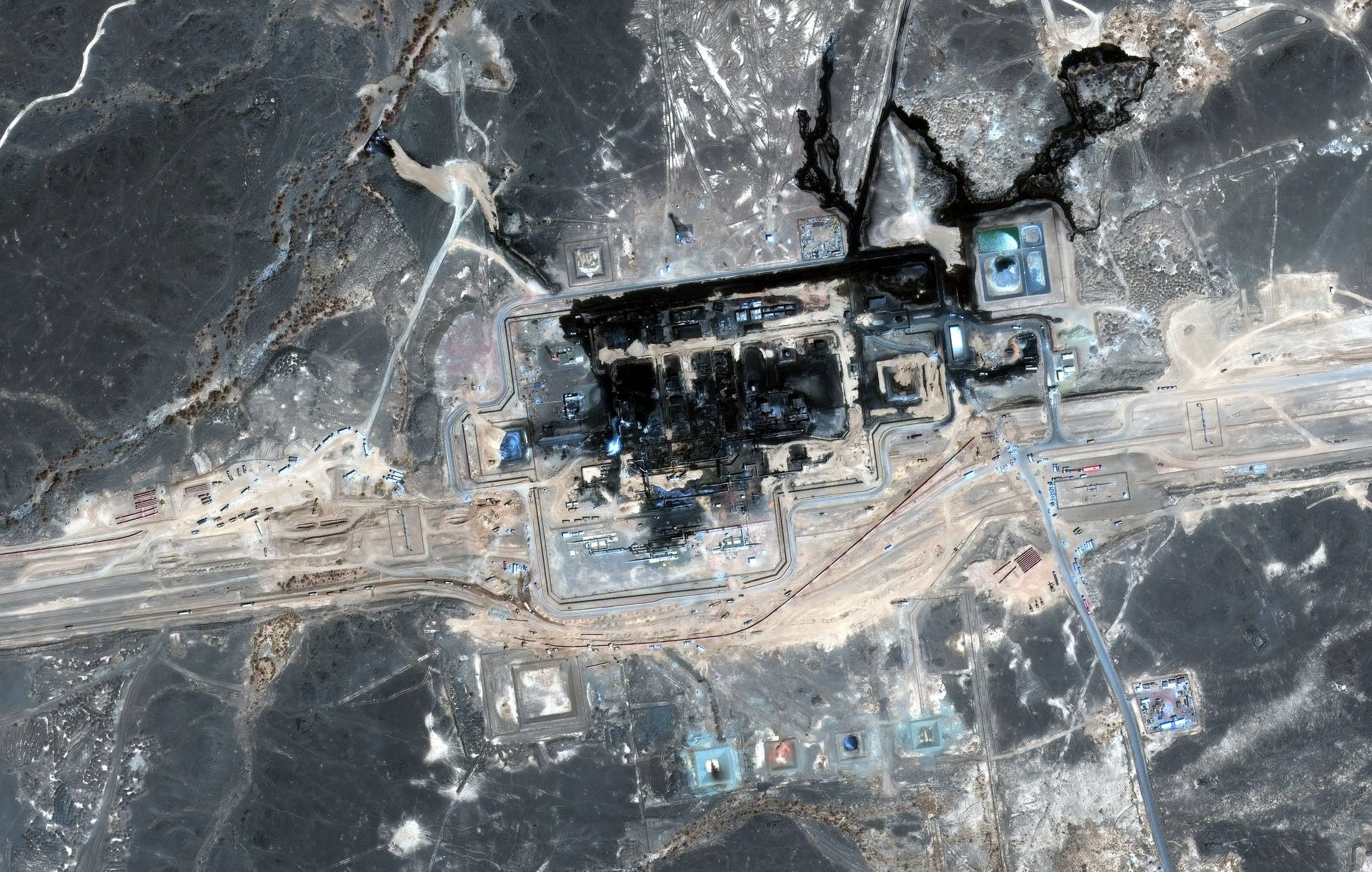
Saudi authorities had not publicly detailed a complete repair schedule. Earlier reporting said satellite images appeared to show significant damage at a pumping station, but imagery alone does not establish the condition of the full pipeline system or the work required to restore its rated throughput. The confirmed operating result is narrower: the pipeline has restarted at a reduced rate, and full service may still be weeks away.
That uncertainty limits what can be concluded about reliability beyond the present recovery. There is not yet a public basis for assigning a precise restoration date, identifying the final repair scope or determining whether throughput will increase steadily or in stages. Reduced operation may allow exports to resume while work continues, but it is not evidence that all damage has been repaired.
The market reacted quickly to the operational improvement. Reuters reported that Brent crude futures fell by more than $2 per barrel after news of the restart, reaching their lowest level since September 8. That movement reflected the return of some transport capacity, not confirmation that Saudi export logistics had returned to normal.
The next meaningful milestone is full rated flow, not simply another cargo departure. Until Aramco restores the East-West Pipeline’s approximately 4 million-barrel-per-day capacity or publishes a firm timeline the route around the Strait of Hormuz remains available but constrained, with oil buyers, refiners and fuel consumers still exposed to an uncertain recovery measured in weeks.
| More aerospace and engineering stories, right in your MSN feed. Follow AMI on MSN |
By Stephen Wallace — Editor for AMI’s aerospace integration and unmanned mobility coverage, focused on drone manufacturing, VTOL systems, autonomous networks, and air-ground mobility links.