Toyota Supplier Aster Gets 10% of Revenue From Military Drones as Automakers Hold Back
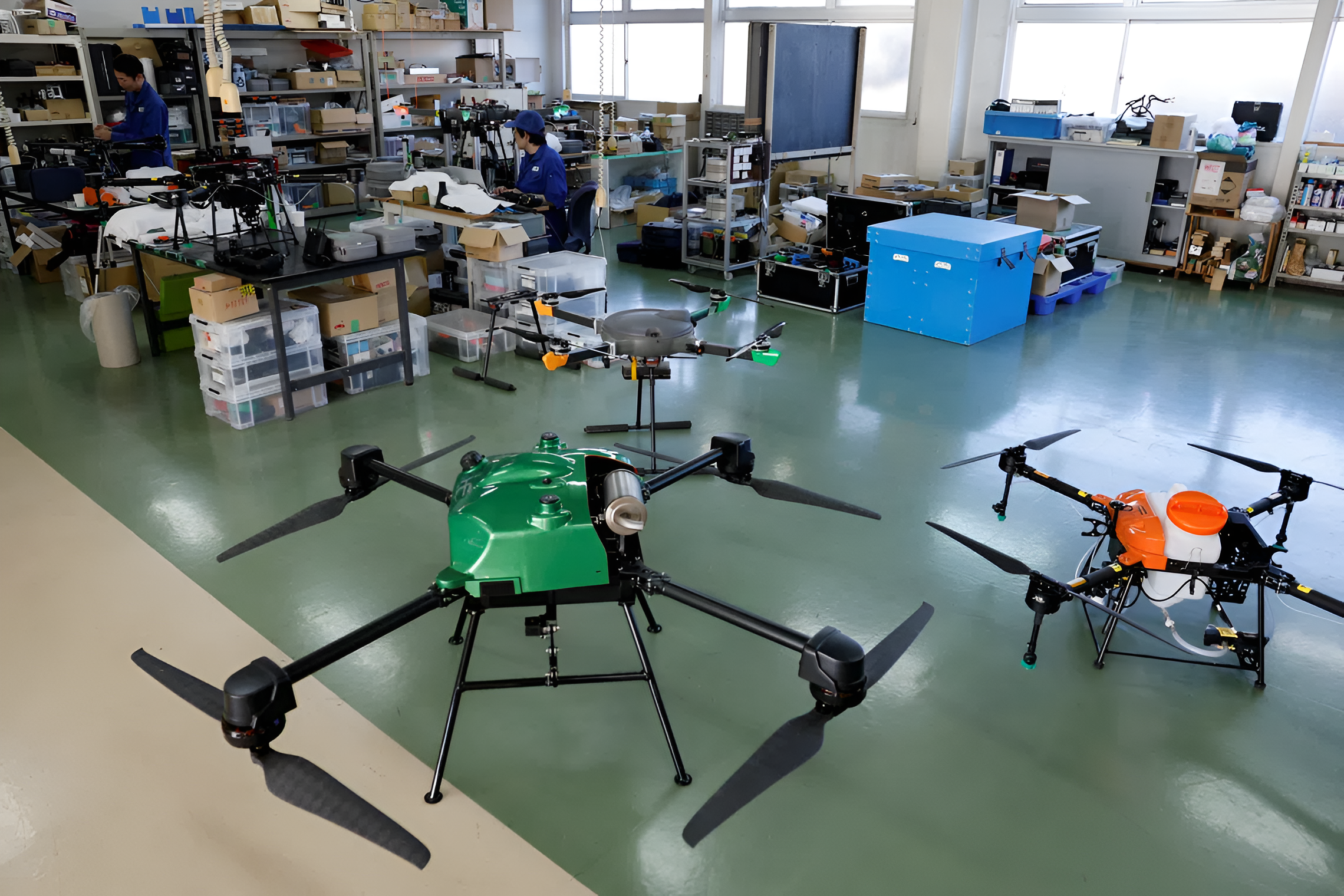
Aster built its business supplying parts for Toyota vehicles. Now its electric motors also power military drones made by U.S. technology company Anduril, and defense work already provides 10% of the Japanese supplier’s revenue. The shift captures a wider tension in Japan’s manufacturing base: smaller automotive suppliers are moving into military drone programs while Toyota, Honda and Nissan remain cautious.
Japan is actively encouraging that crossover as it undertakes its largest military buildup since World War Two. The country’s Acquisition, Technology & Logistics Agency, which manages Defense Ministry procurement, is evaluating prospective suppliers, introducing them to established defense manufacturers and opening funding channels for technology development and testing.
For Aster, which entered defense work in 2025, the commercial incentive is direct. Chief executive Takenobu Hongo said automotive motors are not very profitable for the company and described drones as “a much better business.” Employees responded positively when told that Anduril wanted to use Aster’s motors, he said.
Car-parts expertise transfers but procurement is different
Automotive suppliers bring several capabilities that drone manufacturers need: electric-motor and electronics production, precision machining, process control, traceability and experience delivering reliable components at volume. Those skills do not make a company automatically ready for defense contracts, but they reduce the industrial learning curve for hardware that must be produced consistently.
Japan has unusual depth to draw from. It remains the world’s third-largest vehicle-producing nation, manufacturing more than 8 million vehicles annually through an industry that includes about 70,000 component companies and supports one in 10 jobs. Yet the country produced nearly 900,000 fewer vehicles in 2025 than it did a decade earlier, increasing the pressure on some suppliers to find additional customers.
The transition is already extending beyond Aster. Kyowa Industrial, a producer of car-engine components with a longer history of missile-related work, said defense grew from 3% of its business in spring 2025 to 10% of annual sales. Chief executive Hiroko Suzuki attributed increasing prototype drone-engine orders partly to capacity constraints among traditional suppliers.
ATLA has also connected drone company Terra Drone with Kaaz, a manufacturer of racing components. Kaaz said it has consulted the agency and is actively developing engines for military drones. Ishikawa Energy Research, meanwhile, obtains more than half of the components used in its drones from automotive suppliers.
The agency’s role goes beyond introductions. Forty-eight Japanese companies from multiple industries attended its September supplier event, twice the previous year’s attendance, and ATLA launched a military technology development and testing funding program in October. It also serves as a contact point for companies considering defense work and coordinates with other government departments to encourage new entrants.
Entry still requires more than adapting a commercial component. Companies contracting directly with Japan’s Defense Ministry generally need a government bidding qualification, while suppliers working through a prime contractor can inherit requirements involving cost records, information protection and quality controls. A detailed overview of Japan’s defense procurement routes also notes that research selection does not guarantee a later production order. For smaller manufacturers, the engineering opportunity therefore comes with additional compliance costs and uncertain production volume.
Japan’s largest automakers remain outside
The movement is concentrated among smaller suppliers rather than the companies whose names appear on finished cars. Toyota senior executive Hiroyuki Ueda said the company’s current basic position is that it will not undertake defense-related work. Honda said it has no specific plans to enter the sector, and Nissan declined to comment.
That caution can also affect suppliers. Mitsubishi Electric chief financial officer Kenichiro Fujimoto said automakers have sometimes resisted suppliers accepting work outside the automotive industry. Subaru is a notable but longstanding exception: it has produced military aircraft, including attack helicopters, for Japan’s Self-Defense Forces for decades.
Japan’s strategy is therefore developing from the lower tiers of its automotive supply chain rather than through a wholesale conversion by major carmakers. Aster and Kyowa have each reached the point where defense represents 10% of revenue, while government-backed introductions are bringing more motor, engine and electronics specialists toward drone programs. The next test is whether those prototype relationships can become dependable production contracts without disrupting the civilian manufacturing base that made these suppliers attractive in the first place.
| More aerospace and engineering stories, right in your MSN feed. Follow AMI on MSN |
By Stephen Wallace — Editor for AMI’s aerospace integration and unmanned mobility coverage, focused on drone manufacturing, VTOL systems, autonomous networks, and air-ground mobility links.