Baykar Says Turkey Put Three Kızılelma Unmanned Fighter Jets Into Service
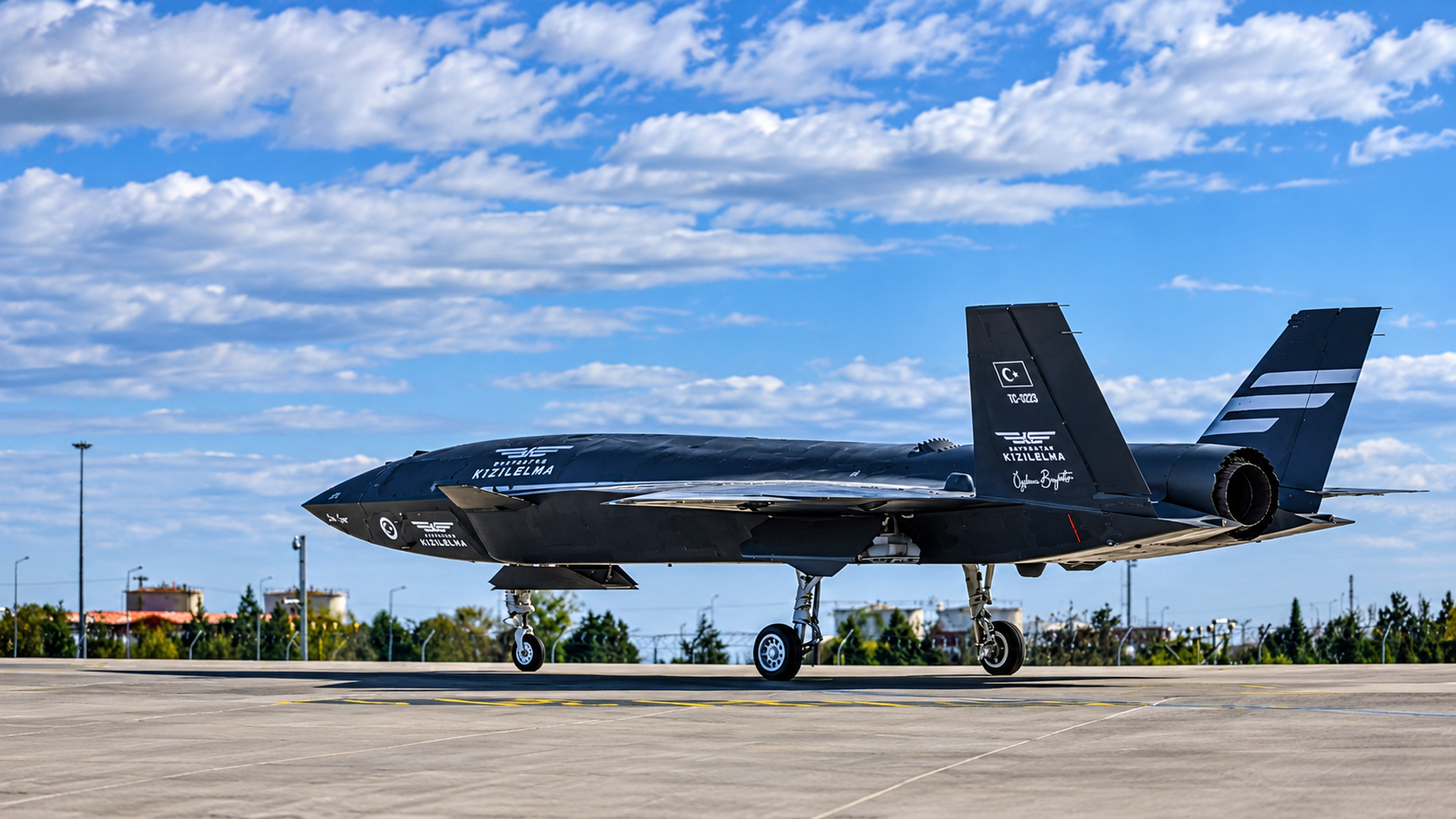
Turkey has placed three Bayraktar Kızılelma jet-powered unmanned fighter aircraft into military service, according to manufacturer Baykar. Announced on November 19, 2026, the delivery followed acceptance tests and moves the aircraft beyond a development program built around prototypes, sensor integration and weapons trials.
The milestone is narrower than a declaration of full operational readiness. Baykar did not identify which Turkish security service received the aircraft, when the delivery occurred or how many are currently available for missions. A three-aircraft fleet can support initial training, evaluation and operating-procedure development, but it provides little margin when individual airframes enter maintenance or undergo further modifications.
From first flight to an initial service fleet
Baykar publicly unveiled Kızılelma in July 2021, began production in March 2022 and completed its first flight that December. The program subsequently demonstrated formation flight with other unmanned aircraft and crewed fighters, guided-munition releases, onboard sensor integration and autonomous close formation by two prototypes.
Those demonstrations established separate pieces of the intended system. Formation trials addressed coordinated flight, while radar and weapon tests examined the chain connecting detection, tracking and simulated or live weapons employment. In a November 2025 company-described trial, Kızılelma used its onboard MURAD radar to track an F-16 and conducted a simulated engagement with a GÖKDOĞAN beyond-visual-range missile. Baykar later reported that the aircraft used the same radar and missile combination against a jet-powered aerial target.
Two prototypes completed an autonomous close-formation flight in December 2025 using Baykar fleet-autonomy algorithms. In July 2026, Kızılelma also flew autonomously in formation with an Italian M-346 trainer. These events support the manufacturer’s planned model of an aircraft that can fly independently or alongside crewed platforms, although they do not disclose the level of human supervision required across operational missions.
Acceptance is a transition, not the end of testing
Acceptance tests generally mark the point at which a customer determines that delivered aircraft meet an agreed configuration and can enter the receiving organization’s inventory. For a new unmanned combat aircraft, service induction also begins a different kind of evaluation: whether maintainers, operators, communications systems and mission-planning processes can generate reliable sorties outside a tightly managed development campaign.
Kızılelma is designed around a canard-delta configuration, canted vertical stabilizers and an internal weapons bay. Baykar intends it for air to air combat, air to ground missions, surveillance, close air support and air-defense suppression. Its autonomous flight controls and planned crewed-uncrewed teaming are central to that mission set, but the delivery announcement did not provide availability rates, sortie-generation data, maintenance requirements or information about how the three aircraft will be organized.
That missing operational data limits comparisons with other advanced unmanned combat-aircraft programs. China’s GJ-11 uses a low-observable flying-wing layout and internal weapons bays, with publicly described roles centered on strike missions and air-defense suppression. The U.S. Collaborative Combat Aircraft effort, meanwhile, emphasizes networked uncrewed aircraft operating with crewed fighters. Kızılelma is presented as a more independent, multirole unmanned fighter, but manufacturer-reported tests and a small initial delivery cannot establish how those different concepts would perform under sustained service conditions.
Baykar called the three-aircraft handover the first operational induction of an unmanned fighter jet in aviation history. The delivery does establish a significant program change: Kızılelma is no longer represented solely by test aircraft and demonstrations. Its next measure of maturity will come from the receiving service’s ability to keep this first small fleet available, train personnel around it and connect its autonomous functions with established military aviation procedures.
| More aerospace and engineering stories, right in your MSN feed. Follow AMI on MSN |
By Stephen Wallace — Editor for AMI’s aerospace integration and unmanned mobility coverage, focused on drone manufacturing, VTOL systems, autonomous networks, and air-ground mobility links.