Jet2’s Six-Month-Old A321neo Stayed Grounded 25 Days After Hard Landing
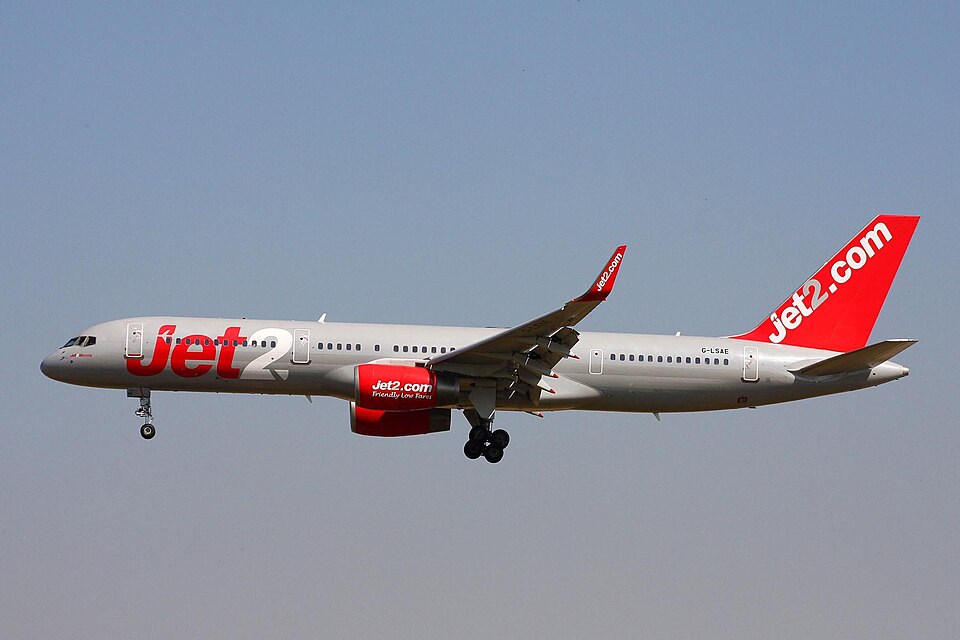
A six-month-old Jet2 Airbus A321neo remained parked in Turkey for 25 days after a hard landing reportedly produced a vertical acceleration of between 3.5 and 4G. Although the 232-seat aircraft completed its rollout and taxied normally to the apron, that movement did not provide the engineering clearance required for another passenger flight.

The aircraft, registration G-SUNX, landed on runway 01 at Dalaman Airport at 11:21 p.m. local time on October 26, 2026. It had been operating flight LS1503 from London Stansted. Jet2 cancelled the return flight, and the aircraft was still listed as parked at Dalaman on November 20. The Aviation Herald reported the 3.5 to 4G figure; the cause of the hard landing remains unclear.
Why taxiing does not settle the structural question
An aircraft’s ability to roll from the runway to its parking position establishes only that it can move on the ground at that moment. It does not determine whether its landing gear, attachment points and surrounding airframe structure remain within approved airworthiness limits for another takeoff, pressurized flight and landing cycle.
On the Airbus A320 family, a touchdown above 2.6G generates an automatic load report for engineers, according to the available technical account. The reported load on G-SUNX was substantially higher, putting the aircraft into a range requiring structural inspection. That inspection process, rather than the uneventful taxi, controls whether the aircraft can return to service.
The distinction is central to continuing airworthiness. Landing loads enter the airframe through the wheels and landing-gear assemblies, then pass through their attachment structure into the surrounding fuselage and wing structure. Engineers therefore may need to examine more than the externally visible gear. The stated inspection scope includes the landing gear, its attachment points and adjacent aircraft structure.
Inspection findings determine the next step. If the checks are satisfactory, engineers can document compliance and clear the aircraft. If they identify damage or deformation, the operator must complete the required repairs and obtain the necessary engineering disposition before release. No inspection findings, confirmed damage assessment or return to service date for G-SUNX had been announced in the available account.
A high reading does not reveal the outcome by itself
A recorded acceleration can trigger an extensive inspection without establishing that damage occurred. A useful comparison comes from a 2021 Airbus A320neo hard landing at Kolkata. India’s Directorate General of Civil Aviation recorded a maximum vertical acceleration of 3.066G and categorized the event as a severe hard landing. Its investigation report said severe hard landing inspections covered avionics, the airframe and engine systems; no abnormality was found, and that aircraft was released to service.
That comparison illustrates why the inspection cannot be replaced by an assumption in either direction. A severe load reading can ultimately produce satisfactory findings, but clearance follows the prescribed checks. G-SUNX’s reported 3.5 to 4G range was higher than the 3.066G recorded in the Kolkata case and also higher than the 3.01G touchdown that the UK Air Accidents Investigation Branch classified as a severe hard landing in a 2017 Airbus A319 incident.
Hard landings are also specifically included among reportable takeoff and landing occurrences under European occurrence-reporting rules. Reporting and maintenance clearance serve different functions: reporting feeds the safety-management and regulatory process, while inspection establishes the aircraft’s physical condition and fitness for service.
A new aircraft still follows the same limits
G-SUNX was built at Airbus’s Hamburg Finkenwerder plant and delivered to Jet2 in Manchester on May 13. It entered service on May 19, making it only about six months old when the Dalaman event occurred. Its age does not reduce the need to follow the inspection threshold. Structural-load procedures apply to the measured event and the aircraft’s approved maintenance requirements, not to an assumption that a recently delivered airframe must be undamaged.
The prolonged grounding also has an operational consequence. With one 232-seat A321neo unavailable, Jet2 must cover its planned flying with other aircraft. The event occurred after the airline moved to its quieter winter schedule, which may provide more fleet flexibility, but the missing capacity still has to be managed elsewhere.
The unresolved fact is now the engineering result. G-SUNX cannot resume passenger service until the inspection is completed, any required repairs are made and authorized personnel clear the aircraft. Until those findings or a departure date are announced, a jet that taxied normally after landing remains unavailable because ground mobility and airworthiness approval answer two very different questions.
| More aerospace and engineering stories, right in your MSN feed. Follow AMI on MSN |
By Thomas Caldwell — AMI’s senior editor for mechanical and mobility engineering, covering vehicle electronics, systems integration, electrification, chassis systems, propulsion, and safety policy.