SpaceX breaks same-pad record with Falcon 9 launches 32 hours apart
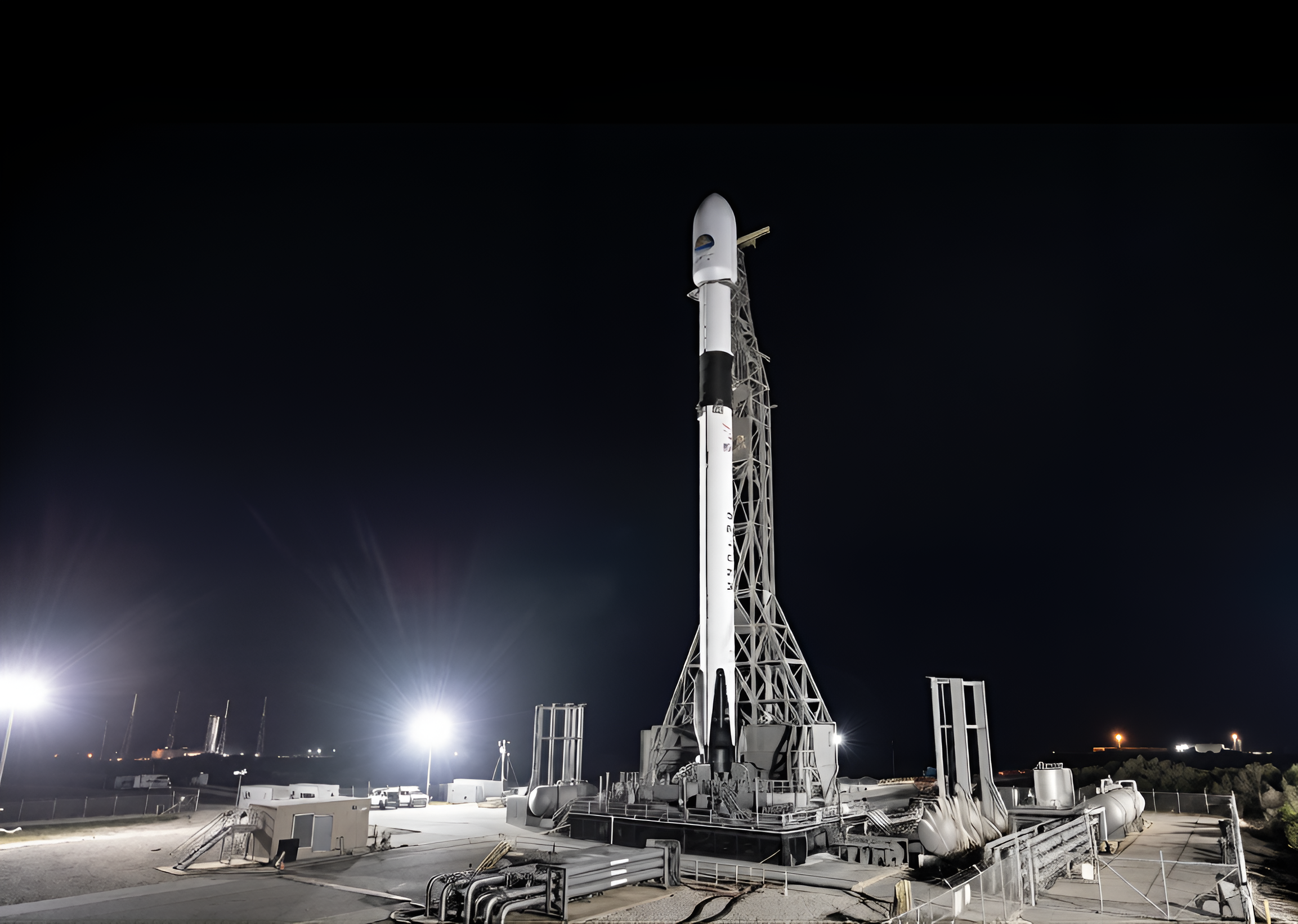
Thirty-two hours, 3 minutes and 21 seconds separated two Falcon 9 launches from the same pad at Vandenberg Space Force Base in California. The second rocket lifted off from Space Launch Complex 4E at 7:23 a.m. ET on November 22, carrying the NROL-136 national-security mission for the National Reconnaissance Office.
The flight followed the U.S. Space Force’s USSF-317 mission from the same launch complex, cutting nearly 13 hours from SpaceX’s previous companywide record of 45 hours between launches from Pad 40 at Cape Canaveral Space Force Station. SpaceX launch vice president Kiko Dontchev said the Vandenberg team completed the work “with several hours of margin” and identified the “next goal” as a 24-hour turnaround.
Why the pad interval matters
A launch pad is only one part of a Falcon 9 mission, but it can become a hard scheduling constraint. After a rocket departs, the site must be returned to a launch-ready condition for a different vehicle and payload. The 32-hour result shows that SpaceX can compress that ground interval at Vandenberg without using a second pad to overlap the two departures.
The record applies specifically to the time between completed launches from one pad. It is not yet evidence that 24-hour turnarounds are routine, nor does it mean every payload and range schedule can support that pace. Rockets must be available, spacecraft must finish processing, and the launch range and surrounding airspace must be ready for each mission. Weather and mission-specific requirements can also determine when a prepared vehicle actually leaves the ground.
Still, reducing pad occupancy creates practical capacity. A launch complex that can be reset sooner has more room in its schedule for government, commercial and internal SpaceX missions. That flexibility is increasingly relevant because Vandenberg, Cape Canaveral Space Force Station and Kennedy Space Center accounted for 83% of U.S. launches in the cited 2026 federal spaceport analysis. More flights through a small number of locations put pressure not only on launch mounts but also on power, transportation, payload-processing and range infrastructure.
A one-day target would narrow the pad-reset portion of that equation further. Moving from the former 45-hour benchmark to 32 hours cut the record by roughly 29%. Reaching 24 hours would require SpaceX to remove another eight hours from the newly demonstrated interval. Dontchev’s statement that the team retained several hours of margin suggests the record was not achieved at the last possible moment, but SpaceX has not yet demonstrated the full 24-hour cycle.
A reused booster for a classified mission
The NROL-136 Falcon 9 first stage separated about two minutes after liftoff. Identified as booster B1097, it returned to Vandenberg’s Landing Zone 4 approximately seven and a half minutes into the mission, completing its 14th flight. Its previous assignments included Sentinel-6B, NROL-172, USSF-259 and eight Starlink missions.
The landing highlights a separate part of SpaceX’s launch-cadence system. The pad turnaround concerned preparing Space Launch Complex 4E for another rocket, while the booster recovery preserved the first stage for potential future use. Fast ground processing and repeated booster flights address different constraints, but both contribute to how frequently the Falcon 9 fleet can fly.
NROL-136 was the NRO’s sixth launch of 2026, and every one of those missions used a Falcon 9 to carry classified satellites into low Earth orbit. It was also the 15th launch dedicated to the agency’s proliferated architecture, a network whose spacecraft were developed in partnership with SpaceX and Northrop Grumman. Deployment began with NROL-146 in May 2024. The agency did not disclose how many satellites flew on NROL-136 or provide details about their onboard technology.
That leaves the pad performance as the mission’s clearest public engineering result. SpaceX has now demonstrated a 32-hour, 3-minute and 21-second interval between separate Falcon 9 missions at Vandenberg; the company’s next benchmark is to fit the same basic launch-to-launch cycle inside one day.
| More aerospace and engineering stories, right in your MSN feed. Follow AMI on MSN |
By David Whitaker — Associate editor for AMI’s aerospace and drone systems desk, translating flight systems, aircraft programs, spaceflight, and UAV developments into accessible technical stories.