Denza B5 Tows Boeing 747 Electrically With Both Right-Side Wheels Removed
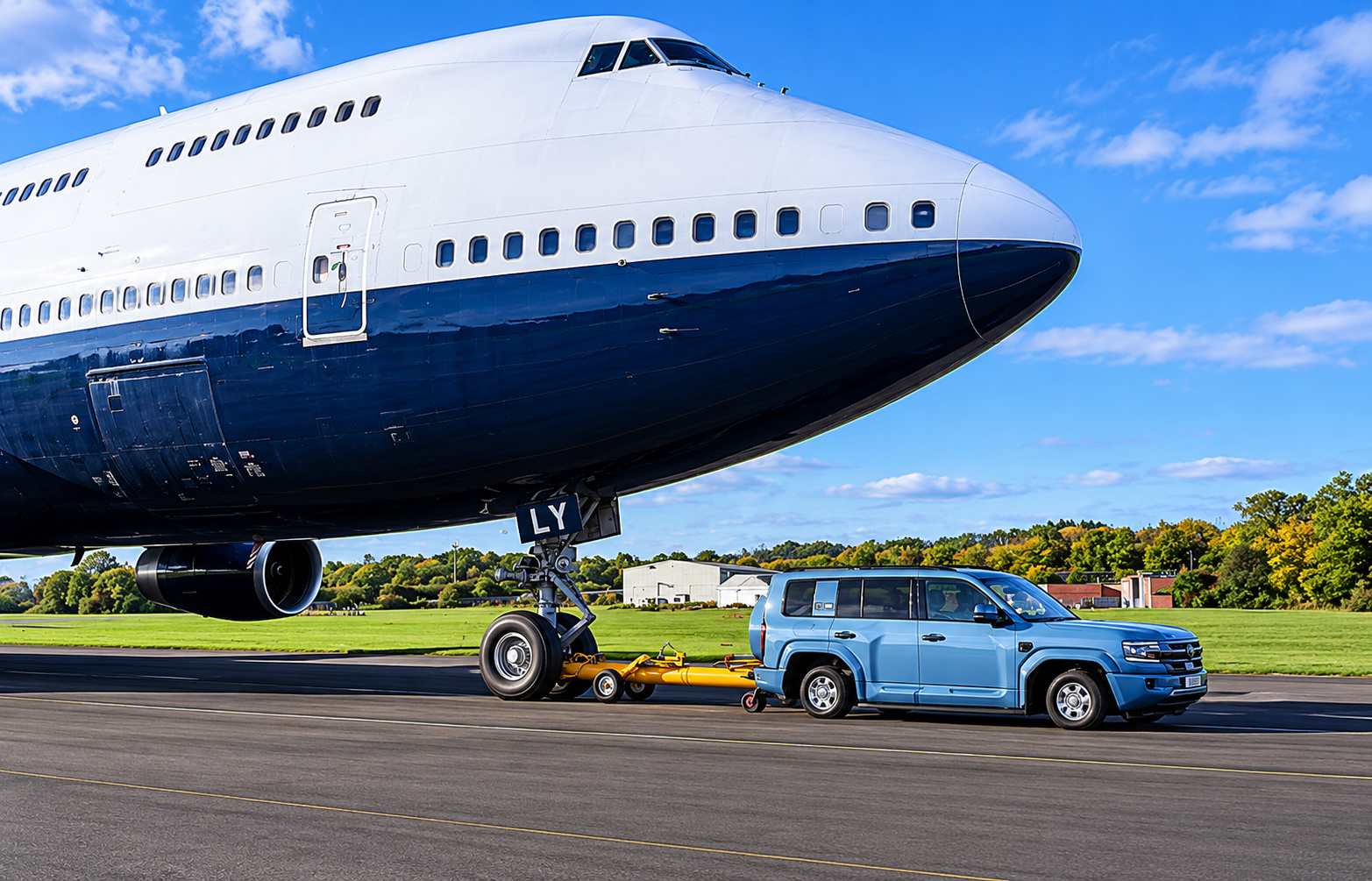
BYD’s Denza B5 plug-in hybrid SUV moved a 207-ton Boeing 747-400 at Dunsfold in the United Kingdom using electric power, then completed the modified demonstration after both right-side wheels had been removed. The striking imbalance was possible only with substantial preparation: five tonnes of ballast, stabilizers and a custom towing attachment supported the final run.
The exercise deliberately escalated a famous Volkswagen advertisement from about 20 years ago. That campaign put a Touareg V10 diesel in front of a jumbo jet on the same Dunsfold runway. The account behind Denza’s recreation describes the earlier aircraft as weighing 171 tons, although Volkswagen’s archived release listed its Boeing 747-200 at approximately 155 tonnes as towed.
More aircraft weight, fewer SUV wheels
Volkswagen’s Touareg used all four wheels and carried 4.3 tonnes of metal ballast, bringing the SUV’s total weight to just over seven tonnes. Its engine, air suspension, wheels, tires and structure remained standard, while a special adapter connected the production towbar mounting point to the aircraft towing link. Volkswagen also installed a different axle ratio, although the company said the run ultimately did not require first gear.
Denza followed a more theatrical progression. The B5 first pulled the aircraft with all four wheels fitted. It then ran on three wheels with 2.2 tons of ballast. For the third run, both wheels on the right side were removed, ballast rose to five tonnes and stabilizers compensated for the missing support points. Seats were removed to make room for that ballast. Across the three runs, the B5 moved the 747 more than one mile.
Those changes define what the result means. A tow vehicle does not carry the aircraft’s full mass; it must generate enough force at the tire contact patches to overcome the aircraft’s resistance to rolling. Added ballast raises the load on the SUV’s remaining tires, helping them transmit more tractive force before slipping. The stabilizers keep the deliberately unbalanced vehicle supported, while the custom hitch transfers the towing load through a purpose-built connection.
Consequently, this was not an independent towing certification or a demonstration that a customer B5 could repeat the pull in showroom condition. The removed wheels created the visual hook, but ballast, stabilizers and the towing attachment were integral parts of the configuration.
Why the B5’s powertrain suited the demonstration
The B5, also called the Bao 5 in some markets, combines front and rear electric motors with a 1.5-liter gasoline engine. Denza lists total system output at 536 horsepower, while the gasoline engine primarily serves as a generator for the high-voltage battery. The demonstration used the electric side of that architecture for all three towing runs.
Its 31.8-kilowatt-hour battery provides up to 56 miles of electric range and can accept charging at up to 100 kilowatts. Those specifications matter for normal operation, but the aircraft pull emphasized a different attribute: electric motors can deliver controlled drive without relying on a conventional multispeed drivetrain to keep an engine in its useful operating range.
The chassis and driveline also fit the assignment. The B5 uses a ladder frame, with battery cells integrated between its chassis rails, plus all-wheel drive and two mechanical locking differentials. A ladder frame provides a defined structure through which towing loads can be managed, while locking differentials are relevant when available tire contact is intentionally reduced. The stunt configuration still depended on its added hardware and ballast rather than the production systems alone.
A European marketing contest conducted in tonnes
The comparison also captures a change in the market. Volkswagen’s original pull promoted the strength of a large diesel SUV at a time when the V10 Touareg served as a technical flagship. Denza has reused the same runway and aircraft-towing premise to introduce a plug-in hybrid SUV, substituting electric drive and an escalating wheel-removal challenge for the earlier advertisement’s diesel-engine message.
Chinese automakers are increasingly using this kind of showpiece marketing to attract European buyers, and Denza’s UK promotion is designed to make an unfamiliar badge memorable before specifications alone can do that work. The aircraft provides scale that any viewer can understand; the missing wheels create the distinction from Volkswagen’s established concept.
The engineering boundary is equally visible. The B5 moved a heavier aircraft than the jet cited in the earlier campaign and did so on electric power, but its final configuration was far removed from an ordinary road vehicle. Denza’s competitive message rests on both halves of the spectacle: a 207-ton Boeing 747 rolling behind the SUV, and five tonnes of ballast plus stabilizers making the two-wheel finish possible.
| More aerospace and engineering stories, right in your MSN feed. Follow AMI on MSN |
By Robert McKinney — Editor-in-Chief for AMI’s automotive and mobility coverage, with a mechanical engineering background and a decade reporting on powertrain systems, EV innovation, and global vehicle manufacturing.