Waymo Recalls Robotaxis That Struggled With Police Directions and Closed Lanes
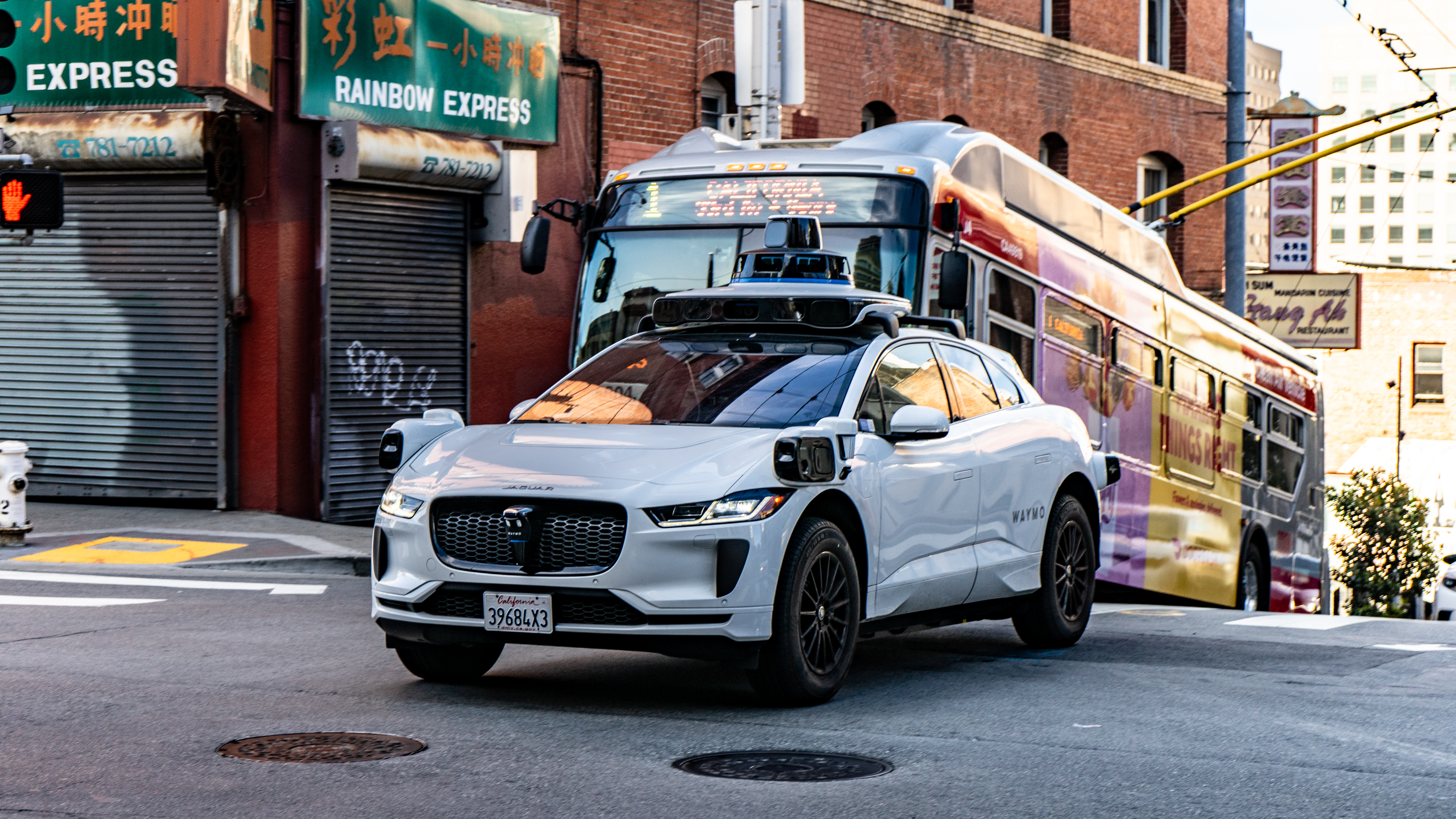
A driverless car can correctly read lane markings, traffic lights and speed limits, yet still get the road wrong when a police officer temporarily replaces those formal rules with a hand gesture. That conflict is behind two Waymo robotaxi recalls announced Friday, covering behavior around closed freeway lanes and intersections manually controlled by officers or city workers.
Waymo is addressing both recalls through software rather than removing vehicles for physical repairs. According to the company’s filings, one update concerning manual traffic control was completed November 6, while Waymo was still developing the remedy for closed freeway lanes. The recalls therefore keep the cars in service on permitted roads, but they do not mean every unusual human-directed situation has already been resolved.
The action follows a significant reduction in the system’s operating territory. California regulators barred Waymo robotaxis from the state’s freeways earlier in November after incidents involving closed lanes and construction areas. Waymo then suspended interstate operations nationwide on Wednesday, leaving its fleet operating primarily on local roads and minor state highways.
One trigger was a Waymo vehicle attempting to pass a California Highway Patrol rolling roadblock. During this maneuver, also called a traffic break, one or more patrol vehicles slow down and move across lanes to prevent other vehicles from passing while authorities handle debris, a collision or another hazard. Officers stopped the Waymo from getting past the roadblock.
The difficulty is less about recognizing a patrol car than understanding what its movement means. Under normal conditions, a slowly moving vehicle may be treated as an obstacle that can be passed when lane markings and surrounding traffic permit. During a rolling roadblock, the patrol vehicle’s position and weaving motion communicate the opposite instruction: all traffic must remain behind it, even if an adjacent lane appears open.
Manually controlled intersections create a related perception and reasoning problem. An officer may wave vehicles through a red light, hold traffic despite a green signal or direct one approach to move while stopping another. The automated driving system must identify the authorized person, interpret the gesture, determine which vehicles it applies to and recognize that the instruction temporarily outranks the normal signal.
Those commands are not as uniform as a traffic light. An SAE International information report on human traffic-controller signals notes that gestures can vary among cities, states and countries. Their appearance can also change with gloves, paddles, whistles, batons, flashlights, the controller’s orientation and whether that person is standing or mounted. The duration and consistency of a gesture add further variables.
That variability exposes an important boundary in automated-driving performance. Routine road operation is highly structured: signs have defined shapes, signals use standardized colors and lanes provide persistent geometric cues. Human traffic control is contextual and temporary. Its meaning can depend on body position, surrounding hazards and a sequence of movements rather than one fixed visual object.
The engineering task extends beyond detecting a raised arm. The software must assign meaning with enough confidence to act safely, while avoiding a different failure in which an unrelated pedestrian movement is mistaken for an official command. A conservative response may reduce immediate risk, but an unnecessarily stopped robotaxi can obstruct traffic or interfere with emergency access. The system must balance motion, uncertainty and right-of-way without a human driver available to exchange eye contact or clarify intent.
Federal regulators have made that interaction a broader priority. The National Highway Traffic Safety Administration said it identified a pattern of driverless vehicles interfering with law enforcement and other first responders, including vehicles entering emergency scenes or failing to respond appropriately to lights, flares, smoke and traffic cones.
Software distribution makes a fleetwide correction faster than replacing a mechanical component, but deployment speed is only one part of the remedy. Waymo must also validate that a change works across variations of the original scenario without degrading behavior elsewhere. The completed manual-control update and unfinished closed-lane remedy reflect that incremental process.
Freeway access remains the clearest operational consequence. Waymo’s robotaxis can continue carrying passengers on permitted surface roads, but interstate operation remains suspended nationwide. Restoring that capability will depend on demonstrating that the automated driver can treat a temporarily closed lane or a moving police barrier as an overriding command not merely another object to navigate around.
| More aerospace and engineering stories, right in your MSN feed. Follow AMI on MSN |
By Robert McKinney — Editor-in-Chief for AMI’s automotive and mobility coverage, with a mechanical engineering background and a decade reporting on powertrain systems, EV innovation, and global vehicle manufacturing.