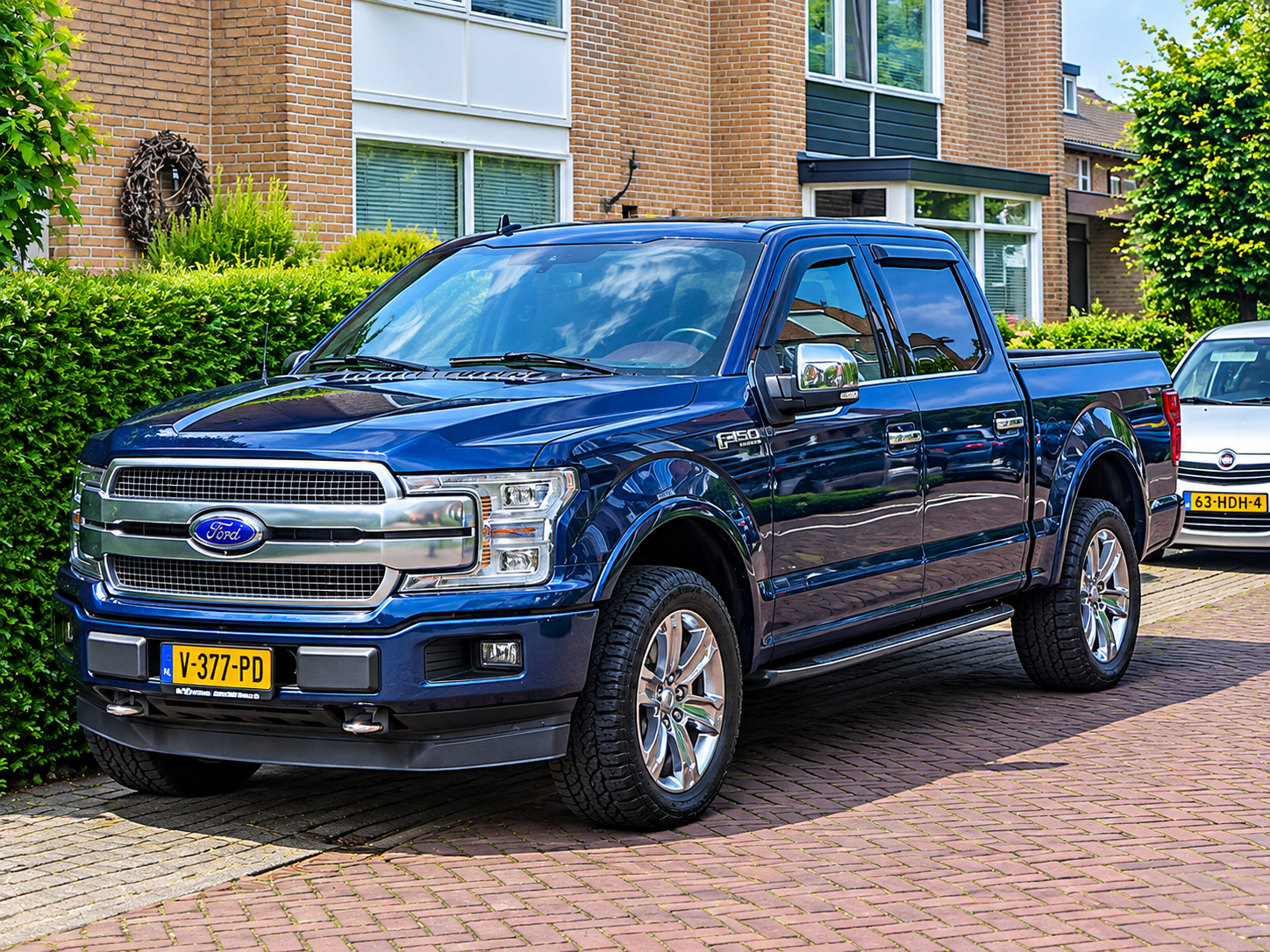
Ford F-150 Supply Hits 93 Days After Supplier Shortage Cut Production
Ford’s F-150 had 93 days of dealer supply in October 2026, providing the first concrete inventory measure after an unidentified supplier shortage stopped production in Dearborn and cut shifts in Kansas City during September. The October inventory data indicate that the interruption did not produce a nationwide shortage of F-150s, although the selection available could still vary by dealer, trim and configuration.

That result answers an important question left open when Ford halted every F-150 production crew at its Dearborn Truck Plant in Michigan for six days. The cancellations ran from Thursday, September 24, through Tuesday, September 29, according to a plant memo described at the time. Kansas City Assembly also lost F-150 shifts because of the same supplier problem. A union representative said 15 F-150 shifts had been canceled there since September 1 because of what Ford described as a lack of parts.
The responsible supplier and constrained component were not publicly identified. Ford declined to comment on supplier disruptions when contacted by the Detroit Free Press. One person familiar with the production changes said the September interruption was unrelated to aluminum, while a Kansas City union representative said he believed aluminum was involved but acknowledged that Ford had identified the problem only as a parts shortage.
Those conflicting accounts do not establish aluminum or aluminum supplier Novelis as the cause. Ford had already endured a separate, documented aluminum constraint after fires at a Novelis facility in 2025 disrupted truck production. That history made aluminum a plausible concern, but it did not identify the missing input behind the September shutdown.
Why two affected plants raised the stakes
A stoppage confined to one factory can result from local equipment, staffing or facility work. The September disruption crossed plant boundaries: Dearborn stopped building F-150s, while Kansas City canceled multiple F-150 shifts. Transit van production at Kansas City was reported to have continued, narrowing the documented effect to the pickup operation rather than the entire factory.
That pattern showed that the unavailable input supported F-150 assembly at more than one location. It did not reveal whether the bottleneck involved a common component, raw material or supplier-managed subassembly. In a high-volume manufacturing system, however, parallel assembly capacity cannot protect output if multiple plants depend on the same unavailable input.
Ford’s Kentucky Truck Plant reportedly increased production to recover some volume lost elsewhere. That provided a degree of manufacturing flexibility, but no figure was released for the added output, and there was no confirmation that Kentucky could replace every canceled truck. Additional line time helps only when the receiving plant has the necessary parts, labor and suitable production allocation.
Dealer supply shows the interruption was absorbed
The October measure changes the consumer side of the story. A 93-day supply means the available nationwide inventory was sufficient to cover approximately 93 days at the prevailing sales pace. It is a market-level indicator rather than a guarantee that every dealer had every engine, cab, bed length or trim requested by customers.
Ford as a brand ended October with 112 days of new-vehicle supply, up from 101 days in September and 89 days in August. The overall U.S. market stood at 87 days. The F-150’s 93-day figure therefore sat below Ford’s brandwide level but above the broader market measure, inconsistent with a nationwide scarcity caused by the September production losses.
Factory output also recovered in October. Ford built 62,082 F-150s during the month, compared with 42,846 in disruption-affected September. Dearborn produced 30,312 and Kansas City built 31,770. Those totals measure completed vehicles rather than dealer deliveries, but the rebound helps explain how the supply chain interruption could remain visible at the plants without developing into a broad retail shortage.
The episode still exposes a systems-integration risk. Ford could shift production effort and later increase output, yet the initial constraint stopped or reduced F-150 assembly at two major operations before the supplier or component was publicly known. By October, production and dealer inventory had absorbed the disruption at the national level. The remaining limitation is local: 93 days of aggregate supply cannot ensure that a particular dealer has the exact F-150 configuration a buyer wants.
| More aerospace and engineering stories, right in your MSN feed. Follow AMI on MSN |
By Thomas Caldwell — AMI’s senior editor for mechanical and mobility engineering, covering vehicle electronics, systems integration, electrification, chassis systems, propulsion, and safety policy.