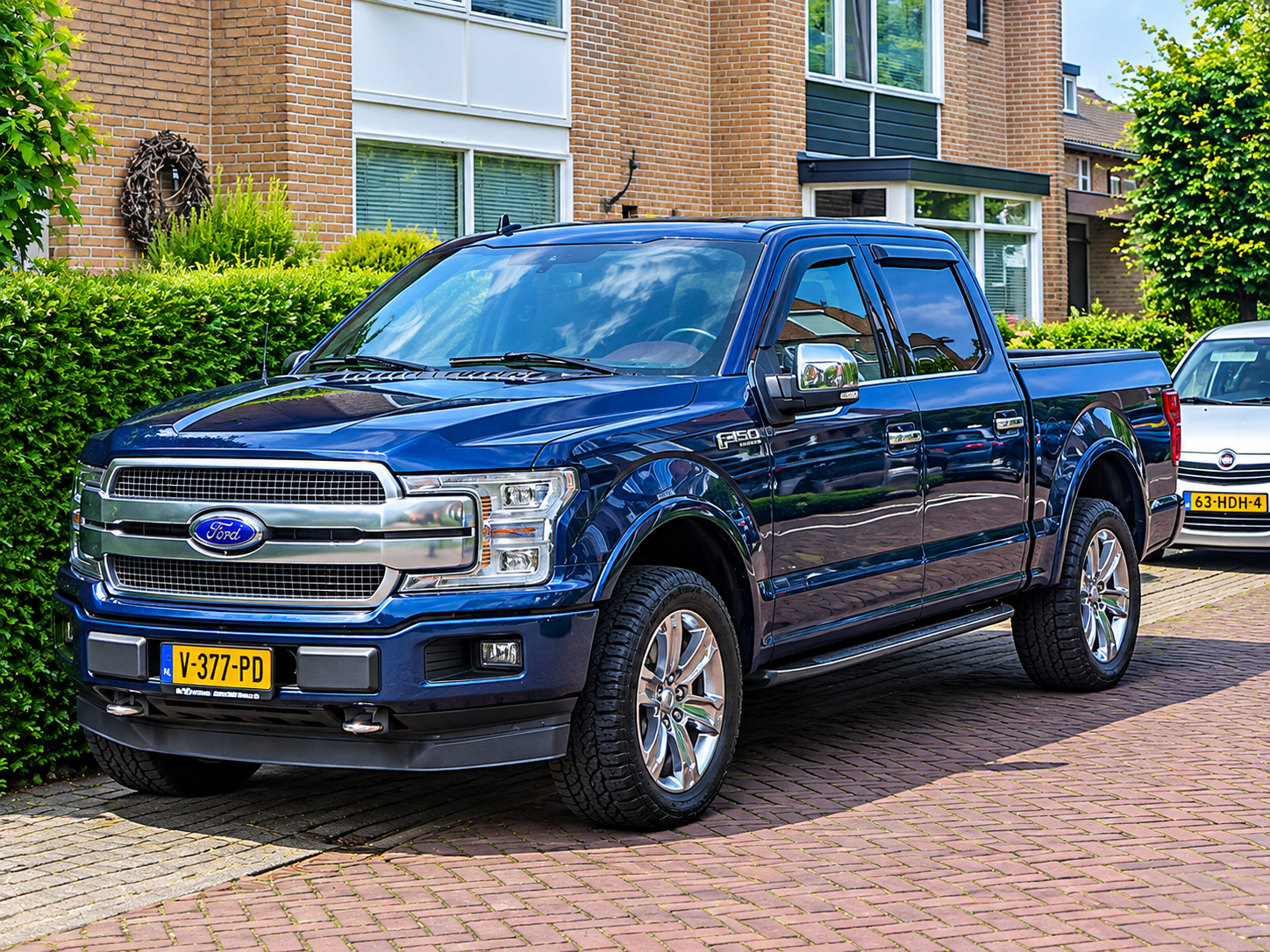
Ford F-150 Owner Says Dealer Approved Free Engine After Lift-Kit Dispute
An Alabama owner of a used 2018 Ford F-150 Lariat says Kia of Daphne authorized a replacement engine at no cost after a dispute centered on a lift kit that was already on the truck when she bought it. The reported reversal spared Taylor Baires from a repair bill she estimated could run from $17,000 to $25,000, although the replacement terms had not yet been provided to her in writing.

Baires bought the F-150 and an extended service plan from the dealership in March 2026. About four months later, she says, its engine stopped running. By November, she reported that the pickup had been undrivable for four months while she still owed approximately $27,000 on it.
The claim initially focused on maintenance. According to Baires, the service-contract company, which she identified only as Fidelity, questioned the truck’s oil-change history. She supplied maintenance records, after which the lift kit became the central issue.
Baires says the suspension modification was installed before the dealership sold her the truck. She also alleges Kia of Daphne acknowledged that it had not disclosed the lift kit to the contract provider. According to her account, the dealership first offered to refund the cost of the service contract but declined to repair the F-150.
After the dispute drew widespread attention online, the position reportedly changed. On Nov. 17, Baires said Kia of Daphne had “officially authorized a new engine at absolutely no cost to me.” She also said the dealership supplied a rental truck at its expense while her F-150 was sent to a Ford dealership for the engine replacement.
Neither the dealership nor the service-contract company provided a response substantiating her account. The reason the engine failed also remains undetermined, so the available information does not connect the lift kit technically to the engine failure or establish whether a contract exclusion properly applied.
Why the contract language matters
Although these products are commonly marketed as extended warranties, separately purchased coverage is generally an auto service contract rather than a manufacturer’s warranty. The Federal Trade Commission explains that these contracts cover only the repairs and services specified in their terms. Limits can involve maintenance, wear, pre-approval, replacement-part type, labor rates and vehicle modifications.
That distinction changes how a dispute is evaluated. Federal warranty guidance says the presence of an aftermarket part does not automatically end a conventional warranty. A manufacturer or dealer may deny warranty coverage for damage caused by a defective or improperly installed aftermarket part, but the aftermarket part itself does not erase every other coverage obligation. Ford similarly says an aftermarket product does not necessarily void its new-vehicle warranty or Ford Protect coverage.
A separately purchased service contract can operate under different written exclusions and claim procedures. Alabama law defines a service contract as a separately paid agreement covering repair, replacement or maintenance for specified operational or structural failures. It is legally distinct from a warranty, which is incidental to the product sale rather than purchased for a separately stated price.
Without Baires’ complete contract, claim decision and vehicle records, it is not possible to determine which provision governed the lift kit or whether the administrator linked it to the failed engine. The sequence nevertheless illustrates how documentation can become as important as the hardware: the vehicle’s modification history, the dealer’s disclosure to the administrator, maintenance receipts and the precise exclusion language can all affect whether a major repair is authorized.
The remaining gap is in writing
Baires expected the repaired truck to be returned in roughly a week and said she anticipated warranty coverage from Ford for the replacement engine. At the time of her update, however, she had not received written confirmation of those terms.
That paperwork should identify who is paying for the engine, whether the unit is new or remanufactured, what parts and labor are covered, how long the coverage lasts and whether mileage limits or other conditions apply. It should also clarify whether the dealer’s payment resolves only this repair or changes the status of the original service contract.
The no-cost authorization is the immediate financial result, but the unresolved documentation will determine what protection remains after the F-150 returns to the road. In a dispute that began with an existing lift kit and shifted through maintenance records, the final written repair and coverage terms are the last consequential step.
| More aerospace and engineering stories, right in your MSN feed. Follow AMI on MSN |
By Thomas Caldwell — AMI’s senior editor for mechanical and mobility engineering, covering vehicle electronics, systems integration, electrification, chassis systems, propulsion, and safety policy.