

Boston Dynamics Opens Hyundai Center to Train Atlas Robots for Parts Handling
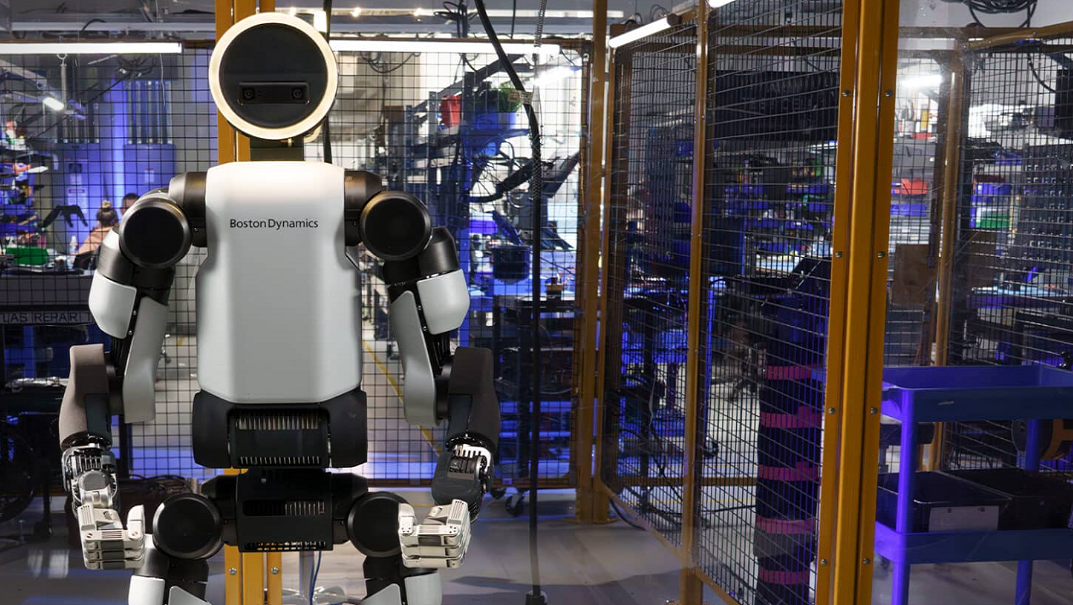
Boston Dynamics has opened a center inside Hyundai Motor Group’s Georgia automotive complex to train Atlas humanoid robots for factory logistics and parts handling. The Robotics Metaplant Application Center, near Savannah, moves Atlas beyond a deployment announcement and into task-specific preparation within an operating vehicle-manufacturing environment.
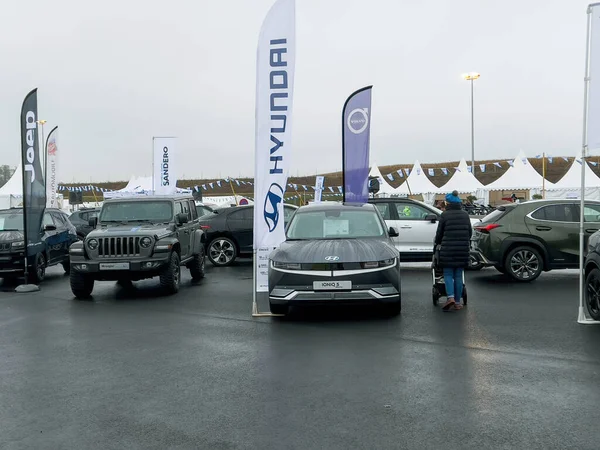
The initial work is narrower than the prospect of humanoid robots building complete cars. Atlas is being trained to prepare and sequence automotive parts, placing components in the correct order before assembly. Hyundai produces electric and hybrid vehicles at the site, including the Ioniq 5 and Ioniq 9.
Boston Dynamics has not disclosed how many Atlas robots are operating at the center. A handful of its employees have relocated from Waltham, Massachusetts, to Georgia to support the program. That makes the opening a concrete deployment step, but not evidence that Atlas is already working at production scale or assembling vehicles.
Parts sequencing comes before assembly
Parts sequencing is a practical starting point because it tests several capabilities without immediately assigning the robot a central assembly operation. Atlas must identify or receive the correct components, manipulate them reliably, move through a factory environment and maintain the required order for downstream work. Performance is determined not by a single successful demonstration but by repeatability, cycle time, handling errors and availability over sustained operation.
Boston Dynamics says the training scope will expand over time to repetitive motions and strenuous tasks such as lifting heavy loads. Component assembly is planned by 2030. Those are future capabilities rather than jobs Atlas is confirmed to be performing at the Georgia center today.
The company is already planning a larger physical footprint. Operations are expected to move into a new building at Hyundai’s Georgia campus in 2027, expanding the center to approximately ten times its current size. Boston Dynamics also plans to explore applications in other industries and has reported interest from existing users of its Spot inspection robot and Stretch logistics robot.
Hyundai’s broader robotics figures require an important distinction. The group plans to begin with 25,000 robots across Hyundai and Kia plants over the next few years and establish a US facility capable of producing 30,000 robots annually. Those figures should not be read as a confirmed Atlas fleet at the Georgia center. The current mix of robot types, deployment schedule and number of Atlas units in training remain undisclosed.
Safety depends on the complete work system
A humanoid robot combines mobile-machine and industrial-manipulator functions in one platform. Its control system has to coordinate sensing, balance, arm motion, gripping and payload handling while accounting for people and equipment nearby. A safe stop of one subsystem may not address hazards from an extended arm, a moving load or an unstable posture.
That is one reason safety cannot be established by applying a single label or standard. The Association for Advancing Automation’s guide to humanoid and general-purpose robot safety says the applicable framework depends on the intended task, operating environment, mobility, manipulation and level of human access. It also notes that no single standard comprehensively covers every such system.
For Hyundai, the relevant measure will be how Atlas performs within the complete production process: the robot, its tools and payloads, factory traffic, surrounding machinery and the employees who may share or enter its workspace. Boston Dynamics has said its goal is to make work safer and more productive, but it has not released operating-performance, productivity or safety results from the new center.
Workers want a role in deployment
The program also faces a labor constraint. Hyundai’s unionized autoworkers staged a partial strike in July over Atlas acquisition plans, according to The Wall Street Journal, and said robots would not enter factory floors without worker approval. The dispute concerns how automation may affect jobs and how much influence employees have over its introduction.
The organized opposition has emerged among Hyundai’s Korean union workers rather than at the company’s nonunion US factories. Reporting from The Korea Herald indicates that the Korean union stopped short of rejecting robotics outright; management and labor instead agreed to share information and jointly manage the manufacturing transition.
The Georgia center therefore begins with two parallel validation tasks. Boston Dynamics must show that Atlas can perform useful factory work consistently and safely, while Hyundai must determine how that work will be divided between robots and employees. The planned tenfold expansion in 2027 will make the program larger, but the undisclosed fleet size, absent performance data and unresolved worker-approval question still separate training from routine production deployment.
| More aerospace and engineering stories, right in your MSN feed. Follow AMI on MSN |
By Jonathan Barrett — Editor for AMI’s future mobility and autonomous systems section, with two decades covering robotics, e-mobility, drone-vehicle convergence, and transport mechanical systems.