

Pentagon Seeks $74.2 Billion as Drone Buildup Strains Ground-Unit Training
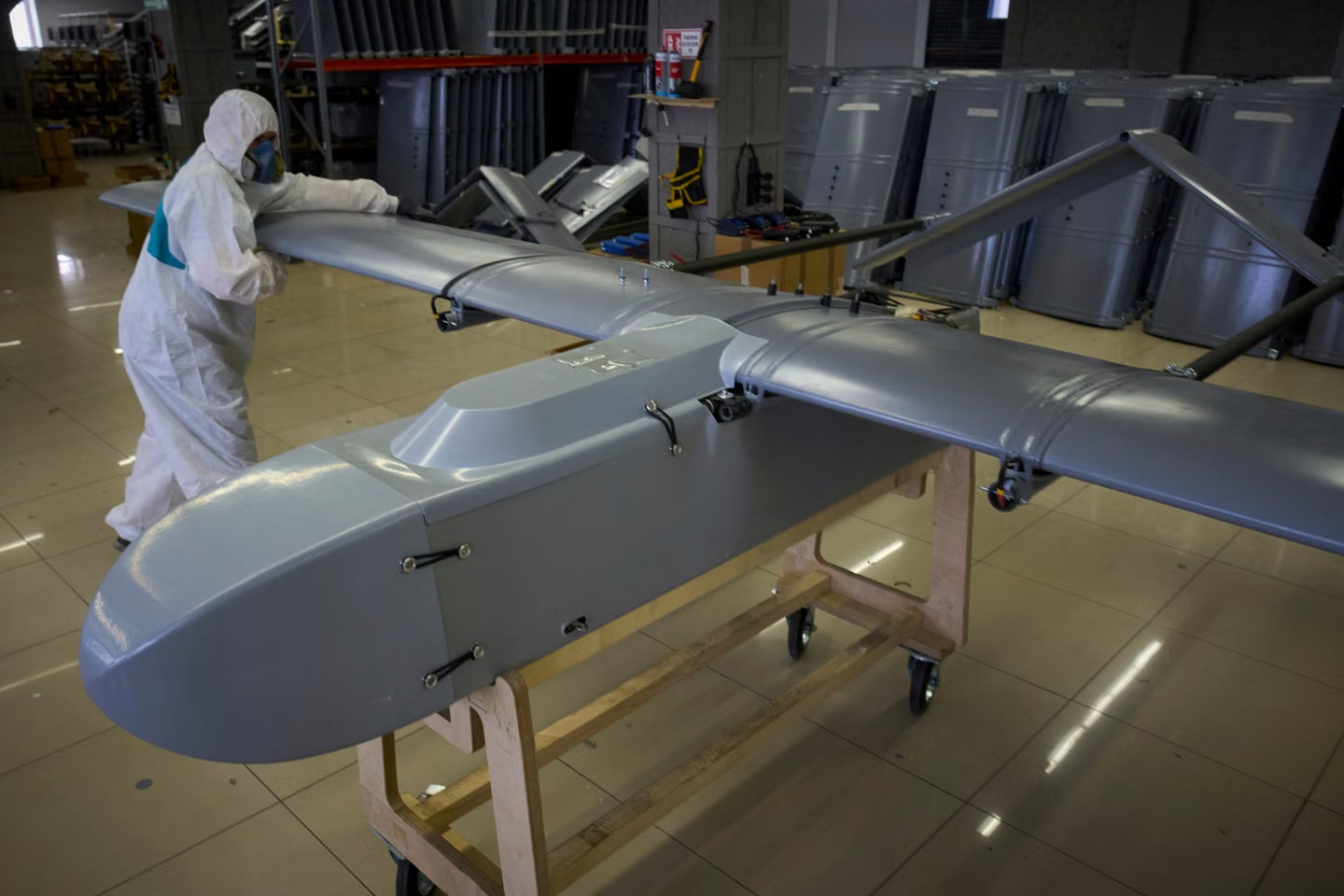
The Pentagon is asking for a combined $74.2 billion for drones and defenses against them, but equipment is reaching Army and Marine Corps formations faster than the services can settle every question about training, support and long-term fleet management. The fiscal 2027 request includes $53.6 billion for the Drone Dominance initiative and a separate $20.6 billion for counter-drone technology.
That distinction matters because buying large quantities of unmanned systems does not by itself create a ready force. Ground units must qualify operators, supply batteries and spare parts, maintain several models, establish purchasing standards and decide which systems deserve a lasting place in the inventory. Those duties arrive alongside personnel’s existing responsibilities.
Fielding is already moving at scale
The initiative is intended both to acquire unmanned systems and expand domestic production. An initial $1.1 billion was allocated to buy about 300,000 small attack drones by the end of 2027 and support training for senior officers. The Army has separately announced a goal of buying one million attack drones by 2028.
The Marine Corps offers a concrete measure of how rapidly equipment is moving. As of the end of May, every Marine infantry battalion had received 80 to 90 Neros Archer first-person-view attack drones, according to Col. Jeremie Hester, who leads the Corps’ Drone Dominance Task Force. Tens of thousands of drones, loitering munitions and counter-drone systems are also making their way into Army and Marine ground units.
A separate Marine Corps proof of concept, Organic Precision Fires-Light, is distributing three types of loitering munitions to two West Coast infantry battalions before a planned service-wide rollout. The Navy Department requested nearly $99 million for the program in fiscal 2027, and a Navy budget document identified Teledyne’s Rogue 1 and Anduril’s Bolt among the notable options.
The task force is working on operating practices, training and a list of systems acceptable for purchase. Hester said increased funding and equipment were helping the Marines move faster. Speed, however, shifts pressure downstream: every additional model creates demand for instructors, maintainers, storage, charging, parts and technical documentation.
Training throughput is the immediate constraint
Army and Marine basic courses for these systems run for at least one week. The Army’s more advanced Unmanned Advanced Lethality Course lasts three weeks. Since that course began in September, three classes had graduated, each with 20 to 28 soldiers.
That means the reported advanced-course output so far totals between 60 and 84 graduates. Compared with acquisition plans measured in hundreds of thousands of systems, the numbers illustrate why training capacity not merely whether an individual controller is intuitive will help determine readiness.
Critics have questioned whether compressed courses can develop sufficient proficiency. Army officials say the schedule reproduces operational pressure, while early Marine evaluations found the controller interfaces intuitive and the workload manageable. Both points can be true: accessible controls can shorten initial instruction, but sustained proficiency also depends on repetition, instructor availability and the ability of units to make time for training.
Marine capabilities integration officer Travis Bowden warned that adding drone responsibilities to the workload of young riflemen is “not always a recipe for success.” His concern identifies a force-design choice that procurement totals cannot resolve: whether drone operation and support remain extra duties or become more specialized assignments as fleets expand.
Multiple suppliers preserve competition but complicate support
The Army and Marine Corps are buying multiple makes and models rather than defining one precise design and selecting a single supplier. Officials argue that the strategy preserves competition and allows unsuitable products to be replaced. It may also give domestic manufacturers more routes into Pentagon procurement.
The engineering cost is configuration management. Different systems can require distinct batteries, chargers, replacement components, software procedures and training material. A diverse fleet therefore needs disciplined purchasing rules and common support practices, or units can acquire nominal capacity that is difficult to keep available.
The budget itself remains a request subject to congressional action. A Congressional Research Service review of the fiscal 2027 defense budget notes that nearly all requested Drone Dominance funding is mandatory rather than discretionary. CRS also cautions that its weapon-system totals generally exclude operations and maintenance and military-personnel accounts the categories that can carry important costs for sustaining and operating equipment.
For taxpayers and ground units, that is the central boundary around the $74.2 billion headline figure. Procurement can put drones into formations quickly; readiness will depend on whether training pipelines, personnel assignments, batteries, spares and supplier standards grow with them. The next decisive milestone is not simply how many systems are purchased, but how many units can keep their expanding mix trained, supported and available.
| More aerospace and engineering stories, right in your MSN feed. Follow AMI on MSN |
By Stephen Wallace — Editor for AMI’s aerospace integration and unmanned mobility coverage, focused on drone manufacturing, VTOL systems, autonomous networks, and air-ground mobility links.