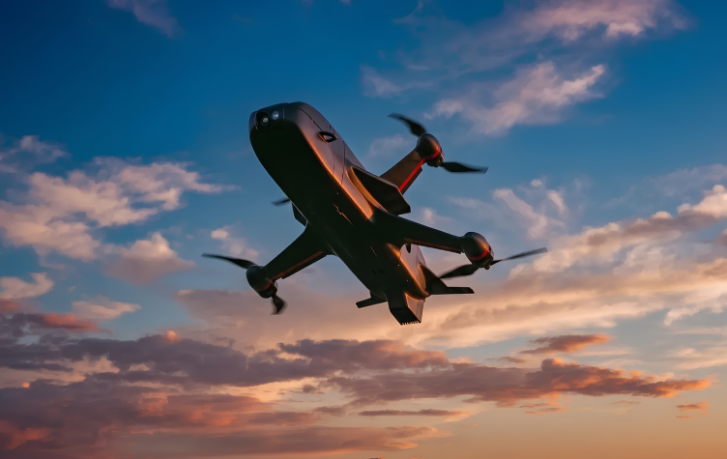
Ukraine Says New Interceptor Engaged Russian Jet Drones; Cost, Scale Unclear
President Volodymyr Zelensky announced that a new Ukrainian interceptor drone has been created, deployed and successfully used against jet-powered Shaheds. Following a Sept. 19 briefing by acting Security Service of Ukraine chief Oleksandr Poklad, Zelensky attributed the system to the service’s military-counterintelligence department and said manufacturers were working to expand production, according to a published account of the announcement.
Claimed operational use is a meaningful step beyond prototypes and flight trials. Yet no disclosed performance, cost or production data show whether the interceptor can consistently preserve the speed margin and availability needed against Russian jet-powered drones reported to travel at 400–600 kilometers per hour. Ukraine has not publicly provided the interceptor’s speed, engagement geometry, unit cost, reliability or production rate.
That leaves a central tension between technical success and system-level readiness. A single successful engagement can validate basic functions such as detection, guidance, control and terminal interception under operational conditions. It does not establish repeatability across different altitudes, routes, weather conditions or target types, nor does it demonstrate that enough interceptors can be manufactured and fielded for sustained defensive coverage.
The distinction matters because Ukraine has reported a widening performance gap between defenses against conventional propeller-driven drones and faster jet-powered models. Air Force spokesperson Yuriy Ihnat put interception effectiveness at about 60% against jet-powered drones, compared with 90–95% against propeller-driven aircraft. Those figures were attributed to Ukrainian authorities and should not be read as independently verified fleet-wide test results, but they define the readiness problem the new interceptor is intended to address.
Overall overnight interception percentages can therefore conceal a weaker result against the fastest portion of an incoming group. Ukraine reported rates between 79% and 96% across five overnight periods from Aug. 27 through Aug. 31, even as the jet-powered share of Shahed-type drones reportedly increased from about one-third on Aug. 27 to half the next day and most of the group on Aug. 30–31. Ihnat said Russia launched more than 2,800 jet-powered drones during August.
The operating tempo adds another manufacturing constraint. Beginning Aug. 27, Russia reportedly shifted from occasional large swarms toward near-continuous waves extending across daytime and nighttime hours. Ukrainian Air Force morning briefings recorded an average of about 188 drones per night from Aug. 27 through Aug. 31, compared with roughly 160 during the equivalent reporting window in July. Incomplete daytime figures prevent a reliable comparison of full-day totals.
More recent reporting indicates that jet propulsion remains a substantial part of the campaign rather than an isolated experiment. During the night of Sept. 20–21, Ukraine’s Air Force said Russia launched 172 drones of various types, including 64 jet-powered Shaheds. It claimed that defensive systems destroyed or suppressed 147 drones and one other aerial system, as detailed in the Air Force figures reported after the attack. Those aggregate numbers do not disclose how many jet-powered Shaheds were intercepted or which defensive systems accounted for them.
For an interceptor program, scaling means more than increasing airframe output. Propulsion units, sensors, flight-control electronics, communications equipment, batteries or fuel systems, launch equipment and trained operators all have to arrive at compatible rates. Quality assurance also becomes more consequential as production rises: an interceptor that performs in selected engagements may still need consistent manufacturing tolerances and dependable field support before it can carry a substantial share of national air defense.
Cost is equally important, although no unit-price comparison has been disclosed. Interceptor drones are being pursued partly to reduce pressure on conventional air-defense assets, but that benefit depends on the complete cost of detection, launch, control, maintenance and replacement not merely the interceptor airframe. A system that works but cannot be produced quickly or used economically against repeated waves would remain a limited supplement.
Ukraine has previously evaluated several domestic interceptor candidates, including jet-powered designs, while conventional air defenses continue to carry part of the burden. Zelensky’s announcement advances that effort from testing to claimed operational success. The next decisive evidence will be repeatable interception data and a production rate showing that the new system can move from a successful deployment to sustained coverage against thousands of faster drones.
| More aerospace and engineering stories, right in your MSN feed. Follow AMI on MSN |
By Stephen Wallace — Editor for AMI’s aerospace integration and unmanned mobility coverage, focused on drone manufacturing, VTOL systems, autonomous networks, and air-ground mobility links.