Navy Acknowledges USS Abraham Lincoln Lacked Fresh Resupply but Missed No Meals
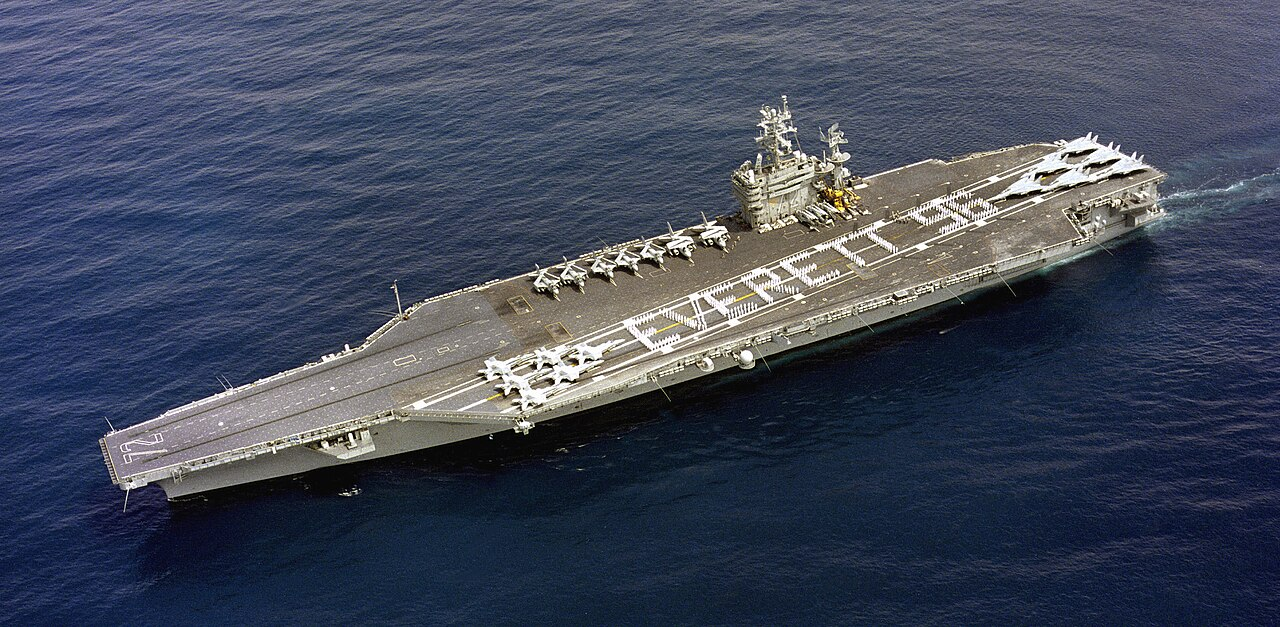
Acting Navy Secretary Hung Cao acknowledged that USS Abraham Lincoln had to adjust its meal plans when fresh resupply was unavailable, although he said the crew did not miss a single meal. The admission, included in Cao’s statement announcing the carrier’s planned return, gives official confirmation that the ship’s extended operations affected what its galley could serve even as Navy leaders disputed broader accounts of conditions aboard.

That distinction matters on a nuclear-powered aircraft carrier. Its reactors provide extraordinary propulsion endurance, but they do not eliminate the ship’s dependence on outside deliveries for food and other consumable supplies. A carrier can remain underway without refueling its propulsion plant while the thousands of people aboard still depend on a replenishment system whose timing, cargo mix and access can shape daily life.
Cao did not characterize the adjusted menus as missed meals or a failure to feed the crew. His wording instead draws a narrower operational boundary: fresh provisions were not always available, so planners changed what was served. Shelf-stable and frozen supplies can sustain meals when fresh food is constrained, but a menu change is still a tangible sign that logistics conditions have reached sailors’ mess decks.
Endurance depends on more than the reactors
The Navy sustains deployed ships through a combination of logistics vessels, ports and other support infrastructure. The Seventh Fleet describes roughly 50 government-owned or contracted combat logistics ships supporting continuous operations across its region. That network illustrates the scale behind the apparent self-sufficiency of a carrier strike group: endurance is produced by both the ship’s onboard systems and a chain of recurring deliveries.
Food is also only one element of that chain. Consumables, mail and routine support must continue moving even when port access is limited. The engineering advantage of nuclear propulsion is therefore specific rather than absolute. It removes frequent propulsion-fuel stops from the carrier’s operating equation, but it does not make the crew or the rest of the ship independent of external logistics.
Lincoln’s circumstances pushed that distinction into public view. The carrier spent more than 250 uninterrupted days at sea during an extended deployment. Reports described crew strain, mental-health difficulties and shortages involving food, hygiene products and other basics. Defense Secretary Pete Hegseth said descriptions of conditions had been “completely misrepresented,” while Cao acknowledged the unavailable fresh resupply and said a small number of mental-health cases had been treated without loss of life.
The Navy has not established a complete public return schedule or said whether Lincoln will make a port call on the voyage to the United States, which is expected to take slightly more than a month. Adm. Brad Cooper, commander of U.S. Central Command, visited the carrier, commended its leaders for emphasizing mental health and resilience, and told the crew it was going home.
Relief for Lincoln creates pressure elsewhere
USS George Washington arrived in the Middle East on August 19 to relieve Lincoln, according to U.S. Central Command. The swap gives Lincoln’s crew and ship a path out of the deployment while preserving a carrier presence alongside USS George H.W. Bush in the region.
It also transfers the availability problem rather than eliminating it. George Washington is the Navy’s forward-deployed carrier in Japan, intended to provide a persistent aviation presence in the Western Pacific with less transit time than a carrier based in the continental United States. Moving it to the Middle East leaves Asia without a U.S. carrier strike group for now, at a time of continuing concern over China’s military posture.
Another carrier could deploy to the Pacific in the coming months, but no replacement ship or firm schedule has been confirmed. That uncertainty exposes the fleet-level cost of extending a scarce platform: relieving one exhausted crew can require accepting reduced carrier coverage in another priority region.
The unanswered questions now concern duration and recovery. Lincoln’s return date, George Washington’s expected assignment length and the plan for restoring Pacific carrier coverage remain unconfirmed. Cao’s acknowledgment settles one narrower point, however: nuclear propulsion kept Lincoln moving, but it could not keep fresh food aboard when the external supply chain could not deliver it.
| More aerospace and engineering stories, right in your MSN feed. Follow AMI on MSN |
By David Whitaker — Associate editor for AMI’s aerospace and drone systems desk, translating flight systems, aircraft programs, spaceflight, and UAV developments into accessible technical stories.