Reported Patriot Shortage in Europe Raises Urgency of Production Expansion
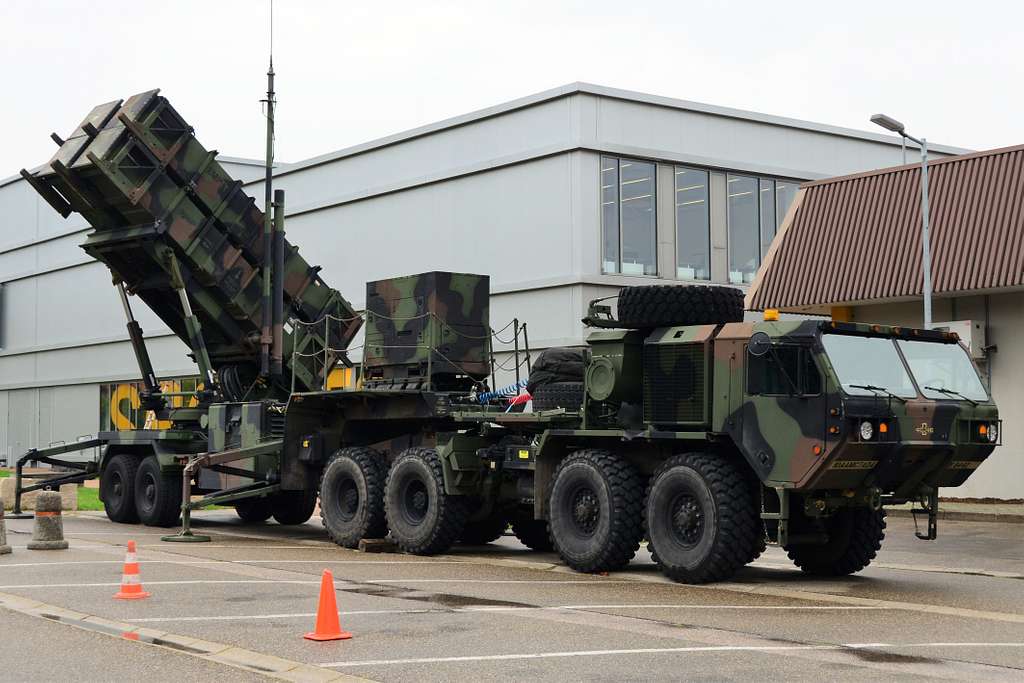
U.S. Patriot interceptor inventories in Europe are “beyond critical” after missiles were redirected to and expended in the Middle East, largely during the Iran war, a U.S. defense official in Europe and a NATO official told The Associated Press. The officials, who were not identified, also pointed to earlier transfers supporting Ukraine as part of the drawdown.

The Pentagon and NATO disputed that characterization. Chief Pentagon spokesman Sean Parnell called claims of U.S. munitions shortages false, while NATO military spokesperson Army Col. Martin O’Donnell said it was “simply not the case” that European Patriot stocks were beyond critical. That disagreement makes one missing detail in the Pentagon’s production plan especially important: officials have announced a threefold increase in Patriot interceptor capacity, but have not disclosed when that higher rate will translate into sustained deliveries.
The distinction between inventory and production capacity is central to understanding the dispute. A military can retain enough interceptors for its formally assigned requirements while still having little flexibility for unexpected expenditures, transfers to allies or simultaneous demand in several regions. Inventory figures, readiness thresholds and allocation plans are generally not public, so the competing official accounts cannot be resolved from disclosed totals alone.
Outside estimates nevertheless indicate a constrained supply. The Center for Strategic and International Studies previously estimated that the U.S. military held fewer than 1,000 Patriot interceptors and fewer than 250 interceptors for the Terminal High Altitude Area Defense system, known as THAAD. Those are think-tank estimates, not Pentagon-confirmed inventory figures, and should not be treated as precise counts. They do show why a production increase measured in multiples can still take time to change the operational picture.
Factory capacity is not the same as delivered missiles
The United States has signed a framework agreement worth more than $3 billion with Lockheed Martin and Northrop Grumman to expand production of components for Patriot and THAAD interceptors. The Pentagon says the effort is intended to triple Patriot production and quadruple THAAD output. A separate Lockheed Martin contract covering Patriot interceptor production has a potential value of up to $58.6 billion.
Those headline values and output targets establish demand, but they do not establish a replenishment date. Missile production depends on qualified suppliers, specialized facilities, trained workers, component testing and final-system acceptance. Increasing the capacity of one supplier does not necessarily raise completed-interceptor output if another stage remains constrained. New equipment and production lines also must demonstrate repeatable quality before they can support a reliable delivery rate.
The Pentagon’s seven-year production framework is designed to provide minimum annual procurement quantities and a more predictable demand signal for industry. That structure can support workforce growth, bulk material purchases and facility upgrades. Funding remains subject to annual appropriations, however, leaving a gap between the long-term industrial objective and the year-by-year money required to sustain it.
That gap has a direct public-cost consequence. Multiyear commitments can reduce uncertainty and make private investment in additional capacity more rational, but taxpayers still need measurable milestones showing when spending produces accepted interceptors rather than only larger factories or theoretical maximum output. The most useful benchmarks would be dated production-rate targets, delivery quantities and evidence that lower-tier suppliers can maintain quality as volume rises.
Allies compete for access to the same constrained output
The allocation problem extends beyond the U.S. military. Patriot operators in Europe, Ukraine and the Middle East draw on an industrial network that cannot expand instantly when demand shifts. Sending interceptors to one region may address an immediate requirement while reducing the reserve available elsewhere, even when every transfer is planned and authorized. Production growth therefore has to cover continuing consumption, allied orders and the rebuilding of reserves not merely replace a fixed number of missiles.
The Pentagon’s threefold and fourfold targets are meaningful because they acknowledge that current manufacturing rates are not sufficient for projected demand. They do not, by themselves, settle whether Europe’s present inventory is adequate or whether the reported shortage has crossed an official readiness threshold.
The next decisive disclosure is not another contract ceiling. It is the schedule showing when expanded component capacity becomes completed, tested and delivered Patriot interceptors. Until that timetable is public, the Pentagon’s production expansion remains a large commitment with an unresolved readiness deadline.
| More aerospace and engineering stories, right in your MSN feed. Follow AMI on MSN |
By David Whitaker — Associate editor for AMI’s aerospace and drone systems desk, translating flight systems, aircraft programs, spaceflight, and UAV developments into accessible technical stories.