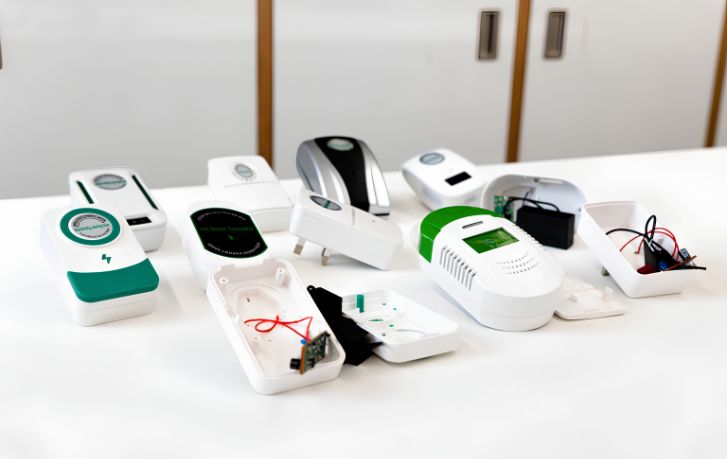
Electrical Safety First: All 13 Energy-Saving Plugs Fail, Two Explode
Thirteen plug-in devices marketed as easy ways to lower household electricity bills produced a uniform result in safety testing: every one failed. Two effectively exploded during laboratory short-circuit tests, according to an investigation published by Electrical Safety First on October 1, 2026.
The UK consumer electrical-safety charity bought the products from third-party sellers on AliExpress, Amazon Marketplace and TikTok Shop. Sold under descriptions including energy-saving devices, voltage stabilisers and “eco plugs,” they purported to balance current, optimize appliances and reduce electricity use after being inserted into a spare wall socket. Electrical Safety First said the tested products were illegal to sell in the United Kingdom.
The first failure was mechanical
None of the 13 devices met the applicable dimensional and mechanical-strength requirements for its plug pins. Those requirements are not cosmetic: pin size, alignment and strength determine whether a plug fits correctly, remains mechanically secure and can be removed without breaking apart.
Electrical Safety First warned that a poorly constructed pin could snap under force and remain inside the wall socket. A person attempting to remove the broken piece could then encounter an exposed live component, creating an electric-shock hazard. This finding separates the investigation from a simple dispute over advertising. Before the internal electronics are considered, the physical interface connecting every tested product to household mains power was already noncompliant.
Internal protection was missing or unsuitable
Inspection found little more than a small circuit board inside each device. In most cases, the circuitry simply powered an indicator light. Some units appeared to contain a capacitor or filter, but Electrical Safety First found that these parts were empty plastic boxes or were not connected to the circuit.
The charity consequently concluded that none of the tested devices contained components capable of delivering the advertised savings. The illuminated indicator itself consumed electricity, meaning the units required power to operate. That is a finding about these 13 products, not proof that every device using voltage-management technology is ineffective.
The more immediate concern was how some units would respond to an electrical fault. Investigators found devices with no internal fuse or other suitable protective circuit. Others used glass fuses in the mains circuit. Electrical Safety First said those fuses did not satisfy the applicable UK requirements for these products because they could shatter under pressure, potentially creating shock and fire hazards rather than containing a fault safely.
Further examination took place at an external specialist laboratory. The two explosions occurred during short-circuit testing intended to assess whether the products could manage a fault without causing further damage. The outcome indicates inadequate fault containment in those two specimens; the available findings do not establish how frequently such a failure would occur in homes.
Marketplace controls become part of the safety system
The warning arrived as the UK energy price cap increased by 4% on October 1. That timing matters because products promising effortless reductions may become more attractive when household costs rise, even though buyers cannot readily inspect pin strength, fuse selection or internal circuitry from an online listing.
The marketplaces acted on the identified listings. According to TikTok, TikTok Shop removed the flagged products and notified customers with safety guidance. AliExpress said it removed five identified listings, was contacting affected customers to initiate a recall and was reviewing the broader category. Amazon said the flagged products were removed and that such items are not permitted under its seller guidelines.
Removal after testing addresses known listings, but it does not by itself prevent similar products from returning under different sellers or descriptions. Electrical Safety First noted that four energy-saving devices were recalled in 2022 over serious electric-shock and fire risks, yet near-identical products were still available four years later.
The charity is calling for online marketplaces to carry legal responsibility for the safety of goods offered by third-party sellers. The UK government is considering duties that would require platforms to prevent unsafe products from being listed, supported by enforcement powers and penalties. At present, Electrical Safety First says marketplaces are not legally treated as part of the traditional supply chain and therefore have no direct responsibility for ensuring third-party products are safe.
For these 13 plugs, the promised bill reduction was not merely unsupported by their internal construction. The products also failed at the physical pins, protective components and fault-containment functions that stand between ordinary household use and mains electricity.
| More aerospace and engineering stories, right in your MSN feed. Follow AMI on MSN |
By Thomas Caldwell — AMI’s senior editor for mechanical and mobility engineering, covering vehicle electronics, systems integration, electrification, chassis systems, propulsion, and safety policy.