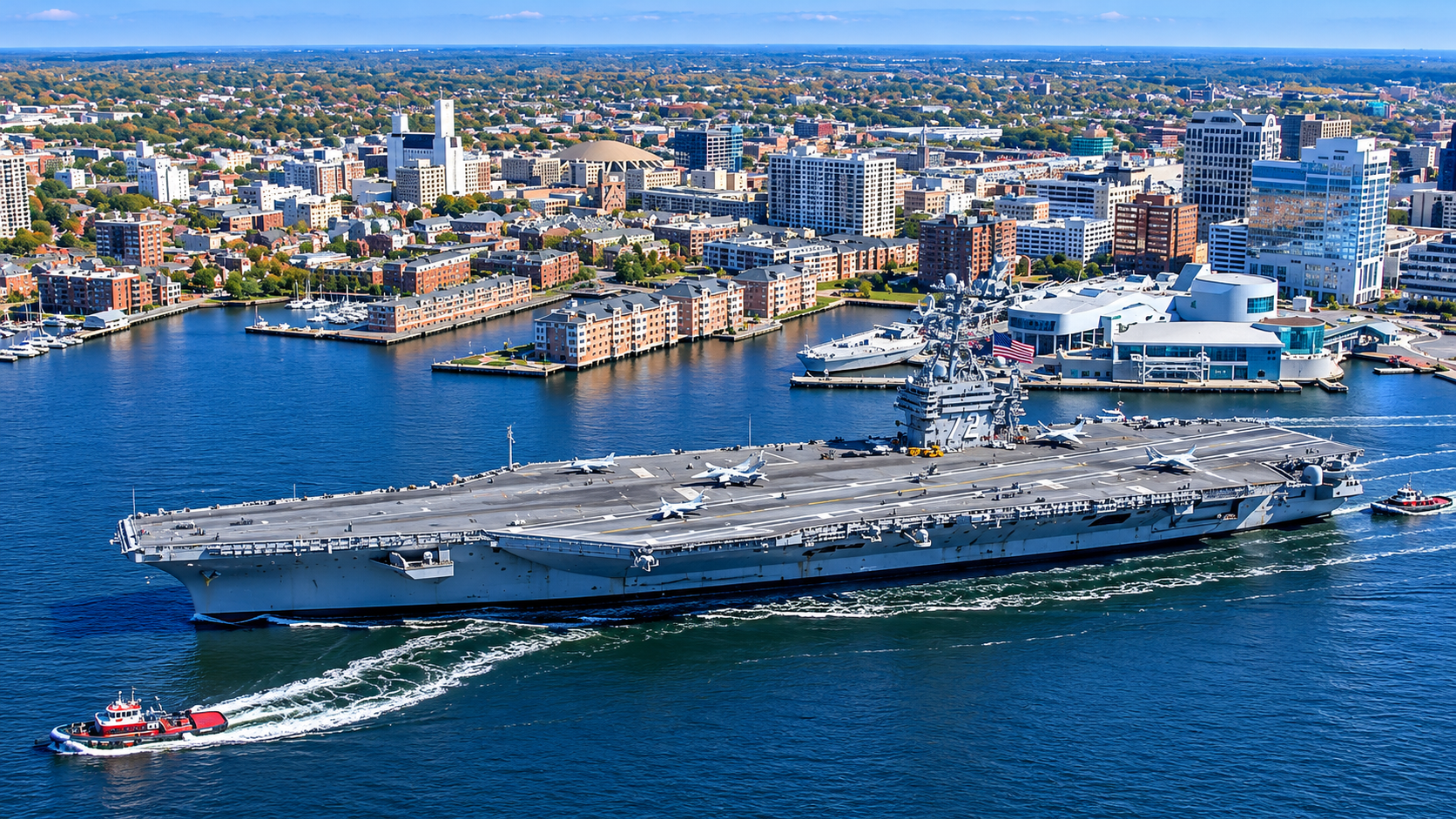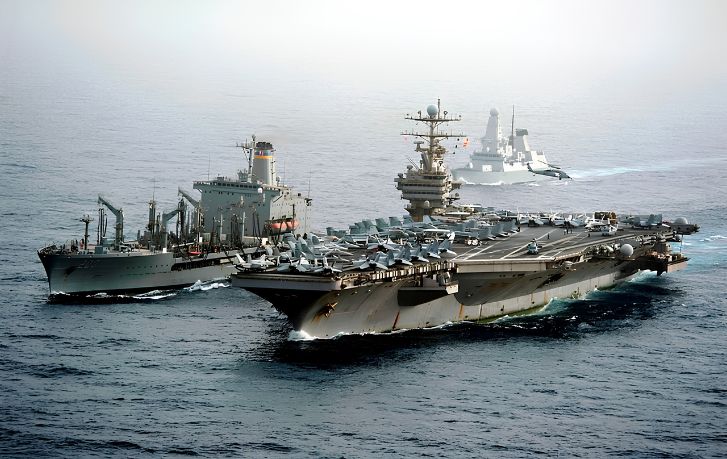
USS Abraham Lincoln Heads Home After 302-Day Carrier Deployment
USS Abraham Lincoln reached Guam after 302 days deployed, putting the aircraft carrier and its embarked air wing on the final legs of their return to the West Coast. The Sept. 19 logistics stop marked the strike group personnel’s first return to American soil in nine months, and Lincoln was expected to reach the West Coast in early October.

The voyage ranks as the second-longest U.S. carrier deployment since the Cold War, behind USS Gerald R. Ford’s 326-day deployment. Lincoln’s homeward transit ends its immediate endurance test, but not the wider pressure on the fleet: Navy leaders are planning for continued extended Middle East rotations, and sailors and families assigned to USS Theodore Roosevelt have been told to plan around an absence of roughly eight months.
Lincoln’s return has continued to progress since Guam. A defense official said the carrier, USS Frank E. Petersen Jr. and Carrier Air Wing 9 were sailing near Hawaii toward California on Sunday. By Monday, Lincoln had accumulated 311 deployed days, extending an already exceptional cruise as the group crossed the Pacific.
The carrier had spent more than eight months in the Middle East without a port call. Its Sept. 2 arrival in Thailand was its first full port visit since the deployment began in November 2025, according to the U.S. Navy’s account of the visit. Lincoln then stopped in Guam for logistics and on-base liberty before continuing east.
Another West Coast carrier takes the load
As Lincoln approaches home, USS Theodore Roosevelt has departed San Diego as the flagship of Carrier Strike Group 9. A defense official confirmed that Roosevelt had begun its planned deployment with Carrier Air Wing 11. The group is expected to cross the Pacific and enter the U.S. Central Command area, where it would relieve the Japan-based USS George Washington, although its destination and complete schedule have not been officially confirmed.
That departure shifts the readiness question from one unusually long deployment to the Navy’s ability to repeat extended rotations across a finite carrier force. Recent requirements have redirected West Coast carrier groups from more traditional Indo-Pacific deployments toward the Middle East. Each move affects not only the ship at sea but also the allocation of escorts, aircraft, trained personnel and future maintenance capacity.
The human planning burden is already explicit. Master Chief Petty Officer of the Navy John Perryman said Roosevelt sailors know they will be away for longer than seven months. “Their commanding officer is giving them eight months to plan on,” Perryman said. That guidance does not establish Roosevelt’s final itinerary, but it gives families a concrete assumption for an extended absence before the carrier reaches its anticipated operating area.
Longer deployments also carry a maintenance consequence after a ship returns. Acting Secretary of the Navy Hung Cao told lawmakers in May that every additional 30 days deployed adds 6 percent to a carrier’s maintenance burden. The figure describes a fleet-planning estimate rather than Lincoln’s final maintenance package, which has not been detailed publicly, but it illustrates why deployment length cannot be separated from future availability.
USS Gerald R. Ford provides the nearest benchmark. Ford returned after 326 days and entered a planned maintenance period that the Navy expects to complete in six months, alongside a separate effort addressing fire damage. Lincoln’s previous 294-day deployment in 2019 and 2020 had ranked behind Ford before the current cruise passed it.
Lincoln is now close to completing the second-longest post-Cold War carrier deployment. Roosevelt’s departure shows why that record is more than a historical statistic: one crew’s return is overlapping with another crew’s preparations for about eight months away, transferring the personnel, maintenance and fleet-allocation pressure to the next West Coast strike group.
| More aerospace and engineering stories, right in your MSN feed. Follow AMI on MSN |
By David Whitaker — Associate editor for AMI’s aerospace and drone systems desk, translating flight systems, aircraft programs, spaceflight, and UAV developments into accessible technical stories.