


USS Theodore Roosevelt Becomes Third US Carrier as Strait of Hormuz Traffic Slumps
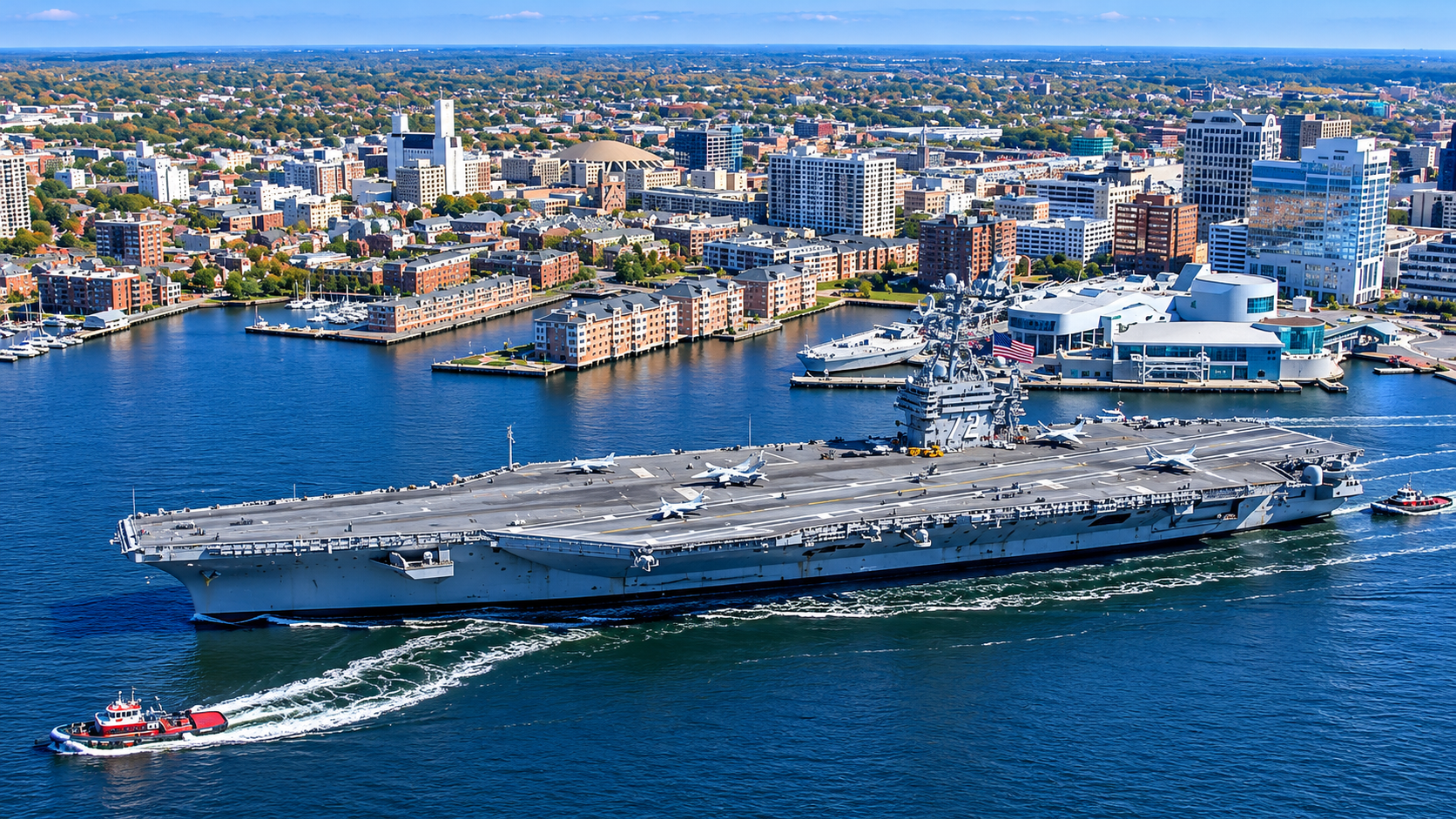
The USS Theodore Roosevelt arrived in the Middle East on Monday, becoming the third American aircraft carrier operating in the region while commercial traffic through the Strait of Hormuz remains severely disrupted. US Central Command confirmed the arrival on social media. The carrier joins the USS George H.W. Bush, which arrived in April, and the USS George Washington, which arrived in August.

The Theodore Roosevelt strike group left San Diego in September and adds thousands of US personnel to a deployment supporting the continuing blockade of Iranian shipping. Diplomacy remains stalled over Washington’s proposed nuclear restrictions and Tehran’s demand that the blockade be lifted, leaving a growing naval presence operating alongside an unresolved political process.
Three carriers are only part of the deployment
US Navy figures cited for the regional force show the scale beyond the carrier count. The Arabian Sea flotilla comprises three aircraft carriers, 13 destroyers, two cruisers and one littoral combat ship. Two more American destroyers are deployed in the Red Sea.
The USS Makin Island amphibious readiness group has also deployed with the USS John P. Murtha, USS Anchorage and approximately 2,000 Marines, although that group had not yet reached the region. Once carrier aviation, escort ships, amphibious vessels and shore-based support are considered together, the buildup represents a large integration and sustainment task rather than the simple addition of another flight deck.
A third carrier expands the force’s available personnel, aircraft-support capacity and command infrastructure. It can also distribute operational demands across more ships. But concentrating this much naval power requires continuous fuel, supplies, maintenance, communications and coordination across a wide maritime area. The deployment’s practical value therefore depends on the readiness of the full supporting system, not merely the number of carriers present.
That distinction is especially important because the immediate public consequence is being measured in merchant traffic. Before the conflict, approximately one-fifth of global oil flows passed through the Strait of Hormuz. Lloyd’s List estimated that traffic through the waterway remained below one-third of its prewar level. CENTCOM said US forces had redirected 150 merchant vessels and disabled five since June during blockade operations.
Naval scale has not restored normal shipping
The reduced traffic indicates that a larger military presence has not by itself returned the strait to normal commercial operation. Shipping companies must account for crew safety, vessel availability, insurance, cargo schedules and the possibility that a transit will be delayed or interrupted. Those decisions can remain conservative even when more naval assets are present.
The operating environment remains hazardous. UK Maritime Trade Operations reported that an unidentified projectile struck a tanker transiting the strait, causing an engine-room fire. No casualties were reported, and responsibility was not attributed. Iranian naval authorities separately attributed damage to six tankers to naval mines. Bahrain’s military also said it intercepted drones that Iran said were aimed at a US radar installation at a helicopter base.
The commercial effects extend beyond ships waiting to transit. The US Energy Information Administration reported that global refinery crude-oil inputs fell by 4.8 million barrels per day, or 6%, in the second quarter of 2026 after conflict began in late February. Inputs recovered by 1.8 million barrels per day in the third quarter as refiners adjusted to new flows, alternative routes and ship to ship transfers, but remained about 5% below the same period in 2025.
Those figures show the operating boundary around the naval buildup: additional carriers can increase military capacity, but they cannot independently resolve negotiations, remove every hazard to commercial vessels or quickly unwind supply-chain adaptations already made by refiners and shipping operators.
Conflicting signals leave the mission open-ended
President Donald Trump is weighing his next move in the war. He has described US forces as “locked and loaded” and said, “If something does not work out, I would not hesitate,” while also saying the war “militarily is effectively over.” The statements leave the duration and political endpoint of the expanded deployment unclear.
Iranian Foreign Minister Abbas Araqchi and Pakistan Army chief Asim Munir discussed regional security on Monday. Pakistan previously helped facilitate the Islamabad Memorandum, an interim agreement that later faltered amid renewed hostilities. For now, the clearest measurable change is at sea: the Theodore Roosevelt has raised the US carrier presence to three, while traffic through a waterway that once carried roughly one-fifth of global oil flows remains below one-third of normal.
| More aerospace and engineering stories, right in your MSN feed. Follow AMI on MSN |
By Thomas Caldwell — AMI’s senior editor for mechanical and mobility engineering, covering vehicle electronics, systems integration, electrification, chassis systems, propulsion, and safety policy.


