Flydubai Flight FZ1073 Attack Used an Axe Required for Cockpit Emergencies
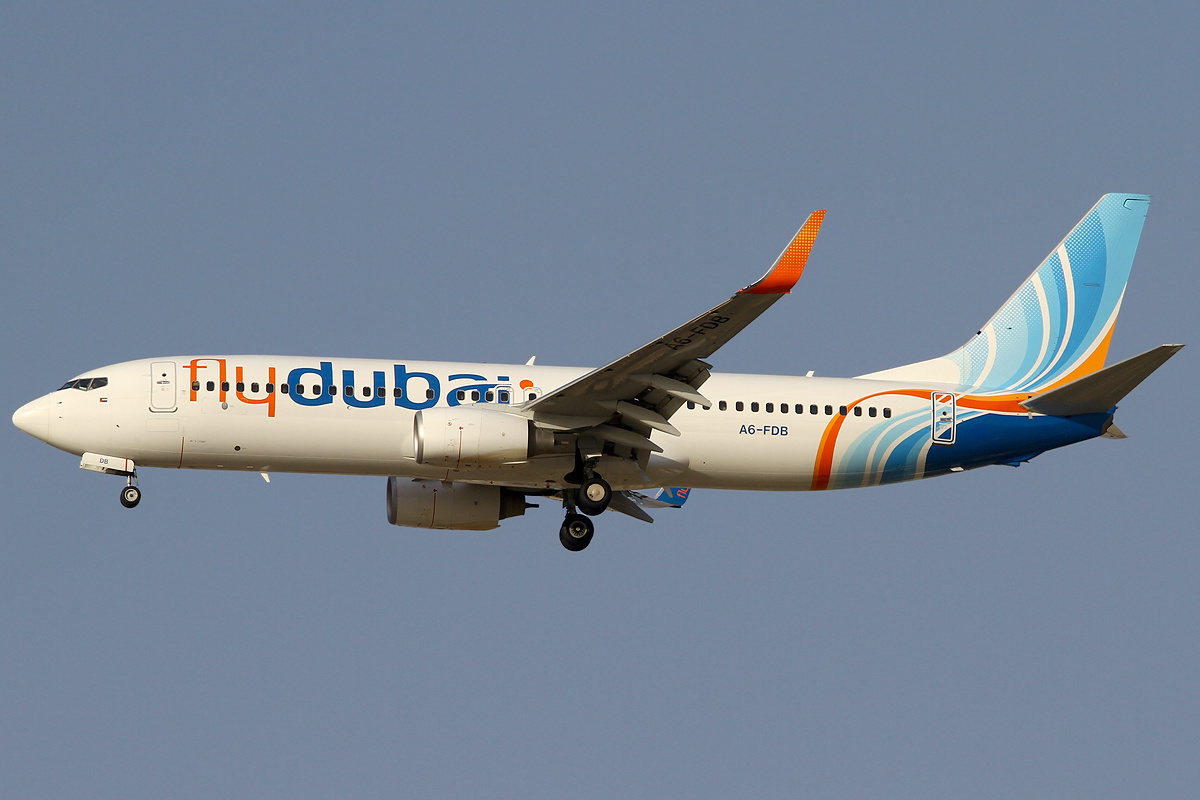
A crash axe is carried aboard an airliner so crews can break through a window, door or panel when normal access is blocked during an emergency. On flydubai Flight FZ1073, however, UAE investigators say that required safety equipment was used by the co-pilot to assault the captain and attempt to take control of the Boeing 737 during its September 30 flight from Dubai to Tel Aviv.
The UAE prosecutor general characterized the alleged conduct as an attempted terrorist act in findings announced October 3. But this remains an active investigation, not a final determination of every circumstance. Authorities are still examining motive, possible connections, physical and digital material, and other details surrounding the incident. Flydubai has likewise said that a full official investigation remains underway.
The aircraft diverted to Tabuk Airport in Saudi Arabia and landed safely. Crew members were injured, all passengers were accounted for, and the captain subsequently returned to the UAE after receiving medical clearance. Flydubai sent two replacement aircraft to Tabuk and suspended flights to and from Israel while the investigation continued.
Why the axe was aboard the Boeing 737
The presence of the axe was not an exception or an improvised choice by the crew. Under the cited 2025 UAE General Civil Aviation Authority regulations, an aeroplane must have at least one crash axe or crowbar if its maximum certified takeoff mass exceeds 5,700 kilograms or if its approved operating configuration has more than nine passenger seats.
Either threshold is sufficient, and flydubai’s aircraft exceed both by wide margins. The airline operates Boeing 737-800, 737 MAX 8 and 737 MAX 9 aircraft. Their listed maximum certified takeoff masses are 79,010 kilograms, 82,640 kilograms and 88,310 kilograms, respectively. FZ1073 carried 174 passengers, also placing the operation far above the nine-seat threshold.
The rule specifies that the required tool must be kept in the flight crew compartment. An aircraft configured for more than 200 passengers must carry an additional axe or crowbar in or near the rearmost galley. If such a tool is located in the passenger compartment, it should not be visible to passengers. Because FZ1073 carried 174 passengers, that figure alone does not establish whether the separate over 200 seat provision applied; the requirement depends on the aircraft’s approved seating configuration, not the passenger count on one flight.
A safety function with a security consequence
The regulation reflects a basic emergency-design problem. Aircraft structures, interior panels and doors can become jammed or inaccessible after an accident, fire or deformation. A self-contained manual tool remains usable when electrical power, powered equipment or ordinary access mechanisms are unavailable. Keeping it near the flight crew makes it immediately available to personnel expected to manage an emergency.
That accessibility is also the source of the tension exposed by FZ1073. Equipment designed for rapid use cannot perform its intended function if it is so inaccessible that crews cannot retrieve it under time pressure. Yet an accessible cutting and breaching tool can create a security hazard if misused by someone already authorized to be in the cockpit.
This incident does not, by itself, prove that the regulation is defective or establish what policy response would produce a better overall safety result. Removing the tool could reduce one particular misuse risk while weakening emergency access capability. Changing its location, restraint or access arrangements could likewise introduce delays during the emergencies for which it is carried. The available findings do not establish whether equipment design, storage practice, personnel controls or another factor should change.
That distinction matters because the investigation is addressing more than the identity of the object used. Authorities still need to establish the full circumstances and motive before regulators or operators can determine whether the event indicates a specific equipment-policy gap, a personnel-security issue, or an exceptional act that existing requirements did not anticipate.
The immediate operational consequence is already clear: a required emergency tool became part of a cockpit security incident, the flight diverted, passengers’ journeys were disrupted and relevant Tel Aviv services were suspended. The harder certification and human-factors question remains unresolved how to preserve rapid access to a last-resort escape tool without creating an unacceptable risk inside aviation’s most security-sensitive compartment.
| More aerospace and engineering stories, right in your MSN feed. Follow AMI on MSN |
By Thomas Caldwell — AMI’s senior editor for mechanical and mobility engineering, covering vehicle electronics, systems integration, electrification, chassis systems, propulsion, and safety policy.