Ford Mach-E Projects 310 Miles as BlueCruise Disengages 10 Times
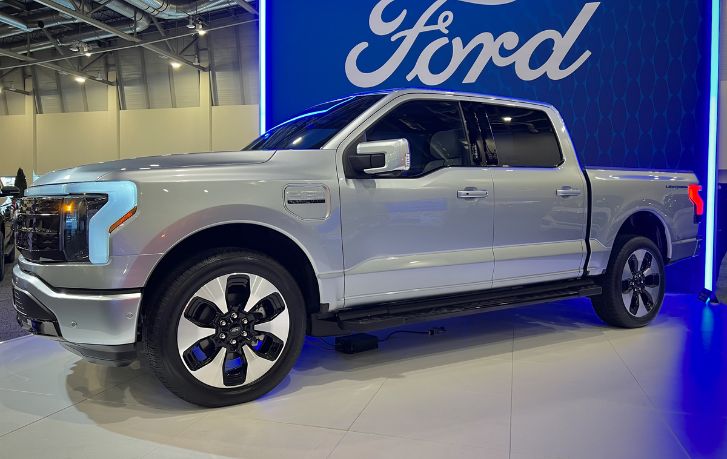
A 2026 Ford Mustang Mach-E Premium AWD delivered a favorable range result in one road test, but its hands-free driver-assistance performance was markedly less consistent. The vehicle’s energy use supported an extrapolated range of 310 miles, while BlueCruise disengaged 10 times during a separate 12-mile highway run.

The contrast matters because battery range and driving automation depend on different systems and environmental inputs. Efficient propulsion under favorable conditions does not predict how reliably cameras, lane-marking interpretation, steering control and driver-monitoring logic will perform on a particular road. These results also came from one vehicle on defined routes, so neither outcome establishes fleet-wide performance.
A favorable range calculation, not a 310-mile endurance run
The tested Mach-E had an 88-kilowatt-hour nickel-cobalt-manganese battery and a cited EPA range estimate of 300 miles. Its range display initially showed 270 miles, reflecting previous driving conditions rather than a fixed measure of the energy available.
During a mostly rural-highway trip, the Mach-E traveled 180 miles while consuming 160 miles from the displayed range estimate. Based on that relationship, the tester projected approximately 310 miles of total range under conditions characterized as fairly ideal. The vehicle did not complete a continuous 310-mile test from full charge to depletion, making “extrapolated” the important qualification.
That distinction is central to interpreting any real-world electric-vehicle range result. Route profile, speed, temperature, driving behavior, tire characteristics, battery condition and auxiliary energy use can change consumption. The EPA’s Green Vehicle Guide provides background on electric vehicles and standardized testing, but an EPA estimate remains a comparison value rather than a guarantee for every trip.
The initial 270-mile dashboard prediction and the later 310-mile extrapolation are not necessarily contradictory. A vehicle’s displayed estimate can respond to recent operating history, while a road-test calculation reflects conditions encountered during that specific drive. In this case, the rural-highway journey was more favorable than the prior driving pattern represented by the initial display.
Ten disengagements on a separate highway segment
BlueCruise was evaluated separately over the 12-mile Dulles Greenway, described as a lightly traveled, limited-access six-lane highway in excellent condition. Over that segment, the system disengaged 10 times. The tester associated the interruptions with consecutive curves, vibration transmitted through the steering wheel over bridge expansion joints and a merge area where the road lacked a right-side stripe.
At some curves, BlueCruise reportedly asked the driver to put hands on the wheel as the first of two bends approached. That observation does not establish why the system changed operating state, and no official Ford technical finding or company response was included. It does show how often the driver had to resume a more active control role during this particular run.
For human factors, predictability can matter as much as whether assistance is available. A system that transfers control frequently or inconsistently can reduce the convenience of hands-free operation because the driver must remain ready to understand and respond to each prompt. BlueCruise is driver assistance, not a substitute for driver supervision, so a disengagement should be treated as a control handoff rather than evidence that the vehicle can continue independently.
A second observation, made on another road with BlueCruise switched off, concerned the Mach-E’s lane-keeping assistance. On fresh asphalt, the system reportedly attempted to track irregular temporary reflective tape. The vehicle zig-zagged and resisted the driver’s effort to maintain a steady course until lane keeping was deactivated.
That behavior was observed once and was not diagnosed. It cannot support a conclusion about a defect, the wider Mach-E fleet or the relative contribution of markings, sensors, software and steering inputs. It does, however, illustrate a general integration challenge: lane-support systems must interpret road boundaries that may be incomplete, temporary or visually inconsistent while keeping the driver’s authority clear.
The two tests therefore answer different questions. The range run suggests that this Mach-E could outperform its cited 300-mile estimate when conditions were favorable. The Greenway run documented a much narrower operating result: 10 BlueCruise disengagements in 12 miles, with curves, bridge joints and missing markings reported around the interruptions. Strong battery efficiency did not eliminate the need for frequent driver intervention from a separate assistance system.
| More aerospace and engineering stories, right in your MSN feed. Follow AMI on MSN |
By Thomas Caldwell — AMI’s senior editor for mechanical and mobility engineering, covering vehicle electronics, systems integration, electrification, chassis systems, propulsion, and safety policy.