Ukraine’s Drone Campaign Forces 993 Russian Airport Closures as Refining Falls
A refinery does not have to remain offline and an airport does not have to be struck for a drone campaign to impose continuing costs. In Russia, repeated attacks and precautionary alerts are reducing industrial output while forcing temporary shutdowns across interconnected civilian systems. Osprey Flight Solutions recorded 993 Russian airport closures in August, while Energy Aspects put refinery throughput at 3.8 million barrels a day, down from 5 million a year earlier. Official statistics showed gasoline prices rising 19% during the year.

The disruption works through lost operating time, constrained inventories and recurring uncertainty rather than one decisive shutdown. Ukraine’s long-range drones have attacked Russian refineries, shipping terminals, logistics hubs and other economic infrastructure. When alerts also interrupt airports, mobile internet and freight movements, the resulting delays can propagate into fuel distribution, online payments, agricultural exports and passenger schedules.
Refining losses reach consumers
Refining is the clearest capacity measure. The International Energy Agency reported that Russian refinery throughput reached 3.8 million barrels a day in June, its lowest level in more than 20 years and roughly 30% below the previous year. Energy Aspects reported the same throughput level for August, compared with 5 million barrels a day in August 2025.
That decline matters because crude production and fuel availability are not interchangeable. Refineries convert oil into gasoline, diesel and other usable products; reduced processing therefore can tighten domestic supplies even when crude remains available. Russia responded by importing gasoline, loosening fuel-quality standards and restricting diesel exports. Those measures preserve more fuel for the domestic market, but they also transfer costs into imports, reduced export availability and altered product standards.
The 19% increase in gasoline prices was more than three times Russia’s annual inflation rate of about 6%. The central bank’s 4% inflation target provides another comparison: fuel-price pressure was not merely moving with the broader price level. Higher transport costs can spread into other goods and services, although the available figures do not isolate drone attacks as the sole cause of inflation or every fuel-market change.
Alerts consume capacity even without physical damage
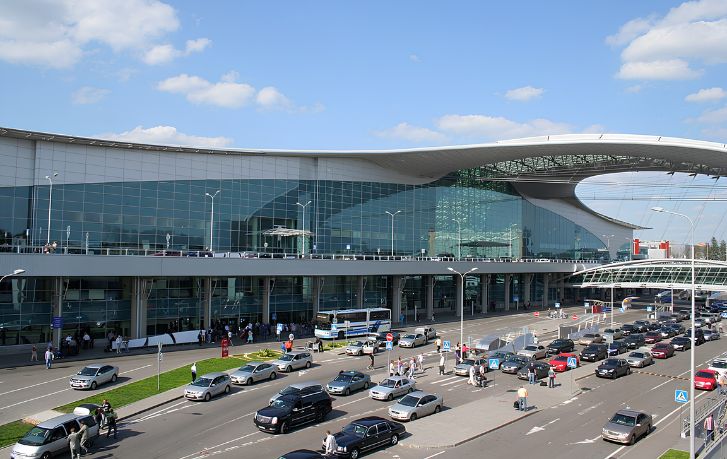
Aviation shows the second mechanism: precaution itself has an operating cost. Osprey counted 993 temporary airport closures across 32 Russian airports in August about 32 closures per day and roughly five times the level six months earlier. Airports routinely restricted operations when drones were detected nearby, producing delays and cancellations as aircraft were held, redirected or prevented from departing.
For civil aviation, this creates a capacity problem rather than simply a security event. Airline and airport schedules depend on tightly coordinated aircraft, crews, gates and passenger connections. A temporary closure can therefore leave disruption after the airspace reopens. Repeated alerts also require Russia to divide detection, response and airspace-management attention across a large geography, adding readiness pressure without proving that every alert involved a successful strike.
Similar precautionary effects reached commerce. Officials often disabled mobile-internet coverage during incursions, interrupting online payments. Russia’s central bank linked those outages to changing deposit behavior; individuals withdrew more money than they deposited during the second quarter. That relationship illustrates how an airspace threat can reach retail transactions without physical damage to a bank.
Freight and exports amplify intermittent disruption
More than 30 reported strikes since July affected logistics hubs used by the Wildberries or Ozon e-commerce platforms. Data Insight estimated more than $10 billion in damaged infrastructure and inventory, plus at least $12 billion in lost sales over the following 12 months. Those are attributed projections, not independently verified losses. Analysts also estimated that Wildberries owed state-owned VTB between $6 billion and $7 billion, showing how warehouse disruption may extend into financing relationships.
Agriculture faces a related bottleneck at the export stage. SovEcon said Russian wheat exports fell more than 50% year over year in August, reaching their lowest August level since 2010. The Rostov regional governor declared an agricultural state of emergency in late August. Drone activity and transport disruption form part of that pressure, but the figures do not establish that drones alone caused the export decline.
Russia’s scale remains an important boundary. It has extensive refining, transport and aviation networks, and temporary interruptions are not equivalent to permanent system failure. President Vladimir Putin estimated losses from attacks on economic infrastructure at about 1% of Russian gross domestic product, or approximately $25 billion, while calling the amount “not critical for us.” That estimate is itself an attributed national assessment.
The more consequential engineering question is whether repair and operating capacity can recover faster than new interruptions accumulate. With 993 airport closures in one month and refinery processing down sharply from a year earlier, the campaign’s measurable effect is no longer confined to individual facilities: it is consuming time, inventory and scheduling margin across systems built to function together.
| More aerospace and engineering stories, right in your MSN feed. Follow AMI on MSN |
By Stephen Wallace — Editor for AMI’s aerospace integration and unmanned mobility coverage, focused on drone manufacturing, VTOL systems, autonomous networks, and air-ground mobility links.