Russian Electric and Hybrid Sales Nearly Double as Refininery Attacks Tighten Fuel
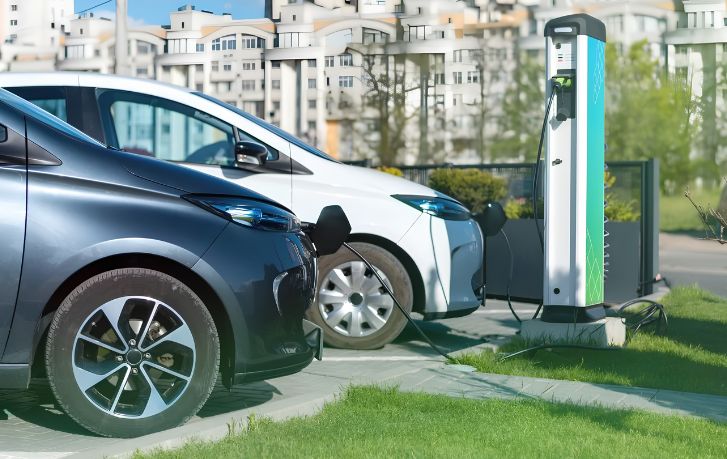
More than 83,000 electric and hybrid vehicles were reportedly sold in Russia from January through August 2026, up from 43,000 in the same period of 2025. The near-doubling coincided with gasoline shortages attributed in part to Ukrainian drone attacks on Russian oil refineries, turning an energy-supply disruption into a rapid change in consumer vehicle demand.
The figures do not establish that every additional purchase resulted from refinery disruptions. They do, however, show how quickly buyers can reconsider powertrains when the availability and quality of liquid fuel become uncertain. According to automotive research agency Avtostat, fully electric vehicles and plug-in hybrids capable of operating without gasoline reached 11.5% of Russia’s automotive market by the end of September, compared with approximately 5% at the beginning of 2026.
Fuel availability changed the powertrain calculation
Automotive analyst Sergey Tselikov, who heads Avtostat, offered one example of that shift. He said he bought a Chinese electric hatchback in July after trying five nearby filling stations and finding only diesel or gasoline below the quality he required.
That experience illustrates a practical distinction between battery-electric vehicles and plug-in hybrids. A battery-electric car removes gasoline availability from day-to-day operation, provided the driver has dependable charging. A plug-in hybrid retains an engine but can cover some travel on stored electrical energy. Under ordinary conditions, that flexibility may be judged against purchase price, charging access and driving range. During a fuel shortage, the ability to travel without immediately finding suitable gasoline becomes more valuable.
The pressure on fuel supply extended beyond individual accounts. A September International Energy Agency analysis estimated that Russian gasoline production was down 20% from 2025 levels and diesel production had fallen nearly 30%. It also reported widespread regional shortages and government measures intended to protect domestic supplies. Those figures strengthen the connection between refinery disruption and consumer fuel problems, although they do not independently prove the precise share of vehicle demand caused by those problems.
Most of the available electrified supply was Chinese
The sales increase also exposed the structure of Russia’s changed automotive market: most electric vehicles sold there are Chinese. That matters because sudden demand can only become completed sales when manufacturers and distributors can supply suitable vehicles. Chinese automakers were positioned to capture the shift, making fuel scarcity not just a powertrain story but also a supplier-dependence story.
Russia’s broader market had already moved away from its earlier mix of foreign brands. Avtostat data show that Korean and Japanese brands together fell from 32% of passenger-car sales in 2022 to about 8% in the first half of 2026. The electrified-vehicle surge therefore occurred within a market whose brand choices and supply channels had already been substantially reorganized.
The reported 11.5% share also needs careful definition. It combines fully electric vehicles with plug-in hybrids rather than measuring battery-only cars. A separate account of weekly sales said plug-in hybrids represented 8.5% of the market during September 19-25, while fully electric vehicles accounted for 3%. That split suggests buyers were often selecting partial independence from gasoline rather than abandoning combustion engines altogether.
Fast demand created an immediate price consequence
Supply did not adjust without friction. The price of a Great Wall Motor vehicle Tselikov considered reportedly increased by about $2,000 within several days. One buyer’s experience cannot establish a marketwide price increase, but it demonstrates how a sudden demand shock can reach consumers before additional inventory arrives.
That response is consistent with a constrained vehicle pipeline. Dealers must have the right models, charging-compatible configurations, parts and service capability available where demand appears. If buyers move faster than distribution networks can replenish vehicles, prices can rise and selection can narrow even when total national sales remain modest relative to the entire car market.
Russia also attempted to compensate for reduced refining output through fuel imports. The Centre for Research on Energy and Clean Air reported that oil-product imports reached 172,000 tonnes in August 2026, more than seven times the previous monthly high since the full-scale invasion began. Gasoline accounted for 74% of those imports. That response underscores the scale of the supply constraint, but imported fuel carries additional transport and handling costs and cannot instantly restore local availability everywhere.
The market shift is therefore best understood as a resilience response, not a simple technology preference. Refinery disruptions reduced confidence in gasoline availability; electric operation offered an alternative; and Chinese manufacturers supplied most of the vehicles positioned to meet that demand. The next test is whether charging access, service networks and vehicle supply can support an electrified share that moved from roughly 5% to 11.5% in less than a year or whether the surge eases when suitable gasoline becomes easier to obtain.
| More aerospace and engineering stories, right in your MSN feed. Follow AMI on MSN |
By Stephen Wallace — Editor for AMI’s aerospace integration and unmanned mobility coverage, focused on drone manufacturing, VTOL systems, autonomous networks, and air-ground mobility links.