Federal Judge Rules Monthlong Flock Camera Search Violated Fourth Amendment, Suppresses Evidence
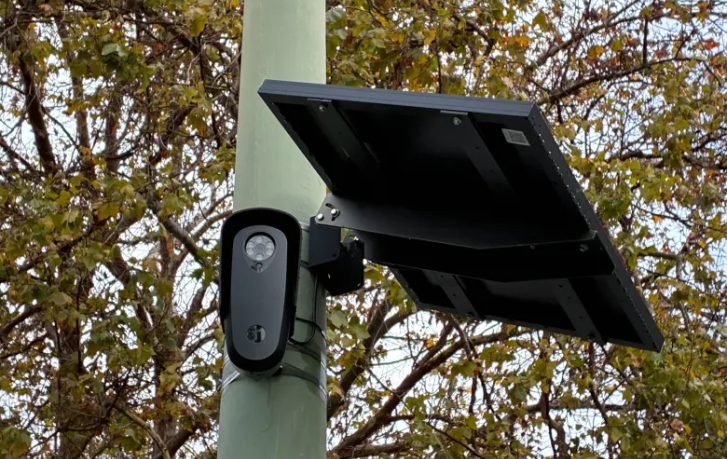
A Flock camera does not follow a vehicle continuously. It records a plate, location and time when the vehicle passes, while other network-connected cameras do the same elsewhere. The system’s consequential capability emerges later: police can search those accumulated detections and reconstruct travel across places and days without having assigned an officer to track the vehicle.
That aggregation drove U.S. District Judge Sara E. Hill’s ruling that a Tulsa County sheriff’s deputy violated the Fourth Amendment by retrieving approximately one month of a driver’s Flock history. The query returned more than 50 sightings across multiple states. Hill suppressed evidence obtained after the database search because the government had not established an adequate exception to the exclusionary rule.
The ruling distinguishes a roadside observation from a retrospective location search. A person driving on a public road exposes a vehicle and its license plate to people nearby. Flock’s network, however, stores many such observations and makes them available later through a single search. Hill described it as a tool that collects information about all vehicles that pass by any network-connected camera at all times, and it serves up the information to law enforcement on demand.
Separate public sightings can become a private pattern
This distinction is closely related to the legal concept known as mosaic theory: individual facts that appear unremarkable in isolation can reveal a much more detailed picture when combined. A single plate detection may show only that a vehicle passed one camera. Dozens of detections can expose routes, timing, repeated destinations and multistate movement.
The engineering change is not simply a better camera. It is the integration of distributed sensors, retained records and a query interface. Together, those components convert observations that once required officers to be present at particular locations into a searchable travel archive. The marginal effort needed to examine a month of movement can consequently be much lower than the effort required for physical surveillance over the same period.
Hill treated that difference in scale and accessibility as constitutionally significant, calling the network a type of indiscriminate mass surveillance. At the same time, she acknowledged that automated plate readers provide “remarkable benefits” to law enforcement. The policy tension therefore is not whether cameras can assist investigations, but when access to accumulated location history requires stronger legal justification or judicial oversight.
The traffic stop and database search received different treatment
The case began after Deputy Freddie Alaniz saw Melisa Kyle driving a vehicle with California plates and searched the plate in Flock. He later stopped Kyle for following another vehicle too closely and for allegedly failing to signal lane changes properly. Kyle refused a request to search the vehicle, was detained while a drug-sniffing dog was brought to the scene, and was arrested after officers searched the vehicle and found marijuana.
Kyle challenged the initial stop, continued detention and Flock search. Hill found that Alaniz had an objectively reasonable basis for the traffic stop, but concluded that retrieving the historical Flock records was an unconstitutional search. That separation matters: the decision did not invalidate every action taken by the deputy or hold that merely reading a visible plate violates the Constitution.
Suppression was the immediate consequence. Because the government did not identify an adequate exception to the exclusionary rule, Hill excluded evidence obtained after the Flock query as fruit of the poisonous tree.In practical terms, information gathered after an unconstitutional search can be barred when it was derived from that search and no applicable exception saves it.
The broader legal boundary remains unsettled
This is a federal district court ruling in one case, not a nationwide prohibition on automated license-plate-reader databases. Neither the Supreme Court nor the 10th U.S. Circuit Court of Appeals has definitively resolved whether searching this type of plate-reader history constitutes a Fourth Amendment search. Most courts that have considered the broader issue have reached the opposite conclusion.
Flock was not a party to the case. A company spokesman told The Washing ton Post that the decision conflicts with the weight of authority in similar cases, does not establish controlling precedent and is expected to be appealed.
The unresolved question is where courts will draw the line between a collection of public-road snapshots and a location history comprehensive enough to receive constitutional protection. Flock’s architecture makes that boundary more urgent because the surveillance does not have to begin when a person becomes a subject of interest. The cameras can record first, allowing the government to decide later whose past movements to retrieve.
| More aerospace and engineering stories, right in your MSN feed. Follow AMI on MSN |
By Thomas Caldwell — AMI’s senior editor for mechanical and mobility engineering, covering vehicle electronics, systems integration, electrification, chassis systems, propulsion, and safety policy.