F-150 Lightning Owner Reaches Wyoming Charger at 5%, Loses Three Hours
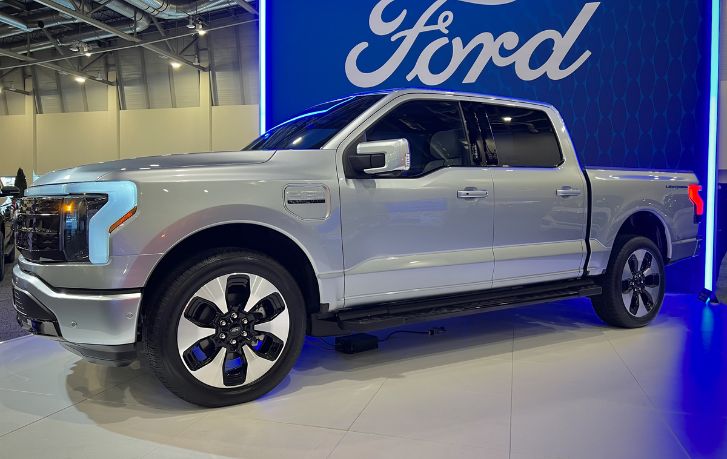
A Ford F-150 Lightning may have enough rated range to cover the distance between two towns, yet still lack enough practical margin to make the trip routine. An owner identified as Ken said he reached the only suitable 50-kilowatt charger he found in Sheridan, Wyoming, with 5% battery remaining, then spent three hours waiting and charging.

The reported experience came during a drive from Colorado to Bozeman, Montana. Ken attributed the difficult Wyoming legs to temperatures around 30 degrees Fahrenheit, a headwind and highway driving. His account is not a controlled range test and should not be treated as representative of every Lightning, but it illustrates how vehicle efficiency and charging infrastructure interact on rural routes.
Rated range was only one part of the calculation
Ken described the truck as having 310 miles of nominal range. The extended-range Lightning identified in the account has a 131-kilowatt-hour battery and an EPA-estimated range of 320 miles. Neither figure promises the same distance in cold weather, wind or sustained highway operation.
Cold conditions can increase cabin-heating demand and affect battery performance, while a headwind increases the air speed experienced by the vehicle. Aerodynamic drag rises rapidly with air speed, making a large pickup particularly sensitive to the combination of highway velocity and wind. Driving speed, temperature, wind and accessory loads therefore reduce the usable route margin together rather than as isolated factors.
AAA research provides a broader benchmark, finding an average 41% electric-vehicle range reduction at 20 degrees with cabin heat operating. That result does not establish how much range this Lightning lost at approximately 30 degrees; the vehicles, temperatures and test conditions are different. It does show why an EPA rating cannot be read as a guaranteed winter-trip radius.
The owner reported using the battery from 100% to 6% between Cheyenne and Casper. He said he reached Sheridan at 5%, then used 100% to 12% between Sheridan and Billings and 80% to 15% between Billings and Bozeman. Those figures indicate that several legs consumed most of the available battery, leaving limited tolerance for a closed charger, an unexpected detour or further deterioration in weather.
A single low-power charger became the route bottleneck
The Sheridan charger was rated at 50 kilowatts and located at a Jeep dealer. Ken said another vehicle was using it when he arrived, while a Tesla destination charger at his hotel did not work. His total Sheridan delay including the wait and charging session was three hours.
Charger power helps explain why recovery was slow. At a theoretical, uninterrupted 50-kilowatt rate, replacing 95% of a 131-kilowatt-hour battery would take nearly 2.5 hours. Real charging power can vary, and battery-management systems generally reduce the rate as the pack approaches full charge. The nameplate figure also does not account for conversion losses. A single occupied charger consequently creates both a queue and a long service time.
Redundancy matters as much as the number of plugs shown on a map. Department of Energy data cited for August 2026 counted 120 public charging stations and 167 direct-current fast-charging ports in Wyoming. The state ranked 48th for fast-charging availability, with eight fast-charging ports in Casper and five in Sheridan. A port elsewhere in a city may not be a practical backup if it is incompatible, unavailable, too slow or beyond the truck’s remaining range.
Wyoming has designated Interstates 80, 25 and 90 as alternative-fuel corridors. Its first National Electric Vehicle Infrastructure funding request seeks proposals for urban and rural corridor clusters. Under the Wyoming Department of Transportation plan, funded sites must be within three driving miles of a corridor exit, have at least four charging ports and include at least two fast-charging ports. The structure addresses two weaknesses exposed by this trip: charger placement and the lack of a backup when one unit is occupied or unavailable.
Network access helps, but location still governs the trip
Ford owners can use compatible Tesla Superchargers with an adapter, and Rivian says its Adventure Network supports both major North American connector formats and is open to other electric vehicles. Rivian owners have also described the benefit of stations placed near camping routes and national parks. Those testimonials are useful examples of route-focused placement, not a controlled comparison proving one network will perform better on every journey.
Ken reported drafting behind a truck and driving unusually slowly while trying to reach Sheridan. He also said he was nearly rear-ended. Close following is not an acceptable range-management strategy: it reduces reaction space and transfers an energy-planning problem into a road-safety risk.
For rural electric travel, the critical metric is not simply whether rated range exceeds the distance to the next town. It is whether the route retains adequate reserve after weather and speed losses and whether the destination offers enough charging power and redundancy to recover without losing hours.
| More aerospace and engineering stories, right in your MSN feed. Follow AMI on MSN |
By Thomas Caldwell — AMI’s senior editor for mechanical and mobility engineering, covering vehicle electronics, systems integration, electrification, chassis systems, propulsion, and safety policy.