Camden Missile Plants Plan 50% Workforce Growth Despite Housing Shortage
Camden’s missile-production surge has run into a constraint that cannot be solved on a factory floor. Defense plants around the Arkansas city are preparing to expand their combined workforce by more than 50%, but the community of roughly 10,000 people has limited housing, under-resourced schools and a financially threatened hospital.
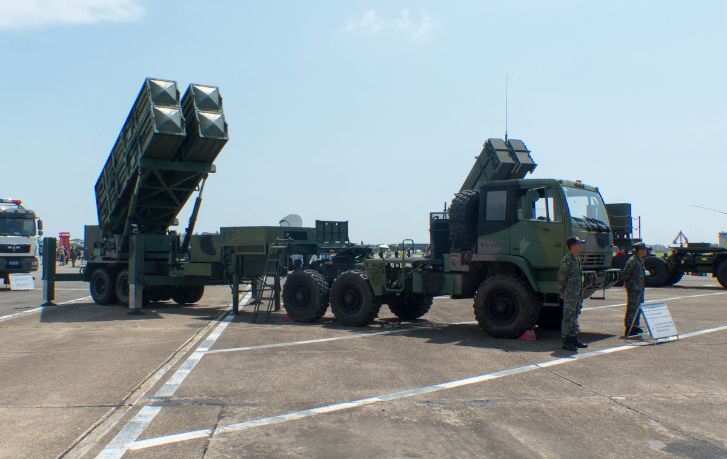
The mismatch matters because about 4,000 employees already travel to the neighboring industrial cluster each workday. Lockheed Martin, L3Harris, Raytheon and General Dynamics Ordnance and Tactical Systems operate facilities there, producing Patriot interceptors, solid rocket motors, warheads, multiple-launch rocket systems and other defense components. Some employees commute as much as an hour each way, while contractors compete for skilled people from the same regional labor pool.
That leaves Camden facing two expansions at once. Manufacturers need more equipment, buildings, suppliers and workers to support higher output. The community must provide enough homes, schools, health care and other services to make those jobs sustainable rather than dependent on increasingly long commutes.
Factory employment has grown by more than one-third since 2020 even as Camden’s population has continued to decline, according to Census data cited in reporting on the expansion. Workers described monthly hiring waves, rising quotas and workweeks exceeding 70 hours. One Lockheed Martin engineer reported working 86 hours in a recent week. Those accounts do not establish a universal schedule across the plants, but they illustrate the pressure created when demand rises faster than staffing.
New factories still need a durable workforce
The physical build-out is substantial. L3Harris says its existing Camden operation employs more than 1,500 people across approximately 2,000 acres and more than 100 buildings. It produces over 115,000 solid rocket motors annually, including motors used in THAAD and Tomahawk systems.
The company is also putting more than $1 billion into its Camden expansion. Its Arkansas Advanced Propulsion Facilities project is planned as a campus of more than 20 buildings, with the first completed facilities scheduled for release to production teams in mid-2027. L3Harris expects the campus to increase its capacity for large solid rocket motors sixfold.
Automation will help move material, control processes and reduce cycle time inside those buildings. It will not eliminate the need for operators, engineers, maintenance personnel, safety specialists and supporting trades. Nor can factory automation create nearby housing or increase the capacity of a school or hospital. Capital equipment raises the production ceiling only when labor and community infrastructure can support its operation.
Lockheed Martin’s planned growth is similarly broad. Tim Cahill, president of Lockheed Martin Missiles and Fire Control, said production of major munitions is generally being increased three to fourfold, depending on the product. General Dynamics and Lockheed Martin are also developing a solid rocket motor manufacturing site in Camden that is expected to become operational in 2027.
Hiring is only one part of the production chain
Even a fully staffed final-assembly plant remains dependent on specialized suppliers. A Patriot interceptor may take about six weeks to assemble, while the upstream process needed to produce its components can extend over years. That difference explains why adding final-assembly capacity does not immediately create finished interceptors.
Supplier-related problems disrupted THAAD interceptor production twice beginning in 2024, according to a Government Accountability Office finding described in reporting on the program. Lockheed Martin says it is responding by adding second and third supplier options for some components and working with the federal government to secure raw materials further in advance.
Those measures address resilience in the industrial network. Camden’s local challenge is resilience in the workforce network. A job opening does not become production capacity until a qualified employee can be recruited, trained, housed and retained. Long commutes widen the recruiting radius, but they also add time and cost to each shift. Repeated hiring from neighboring plants may move expertise around the cluster without producing an equivalent net increase in regional capability.
The planned output increase therefore depends on more than new production buildings coming online. Camden must absorb thousands of additional workers or support a much larger daily commuting population while its own resident count is shrinking. As local business owner Bobby Glaze put it, the community does not want to serve merely as a stepping stone for workers: it wants people to live there.
By mid-2027, L3Harris plans to begin handing its first new propulsion buildings to production teams. That milestone will measure construction progress. Whether enough skilled people can build their lives around those facilities will determine how much of the new factory capacity can actually be used.
| More aerospace and engineering stories, right in your MSN feed. Follow AMI on MSN |
By David Whitaker — Associate editor for AMI’s aerospace and drone systems desk, translating flight systems, aircraft programs, spaceflight, and UAV developments into accessible technical stories.