Germany’s Tomahawk-Typhon Budget Rises €2.03 Billion Without Expected Quantity Increase
Germany’s planned spending on ground-launched Tomahawk missiles and Typhon launch equipment has risen from €1.37 billion to nearly €3.4 billion, yet the larger allocation may not produce a larger missile force. The additional €2.03 billion is expected to enter preparations for the country’s 2027 budget, although no completed German-U.S. agreement or final contract terms have been reported.

The central tension is cost rather than quantity. Germany’s original plan covered 400 Tomahawk Block Vb missiles and three Typhon batteries. Calculations attributed to German defense publication Hartpunkt indicate that €3.4 billion would still support only three batteries and approximately 400 to 440 missiles after launch equipment, fire-control systems, maintenance and related support are included.
Those quantities remain estimates, not an official procurement result. Final missile numbers, delivery schedules and a German government cost breakdown have not been provided. The available figures therefore point to a program whose financial scope is becoming clearer before its contractual scope is settled.
The launcher is only one part of the system
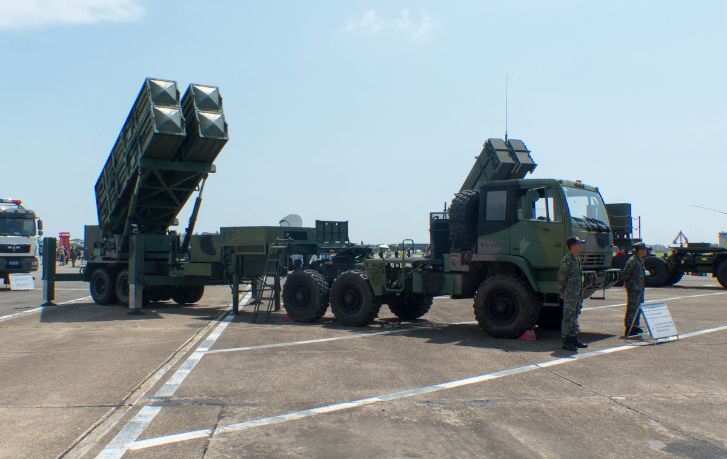
The three planned Typhon batteries would reportedly include 12 launchers, three command vehicles and associated equipment. Germany’s earlier allocation assigned €220 million to that portion of the acquisition, while Hartpunkt estimates that roughly €440 million would be more realistic.
That difference illustrates a recurring procurement issue: a missile’s unit price does not represent the cost of fielding an operational force. Launchers need command-and-control equipment, communications links, software, training, spares, technical documentation and maintenance support. Integration and long-term support can consume a substantial share of the budget without adding another missile or launcher to the published quantity.
Hartpunkt assigns approximately €1.2 billion to fire-control and technical-support expenses. Under its calculation, €1.76 billion of the €3.4 billion total would remain for the missiles themselves. The estimate draws partly on Japanese and Dutch procurements, although those countries are acquiring ship-launched Tomahawks rather than Germany’s planned ground-launched configuration. That platform difference limits any direct price comparison.
The Dutch case still demonstrates why headline missile counts can obscure the full acquisition bill. In April 2025, the U.S. State Department approved a possible $2.19 billion sale to the Netherlands covering up to 163 Block V rounds, 12 Block IV rounds and as many as 10 weapons-control systems. The package also listed software, training, containers, communications equipment, maintenance, spares, transportation and engineering and logistical support.
The U.S. notice explicitly described that amount as the highest estimated value, with the actual price dependent on final requirements, budget authority and signed agreements. Germany’s proposal is at an earlier and less transparent point: the €3.4 billion figure represents a current planning requirement, while the precise composition of a potential sale remains unresolved.
A larger budget does not automatically mean a larger capability
For German taxpayers, the immediate consequence is that the planned public cost has increased by roughly €2.03 billion without a corresponding expected increase in equipment. For defense planners, however, the tradeoff is not simply missiles versus overhead. Control systems, support equipment and maintenance arrangements determine whether purchased hardware can be operated and sustained over time.
Defense Express interprets the revised figure as a sign that the initial allocation may have understated the complete program cost, rather than the increase being attributable only to inflation. That is an analytical judgment, not an official German finding, and inflation has not been formally excluded as a contributor.
The distinction matters for public accountability. If the increase reflects items omitted or undercounted in the first estimate, the original €1.37 billion allocation did not describe the full cost of establishing the planned capability. If requirements changed, prices escalated or different support assumptions were introduced, the increase would have a different explanation. A government cost breakdown is needed to separate those possibilities.
Until contract terms are concluded, three figures define the program’s unresolved boundary: nearly €3.4 billion in planned funding, three expected Typhon batteries and approximately 400 to 440 estimated missiles. The next meaningful milestone is not another budget headline, but a finalized package showing how much of the money pays for missiles and how much buys the infrastructure required to use and maintain them.
| More aerospace and engineering stories, right in your MSN feed. Follow AMI on MSN |
By David Whitaker — Associate editor for AMI’s aerospace and drone systems desk, translating flight systems, aircraft programs, spaceflight, and UAV developments into accessible technical stories.