Ukrenergo Imposes Ukraine Power Cuts as Damage and Cloud Cover Tighten Supply
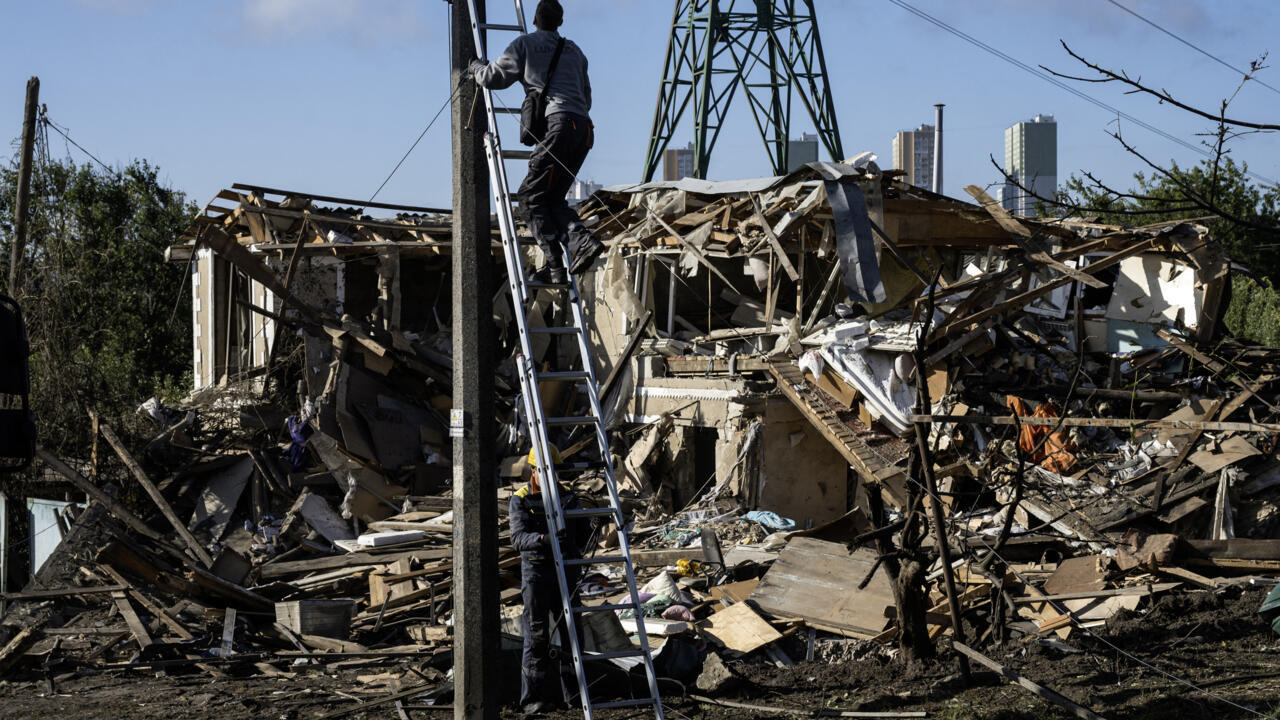
Ukraine’s power system faced a three-way operating constraint on October 6: energy infrastructure had been damaged by Russian strikes, electricity consumption was rising, and cloudy weather was reducing output from household solar installations. Ukrenergo responded with temporary restrictions in parts of the country, including hourly outages for all consumer categories in some regions and separate limits for industrial users.
The national transmission operator scheduled the measures from 3 p.m. through the end of the day. The planned volume reached up to one outage queue, although Ukrenergo did not define how many customers that represented or identify every locality covered. Address-level timing remained the responsibility of regional distribution operators.
New outages were recorded that morning in the Kharkiv, Sumy, Zaporizhzhia and Dnipropetrovsk regions. Emergency repairs began where security conditions allowed, while Ukrenergo warned that system conditions could change. That warning matters operationally: a published rotation is a short-term control plan, not a guarantee that damaged equipment, available supply and demand will remain unchanged.
Why cloudy weather added pressure
At 9:30 a.m., electricity consumption was 2.9% higher than at the same time the previous day. Ukrenergo attributed the increase to cloudy conditions across much of Ukraine, which reduced household solar generation and increased the amount of electricity drawn from the main grid. The evening peak on October 5 was also 1.7% above the maximum recorded on the previous working day, October 2.
Those percentages do not establish precisely how much solar output was lost or how much of the restriction was caused by weather. They do show the operating direction: demand on the centralized system increased at the same time that damaged infrastructure constrained electricity delivery. In a stressed network, modest percentage changes can matter because operators must continuously balance production and consumption while keeping equipment within operating limits.
Distributed rooftop solar can reduce a household’s grid demand when sunlight is available. Cloud cover weakens that contribution, shifting part of the load back to the wider system. Its effect is therefore conditional rather than equivalent to firm generating capacity available on command. The October 6 restrictions illustrate that boundary without proving that reduced solar output alone triggered the cuts.
Scheduled outages are a grid-control measure
Hourly outage schedules and industrial capacity limits serve different users, but both reduce aggregate demand. Their immediate purpose was to keep electricity use compatible with the system’s available capability and prevent equipment overload while repairs proceeded.
A queue-based rotation also distributes the interruption over time rather than disconnecting every covered customer continuously. Yet “up to one queue” is not a national customer count, and it should not be read as one uniform outage affecting all of Ukraine. Local network configurations and regional schedules determine which addresses lose service and when.
The restoration period creates another systems problem. When electricity returns, many thermostats, water heaters and other appliances may attempt to restart within the same short interval. That synchronized rebound can produce a sharp demand increase even if each device is operating normally. Ukrenergo therefore asked consumers not to switch on several high-power appliances simultaneously after service resumed.
Energy workers also recommended moving energy-intensive use to 10 a.m.-3 p.m., when solar generation is most effective. This is basic demand shaping: flexible loads are shifted toward a period with better expected supply conditions, reducing pressure during a more constrained interval. It cannot repair damaged infrastructure, but coordinated timing can preserve some operating margin.
Repairs remain constrained by security and uncertainty
The engineering challenge is not limited to replacing damaged components. Crews can begin emergency work only where security conditions permit, while operators must manage the network around equipment whose availability may change. At the same time, consumers and factories need schedules precise enough to plan around interruptions.
That makes communication part of system operation. Ukrenergo set the broad restriction window, but directed customers to regional distribution companies for address-specific schedules. The distinction reflects how transmission-level balancing decisions are translated into local switching plans.
The restrictions were temporary and scheduled to expire at day’s end, but their duration depended on changing system conditions. The decisive constraint was the combination: damaged infrastructure reduced flexibility just as consumption increased and household solar supplied less power under cloud cover. Until repairs restore more margin, even ordinary weather-driven demand shifts can complicate the task of keeping electricity supply and use in balance.
| More aerospace and engineering stories, right in your MSN feed. Follow AMI on MSN |
By Thomas Caldwell — AMI’s senior editor for mechanical and mobility engineering, covering vehicle electronics, systems integration, electrification, chassis systems, propulsion, and safety policy.