HondaJet Echelon Deliveries Delayed Two Years Over Supplier Issues
Honda Aircraft has assembled the first wing structure for its new HondaJet Echelon, but that visible manufacturing progress has not protected the program from a much larger schedule reversal. Tier-one supplier issues have pushed planned deliveries back by two years, leaving prospective customers with a longer wait even as major aircraft structures move through the factory.
In a September 15 program update, Honda Aircraft set new targets of 2028 for the first flight and 2031 for type certification and the first customer delivery. The company attributed the revised timeline to supplier-related schedule adjustments and continuing development work. It did not identify the affected suppliers, components or processes, so the technical source of the constraint remains unconfirmed.
A finished wing is one milestone, not a finished supply chain
The first completed wing structure is significant because it advances a test aircraft toward mainline final assembly. Honda said five wing structures were in various stages of final assembly and that mainline final assembly was targeted to begin in early 2027.
Those milestones measure progress in a defined portion of the aircraft, however. They do not establish that every system, qualified component, production tool or supplier deliverable needed for flight testing and certification will arrive on the same schedule. A development aircraft can therefore have a major structure completed while dependencies elsewhere continue to govern the program’s critical path.
Honda reported that more than 70% of the parts required for the first assembly were on hand. That is a substantial share, but the figure does not reveal whether any of the remaining parts have long lead times, require additional qualification or sit on a schedule-critical path. Nor does it show whether the supplier issues involve hardware, documentation, production capacity or another development dependency. Assigning the delay to any particular aircraft system would go beyond what Honda has disclosed.
The two-year movement in first flight from the previously planned 2026 target to 2028 also matters beyond the timing of one test event. Flight testing supplies data needed to demonstrate aircraft behavior and support certification work. Honda now expects certification and first delivery in 2031, making the revised first-flight target one of the clearest milestones for judging whether the new schedule is holding.
Integration and qualification continue before flight
Honda said structural testing had advanced, with key component tests complete. Systems-integration work is continuing in an integrated test facility, where an operational cockpit environment is being used for integration campaigns. A second cockpit is being commissioned to evaluate aircraft systems before the test aircraft flies, while equipment qualification continues in support of a safety-of-flight declaration.
That work illustrates why physical assembly and overall program readiness should not be treated as interchangeable. Before a new aircraft can begin its flight campaign, its systems must be integrated and its equipment must reach the required level of qualification. After first flight, the manufacturer still has to conduct the broader test and certification program before customer deliveries can begin.
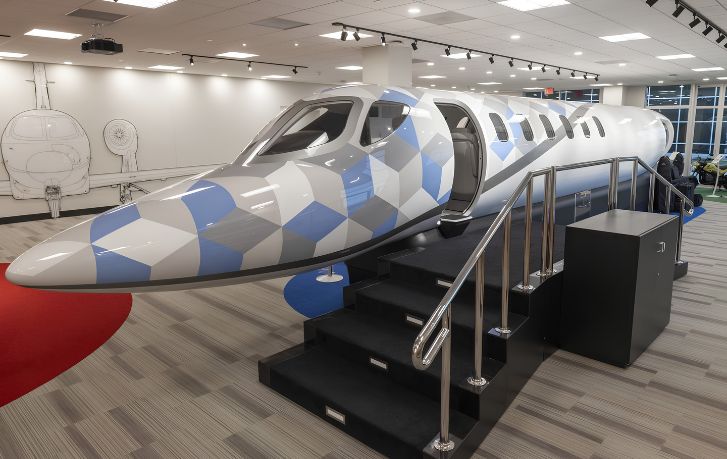
The Echelon is planned as an 11-occupant light business jet with a larger cabin than the existing HondaJet HA-420. Honda is targeting single-pilot certification and transcontinental U.S. range. Planned systems include autothrottle, emergency autoland, automatic braking and runway-overrun awareness and alerting. Those remain planned capabilities subject to development and certification rather than delivered features.
Greensboro expansion remains planned
Despite the delay, Honda Aircraft still plans to add hundreds of employees in Greensboro, North Carolina, where the Echelon is to be built alongside the HondaJet Elite II. The available information does not provide an exact headcount, recruitment schedule or job breakdown, and it does not establish whether the delay will alter the pace of hiring. The expansion should therefore be understood as an active plan, not completed recruitment.
Honda has provisioned more than 88,400 square feet for Echelon manufacturing and reported more than 530 signed letters of intent for the aircraft. Letters of intent indicate customer interest, but they are not the same as delivered aircraft or completed certification.
The next useful checks will be concrete rather than symbolic: whether mainline final assembly begins in early 2027, whether equipment qualification supports the required safety-of-flight declaration, and whether the first aircraft flies in 2028. Until then, the completed wing demonstrates real manufacturing progress, while the 2031 delivery target shows how strongly undisclosed supplier constraints can still control the schedule of an entire aircraft program.
| More aerospace and engineering stories, right in your MSN feed. Follow AMI on MSN |
By Thomas Caldwell — AMI’s senior editor for mechanical and mobility engineering, covering vehicle electronics, systems integration, electrification, chassis systems, propulsion, and safety policy.