US Air Force Pulls All RAF Fairford Bombers, Says Missions Can Continue
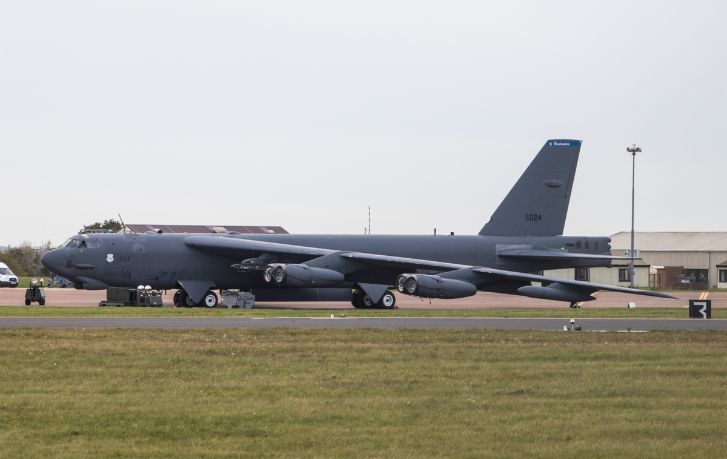
RAF Fairford has lost its entire deployed U.S. bomber contingent, but the Pentagon says that does not end the Air Force’s ability to conduct long-range missions from American soil. All U.S. bombers stationed at the British base returned to their home stations in the United States on Oct. 4, following a security incident nearby.

The Pentagon confirmed the completed withdrawal but did not say whether it was permanent or when bombers might return. It also did not directly establish that the Sept. 27 incident caused the redeployment. The immediate confirmed change is therefore geographic: Fairford no longer hosts that contingent, while the aircraft and crews remain available at their U.S. bases.
Arrests remain under investigation
British authorities arrested five London men in their 20s near RAF Fairford on Sept. 27 on suspicion of explosives and terrorism offenses. Police said three vans linked to the men contained a quantity of gasoline described as an accelerant, but no explosives were found. All five were released on bail and remain under investigation, meaning the suspicions have not been established in court.
A 25-year-old dual U.K.-Iranian national was subsequently arrested in London on suspicion of preparing terrorist acts and was also released on bail. In an Oct. 1 investigation update, Counter Terrorism Policing described the case as highly complex and said investigators were pursuing multiple lines of inquiry, including possible foreign-state involvement. That possibility remains an investigative line, not a confirmed finding.
The sequence is significant without proving causation: the arrests occurred close to a base hosting American bombers, and every deployed bomber left one week later. The precise nature of the threat considered by U.S. officials has not been publicly detailed. Nor has the Pentagon announced a broader suspension of bomber deployments to Britain.
Forward presence and long-range capability are not the same
RAF Fairford serves as a forward operating location rather than a base with permanently assigned U.S. Air Force aircraft. Its value lies in giving visiting bomber units an established operating site in Europe. Compared with launching from the continental United States, a European deployment can shorten the distance to some operating areas and place crews, maintenance personnel and support equipment closer to the mission region.
Removing the aircraft therefore changes immediate posture even if it does not eliminate mission capability. A forward contingent can support faster access and reduce the burden associated with intercontinental flights. Home-station operations preserve reach, but they generally demand longer sorties and greater coordination across the wider support system. The Pentagon did not disclose how the move would affect sortie timing, maintenance cycles or future deployment plans.
The Air Force’s counterweight is the design purpose of its bomber force: long-range operations are not dependent on maintaining aircraft at one overseas location. The Pentagon specifically named the B-1, B-2 and B-52 and said their crews remain prepared to conduct missions that launch and recover from the continental United States.
“U.S. Air Force bombers routinely operate around the world to support global force readiness and operational requirements,” a Pentagon spokesperson said. The department added that crews operating the three bomber families remain ready for long-range missions from U.S. bases.
That distinction matters for readiness assessments. Aircraft presence at Fairford is a measure of forward posture, not the full measure of whether the bomber force can operate. Returning the contingent removes locally positioned aircraft and the time advantage associated with that location, but it does not amount to an announced grounding, stand-down or loss of intercontinental reach.
The next unanswered question is deployment timing
RAF Fairford has supported American bomber operations for decades and has recently been used for U.S. missions against Iran. Its infrastructure and established support role make it more than an incidental stop, but the base routinely hosts rotating forces rather than a permanently assigned bomber fleet.
For now, the United States has traded that forward presence for operations from home stations while British authorities continue their investigation. The next concrete indicator will be whether the Air Force announces another Fairford rotation or whether the base remains without U.S. bombers beyond the current security response.
| More aerospace and engineering stories, right in your MSN feed. Follow AMI on MSN |
By David Whitaker — Associate editor for AMI’s aerospace and drone systems desk, translating flight systems, aircraft programs, spaceflight, and UAV developments into accessible technical stories.