Germany Funds Tens of Thousands of Quantum Systems Drone Interceptors
Several tens of thousands: that is the scale of Germany’s planned funding for Quantum Systems interceptor drones to be produced in Ukraine. Announced on October 4 during a visit to Kyiv, the procurement forms part of Germany’s winter 2026/2027 military-assistance package and is intended to expand protection for cities, civilian facilities and critical infrastructure. The publicly described plan, reported from the announcement and company statements, does not include the exact quantity, contract value, unit price or delivery schedule.

The number shifts the program’s central challenge. This is no longer solely a question of whether an interceptor concept can fly and engage an aerial threat. The harder test is whether a linked German-Ukrainian production network can manufacture, deliver and support tens of thousands of systems quickly enough to meet demand while maintaining consistent performance.
Production moves close to the point of use
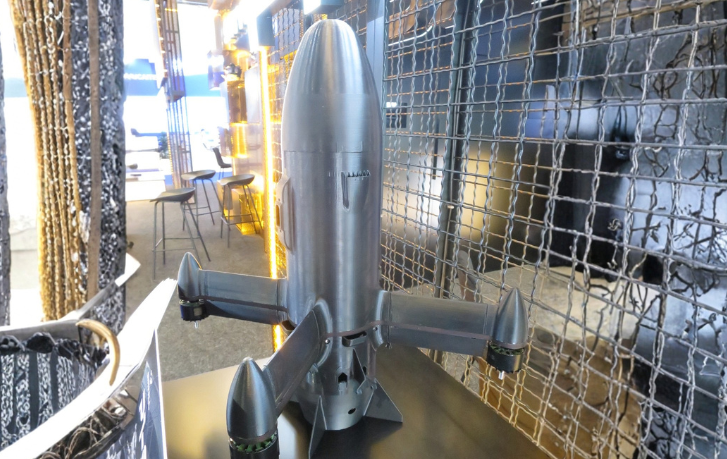
The interceptors were developed by the Ukrainian team at Quantum WIY Industries, backed by WIY Drones, a Ukrainian manufacturer in which Munich-based Quantum Systems has invested. Quantum Systems says the aircraft are already in use and will be controlled through its MOSAIC UXS software platform.
That arrangement combines local aircraft production and operational feedback with a common control layer. Quantum describes MOSAIC UXS as a command-and-control platform connecting sensors, aircraft and operators. At industrial scale, that software layer matters because adding airframes without coordinating their data, tasking and operator interfaces can create a fragmented fleet rather than useful defensive capacity.
Local production may shorten the path between field observations, design changes and manufacturing revisions. It can also reduce dependence on transporting every completed aircraft from Germany. Those are potential industrial advantages, not guarantees: output still depends on components, quality control, trained labor, software configuration and a supply system capable of sustaining a large fleet.
Quantum Systems already operates three linked German-Ukrainian businesses Quantum Frontline Industries, Quantum WIY Industries and Quantum Tencore Industries and employs several hundred people in Ukraine. It has also signed a memorandum of understanding with Ukrainian manufacturer Fire Point to develop unmanned and counter-air systems. Together, these arrangements indicate that the company is building a production network rather than treating the order as a single export shipment.
Faster threats raise the performance requirement
The expansion comes as faster, jet-powered attack drones are appearing alongside slower Shahed models. The reported speed for some of the faster aircraft is about 230 mph. Higher speed reduces the time available for detection, coordination and interception, making aircraft performance and control-system latency more consequential even as production volume rises.
Quantum Systems has separately tested an electric aircraft at a claimed 699 kilometers per hour, or about 434 mph, and says technology from that test is intended for future interceptor designs. That figure should not be read as verified operational performance for the drones Germany plans to fund. No independently verified effectiveness results, mission reliability figures or production-representative speed data have been disclosed for the large planned order.
This distinction is important because a fast test aircraft and a fieldable interceptor are different engineering propositions. A production system must balance speed with endurance, controllability, manufacturing repeatability, communications, environmental tolerance and cost. Buying tens of thousands also magnifies small reliability problems: a defect rate that appears manageable in a limited trial can become a major availability and maintenance burden across an industrial-scale fleet.
The missing numbers limit public accountability
Quantum Systems previously received a Ukrainian armed-forces contract for 15,000 interceptor drones. Germany’s new commitment is described only as several tens of thousands, making it larger in reported scale but impossible to compare precisely. Without a firm quantity and delivery calendar, the announcement cannot yet be translated into monthly output targets or a date by which defensive capacity should materially increase.
The undisclosed price creates a similar limitation. Interceptor drones are intended to provide a more scalable response to numerous aerial threats, but no unit cost or total contract value has been published. That prevents an informed assessment of how much defensive coverage the public funding purchases, whether support and software are included, or how the cost compares with alternative air-defense resources.
For communities exposed to drone attacks, the relevant measure will not be the announced order size alone. It will be how many reliable systems reach operators, how consistently they work against evolving aircraft and whether production can be sustained. Germany has committed to industrial scale; the next meaningful milestone is a disclosed schedule showing when that scale becomes fielded capacity.
| More aerospace and engineering stories, right in your MSN feed. Follow AMI on MSN |
By Stephen Wallace — Editor for AMI’s aerospace integration and unmanned mobility coverage, focused on drone manufacturing, VTOL systems, autonomous networks, and air-ground mobility links.