Reported Drone Alert at Omsk Diverts Boeing 737 About 600 Kilometers
A reported drone alert temporarily removed Omsk Airport from normal use on Thursday, November 12, sending a Nordwind Airlines Boeing 737 to an airport approximately 600 kilometers away. The disruption, more than 2,000 kilometers from the front lines in Ukraine, also delayed several domestic and regional flights.

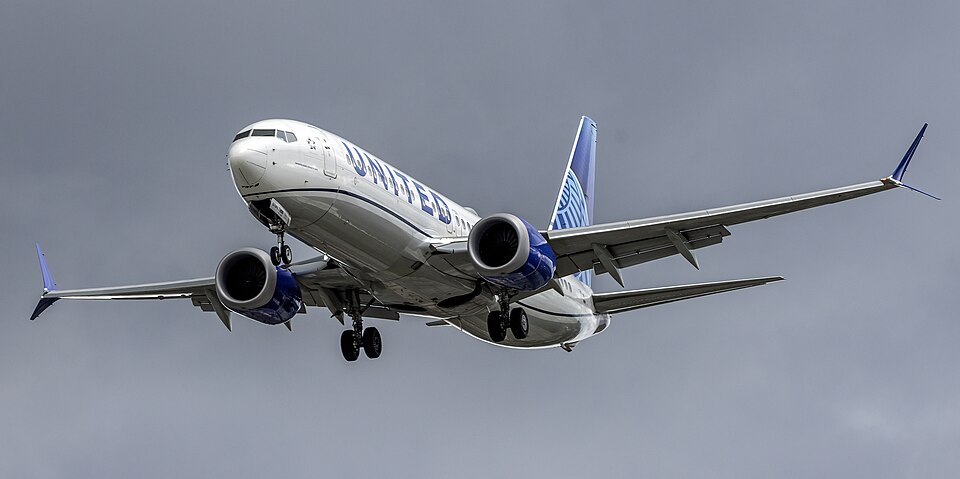
Air traffic data documented the diversion of Nordwind flight N4307, which was traveling from St. Petersburg to Omsk. The Boeing 737-8AS, registered RA-73312, instead landed at Tolmachevo Airport in Novosibirsk, roughly 600 kilometers east of its intended destination. That figure describes the distance between the cities, rather than a confirmed measurement of the aircraft’s additional flight distance.
Emergency restrictions on takeoffs and landings were imposed during the alert. Russia’s TASS news agency reported that it began at about 4 p.m. Omsk time and ended shortly before midnight. TASS cited Omsk Oblast Governor Vitaly Khotsenko as saying Russian Defense Ministry air defenses had shot down hostile drones over the region. The claimed interceptions were not independently established.
The temporary restrictions affected more than the arriving Boeing. Airport schedules and traffic data indicated delays to Utair flight UT139 to Surgut, Utair flight UT305 to Khanty-Mansiysk and IKAR Airlines flight EO760 to Kazan. No damage was reported at either Omsk Airport or the region’s Gazprom Neft-owned Omsk Oil Refinery, described as Russia’s largest refinery by production capacity.
A restriction can matter more than its duration
For civilian aviation, the important operational fact was the loss of predictable airport access. An arriving airliner cannot wait indefinitely for a destination to reopen. Its crew and airline must preserve fuel reserves, evaluate conditions at possible alternates and account for runway suitability, weather, ground handling and permission to land.
SKYbrary’s aviation-safety guidance defines a diversion as landing at an aerodrome other than the one originally planned. It notes that destination restrictions and security issues are among the conditions that can require such a decision. The selection process can involve the operator and air traffic services as well as the pilot in command.
That framework helps explain why a temporary closure can produce a geographically large consequence. The operationally suitable alternate is not necessarily the nearest airport on a map. It must be able to accept the aircraft and support its arrival under the conditions prevailing at the time. Here, the documented result was a narrow-body passenger jet landing in Novosibirsk rather than Omsk.
The diversion also creates work after the aircraft lands. The airline must manage passengers and baggage at an unintended destination, reconsider the aircraft’s next assignment and account for crew-duty limits. The supplied records do not establish how those downstream issues were handled for N4307, but they are the standard scheduling pressures created whenever an aircraft is displaced from its planned station.
Delays can outlast the original alert
Airport restrictions affect departures as well as arrivals. An aircraft held on the ground may be late for its next service, while crews, gates and passengers can fall out of sequence. Research into air-transport networks treats this reactionary or knock-on delay as a system-level problem because aircraft and crews operate linked schedules rather than isolated trips.
EUROCONTROL’s 2023 all-causes delay analysis found that reactionary delay accounted for 46% of delay minutes in the European network that year. Those figures do not measure the Omsk event, but they illustrate why an airport reopening does not instantly restore every affected schedule.
The episode also shows the readiness burden created by an alert even when reported interceptions and possible targets remain uncertain. Authorities restricted civilian movements for hours, airlines adjusted operations, and at least one arriving aircraft was displaced hundreds of kilometers. Those consequences follow from the protective airspace response itself; they do not depend on confirmed damage on the ground.
Distance is the notable boundary in this case. Omsk Oblast lies more than 2,000 kilometers from the Ukrainian front, yet the reported threat still translated into a direct civil-aviation disruption. No verified drone count or independently confirmed interception result is available, so the event cannot support conclusions about attack effectiveness or production scale. It does show that managing reported unmanned-aircraft threats now imposes operational demands far beyond the immediate conflict zone.
By shortly before midnight, the alert had been lifted. The airport restriction was temporary, but its clearest consequence had already occurred: a flight intended for Omsk ended roughly 600 kilometers away, while other services waited for the airport to return to normal use.
| More aerospace and engineering stories, right in your MSN feed. Follow AMI on MSN |
By Stephen Wallace — Editor for AMI’s aerospace integration and unmanned mobility coverage, focused on drone manufacturing, VTOL systems, autonomous networks, and air-ground mobility links.