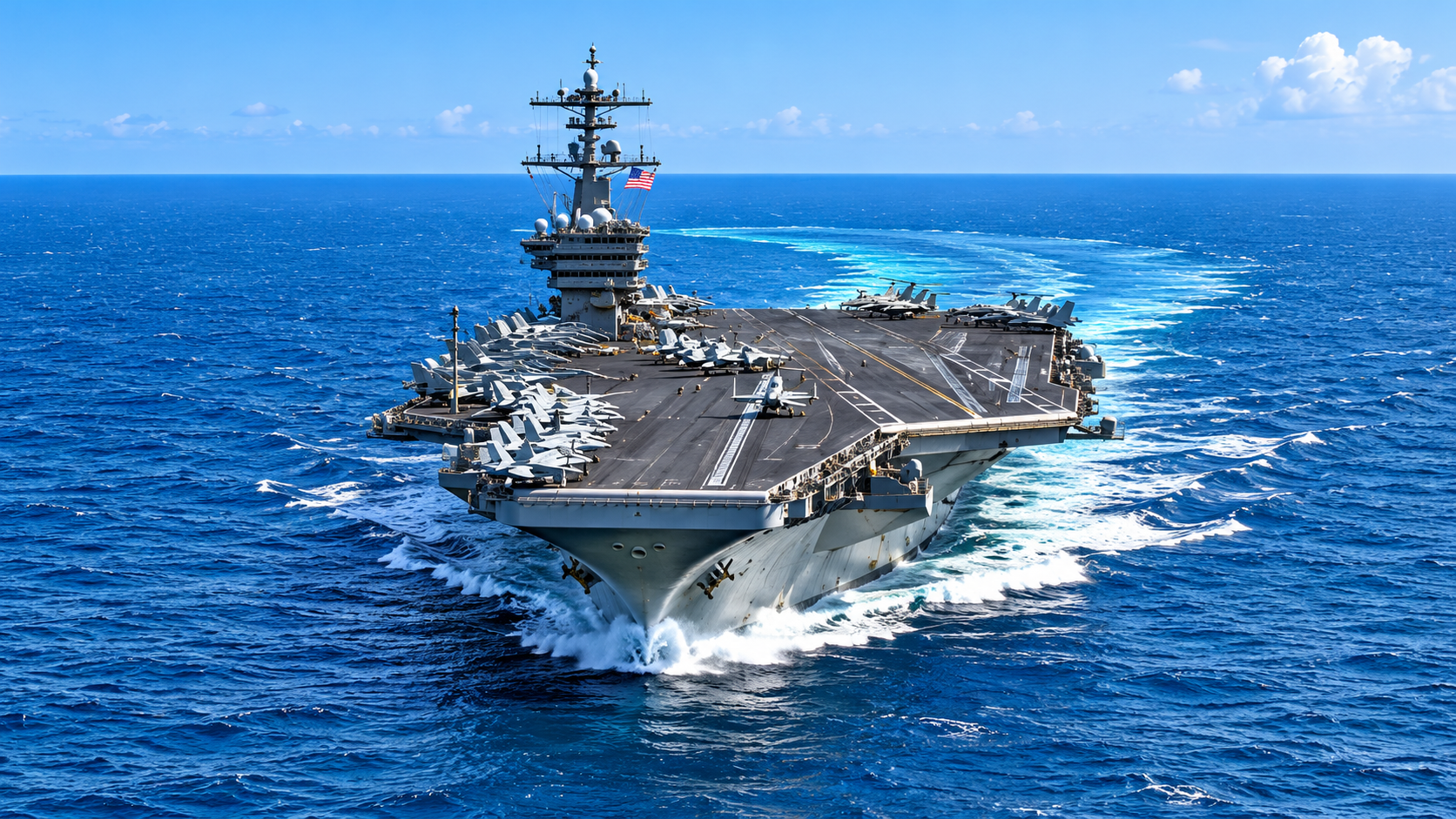
USS Abraham Lincoln Hearing Confronts Eight Suicide Attempts and Supply Complaints
Eight suicide attempts were recorded across the USS Abraham Lincoln carrier strike group during a deployment lasting more than 300 days, while crew families reported inadequate food, hygiene supplies and severe weight loss. At a Senate confirmation hearing on November 17, acting Navy Secretary nominee Hung Cao maintained that supplies and onboard support were adequate, exposing a deeper dispute over how the Navy measures the human condition of a deployed force.
The scope of the mental-health figure is broader than the carrier alone. Cao’s September response, described in an official statement from Senator Kirsten Gillibrand, counted Lincoln’s crew along with personnel from the carrier air wing, strike-group and destroyer-squadron staffs, escorting destroyers and embarked aviation squadrons. Cao said no suicide was completed and called the cases “eight suicide mitigations,” crediting chaplains, deployment resiliency counselors and mental-health specialists.
Senators challenged both that characterization and the Navy’s assessment of shipboard conditions. Senator Mark Kelly cited family accounts that service members depended on care packages, that some Marines appeared malnourished and that one service member allegedly lost more than 45 pounds in six months. Cao said he believed supplies were adequate and compared complaints about food choices to children looking into a stocked refrigerator and finding nothing they wanted. Kelly replied: “Somebody doesn’t lose 45 pounds just because they don’t like the options.”
Inventory figures do not fully measure crew support
The logistical defense centered on quantity. Cao said he did not want ships falling below two weeks of supplies, while Defense Secretary Pete Hegseth previously said Lincoln and the amphibious assault ship Tripoli each carried more than 30 days of food. Those figures address endurance the amount of inventory nominally available but not every part of food service that affects a crew.
For a carrier force, support performance is better understood as a chain: inventory must be replenished, stored, prepared and distributed in forms crews can use across long working cycles. A count of food on board can establish that a ship is not running out in aggregate. It cannot by itself resolve allegations about nutritional adequacy, availability at the point and time of need, hygiene stocks or individual weight loss. The hearing presented conflicting accounts, not a documented finding that the reported shortages caused the weight-loss allegation.
That gap is important on an unusually long deployment. Lincoln departed San Diego on November 21, 2025, for the Indo-Pacific and was later redirected to the Middle East. Once a deployment stretches beyond its original pattern, food, personal necessities, rest and access to care become interconnected readiness inputs. A ship can remain mechanically available while accumulated strain reduces the effectiveness or health of the people operating and maintaining it.
Embedded counselors are capacity, not an outcome metric
The presence of chaplains, resiliency counselors and mental-health specialists shows that support capacity existed aboard the force. The eight interventions also indicate that sailors reached or were identified at points requiring urgent action. Preventing completed suicides is a critical result, but it does not answer whether working conditions, recovery opportunities and early intervention were sufficient during the preceding months.
Research involving Royal Australian Navy personnel offers useful, though not directly transferable, context. A longitudinal naval-deployment study found that job demands and resources including interpersonal conflict, role clarity, psychological safety, support and opportunities for recovery were strongly associated with mental-health trajectories. Its sample involved different ships, missions and personnel, but its systems-level conclusion is relevant: individual counseling is only one part of deployment health. Work design and living conditions can shape demand for that counseling.
The Navy also uses formal deployment health assessments to identify physical and psychological concerns before and after qualifying deployments. The Navy’s public guidance notes, however, that personnel deployed on ships are specifically excluded unless they meet designated requirements. Even where assessments apply, scheduled pre and post-deployment checks serve a different function from continuous monitoring during a deployment exceeding 300 days.
The unresolved issue is measurement
The hearing therefore revealed a mismatch between the metrics used by leadership and the conditions described by families. Days of food on board, staffing counts and the absence of completed suicides are measurable indicators. Reports of substantial weight loss, dependence on care packages and eight suicide attempts point toward outcomes that inventory and staffing totals alone may not capture.
Cao still requires majority Senate support and a congressional waiver because he retired from the Navy in October 2021, less than seven years ago. The confirmation process now turns partly on whether the Navy can reconcile its logistics data with the experiences reported from Lincoln’s extended deployment. The most consequential next step is not another assertion that supplies or counselors were present, but a clearer accounting of whether those resources consistently reached the sailors and Marines who needed them.
| More aerospace and engineering stories, right in your MSN feed. Follow AMI on MSN |
By David Whitaker — Associate editor for AMI’s aerospace and drone systems desk, translating flight systems, aircraft programs, spaceflight, and UAV developments into accessible technical stories.