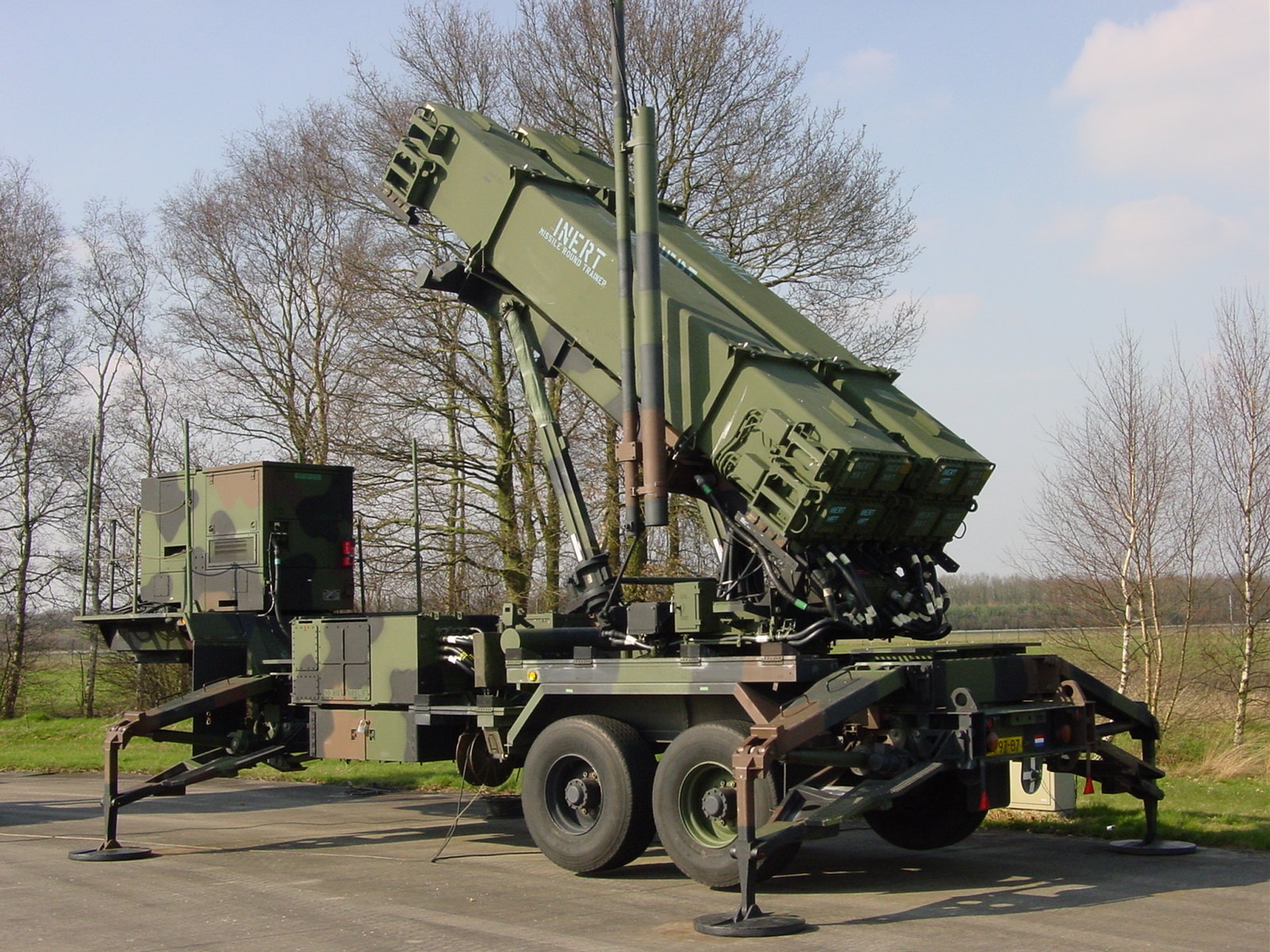
Europe Plans First Patriot Missile Factory Amid NATO’s Fourfold Air-Defense Gap
Europe is preparing to gain its first Patriot-missile manufacturing facility, but the industrial milestone will arrive against a much larger requirement. NATO Secretary General Mark Rutte said on March 12, 2026, that the alliance needed four times its current air-defense capacity and remained far from that objective. The planned MBDA and RTX facility was scheduled to open in September 2026.

The tension is straightforward: opening a production line is not the same as fielding an operational air-defense unit. A missile must move through funding, contracting, component supply, assembly, testing, government acceptance and delivery before it reaches a launcher. Deployable coverage also requires trained crews and connection to NATO’s wider command network.
Those additional steps help explain why Europe’s Patriot shortage cannot be measured by factory capacity alone. The planned facility expands the industrial base, but it does not automatically guarantee control over every critical component or determine which customer receives completed missiles first when several regions need them simultaneously.
Large orders still face a long production chain
The United States is pursuing a major expansion of the Patriot Advanced Capability-3 Missile Segment Enhancement, or PAC-3 MSE. The U.S. Army’s fiscal 2027 budget request included $1.297528 billion in discretionary funding and $10.931919 billion in mandatory funding for the program. The mandatory portion was associated with 2,554 missiles under an expanded production plan.
The Army had already raised its PAC-3 MSE acquisition and procurement objective from 3,376 to 13,773 missiles in April 2025. Its cited base program lists 244 missiles for 2027, followed by planned quantities of 1,672 in 2028, 1,675 in 2029, 1,684 in 2030 and 1,690 in 2031.
Those figures show the scale of the expansion, but appropriated money and planned procurement quantities remain upstream of physical output. Contracts must be awarded, suppliers must provide parts, production lines must complete the missiles and government inspectors must accept them. Delivery schedules can therefore trail budget decisions by years.
Supply-chain visibility is another constraint. An April 2024 Government Accountability Office report found that the lead time for electronic components in one missile program had risen from 19 months to 34 months. A separate July 2025 GAO report said the Defense Department depended on more than 200,000 suppliers while retaining limited visibility into the origins of many materials and lower-tier components.
That supplier depth means a final-assembly plant can increase capacity without eliminating every bottleneck. A specialized electronic part or material produced several tiers down the chain can still set the pace for the complete missile.
Missiles alone do not create defended territory
Patriot batteries also operate as part of a broader architecture. NATO describes its integrated air and missile defense system as a network of national and alliance capabilities in which technical, procedural and human interoperability is essential. Launchers and interceptors need surveillance data, command and control links, trained personnel and sustained maintenance support.
That makes the number of available fire units important alongside missile production. Germany approved four additional Patriot systems and associated missiles in July 2024 under a program valued at nearly €1.4 billion, with deliveries planned progressively through 2030. The extended schedule illustrates why procurement announcements do not immediately add operational coverage.
Europe is also buying complementary systems. Italy has described the Franco-Italian SAMP/T NG as a NATO-interoperable system scheduled to enter service in 2026. Germany approved six IRIS-T SLM fire units and associated measures for up to €950 million, while Britain awarded a £118 million contract for six additional Land Ceptor launchers in August 2025.
These layers can handle different classes of aerial threat and help preserve scarce high-end Patriot interceptors for missions requiring their capabilities. They cannot immediately replace PAC-3 MSE, however, particularly where ballistic-missile defense is required. Each system brings its own ammunition supply, training, maintenance and command-integration demands.
The European Commission’s €1.5 billion defense-industry work program for 2026 and 2027 includes more than €700 million for critical products and components and €240 million for joint procurement. That funding can reinforce the supplier base and coordinate orders, but the practical measure will be accepted equipment delivered to units rather than announced production ceilings.
The most exposed period is expected to run from 2027 through 2029, when demand could outpace interceptor deliveries while new launchers, crews and command capacity are still arriving. Europe’s first Patriot-missile plant is therefore a necessary industrial step, but closing NATO’s fourfold requirement depends on turning factory expansion into complete, tested and integrated air-defense units.
| More aerospace and engineering stories, right in your MSN feed. Follow AMI on MSN |
By David Whitaker — Associate editor for AMI’s aerospace and drone systems desk, translating flight systems, aircraft programs, spaceflight, and UAV developments into accessible technical stories.