Cockpit Traffic-Display Mandate Advances After 67 Deaths, Military Rules Unsettled
A proposed requirement for aircraft to carry cockpit equipment showing nearby traffic has moved closer to passage, but the central military-aircraft dispute remains unresolved. Congressional transportation leaders announced an agreement in principle on November 17, nearly two years after a midair collision near Ronald Reagan National Airport killed 67 people.
The civil-aviation framework would mandate Automatic Dependent Surveillance Broadcast In, commonly called ADS-B In, aboard aircraft already required to transmit their positions through ADS-B Out. Armed-services committee members have not yet accepted the provisions governing military aircraft in civilian airspace, and the framework has neither completed its legislative text nor become law.
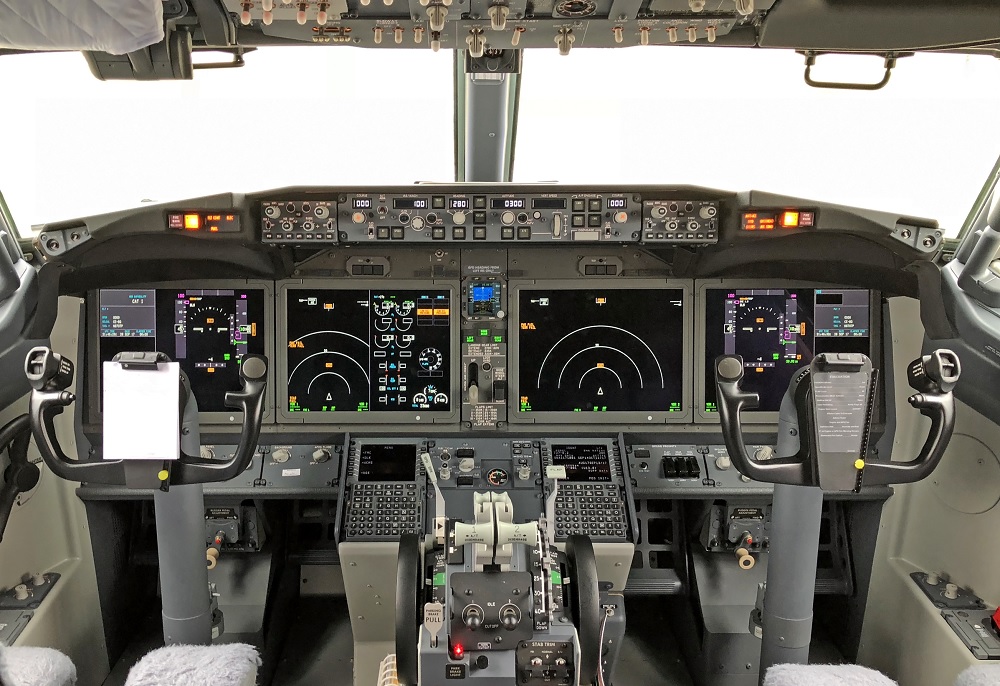
The distinction between “In” and “Out” explains both the safety objective and the policy tension. According to the Federal Aviation Administration, ADS-B Out broadcasts an aircraft’s GPS-derived location, altitude, ground speed and other information. ADS-B In receives traffic-position information and delivers it to a compatible cockpit display, giving pilots another source of situational awareness.
The proposed mandate therefore addresses an asymmetry in the existing system. Aircraft operating in most controlled US airspace must already transmit through ADS-B Out, allowing controllers and suitably equipped aircraft to receive their position data. A cockpit without ADS-B In cannot present that same traffic picture directly to its pilots, even when surrounding aircraft are broadcasting.
A display adds awareness, not automatic separation
ADS-B In can help a crew identify nearby traffic, but its basic traffic display should not be confused with an autonomous collision-avoidance command. The FAA treats basic ADS-B In traffic awareness differently from advanced operations that use the technology for specific separation procedures, which require separate authorization. The practical benefit of the proposed mandate is earlier and more accessible information inside the cockpit, while pilots, controllers and other approved safety systems retain their respective roles.
The legislation follows the January 2025 collision involving an American Airlines flight and an Army Black Hawk helicopter near Reagan National. Sen. Ted Cruz, who chairs the Senate Commerce Committee, has argued that cockpit traffic equipment could have allowed the crews to recognize their proximity and prevent the collision. That is his assessment, not an official accident finding, and the legislation should be evaluated as a proposed system-wide safety measure rather than a definitive account of that accident’s cause.
The military issue concerns location disclosure. House Armed Services Committee members previously opposed expanded requirements because broadcasting military-aircraft positions could create a national-security risk. From a systems perspective, the sensitive function is the transmission of location through ADS-B Out; ADS-B In is principally the receiving side. A complete legislative package must therefore define how military aircraft operating in civilian airspace participate, and whether any exceptions preserve both operational security and a useful traffic picture for nearby civilian crews.
That balance becomes harder if exemptions create incomplete information in shared airspace. A receiving display is only as useful as the traffic data available to it. The FAA can also provide certain radar-derived traffic information through ground services, but those services depend on aircraft equipment, surveillance coverage and other eligibility conditions. A mandate for cockpit receivers alone does not eliminate every gap in traffic visibility.
Scope and installation details will shape the burden
The announced framework would apply to aircraft already required to carry ADS-B Out, rather than automatically covering every aircraft in the national fleet. That linkage concentrates the requirement in airspace and operations already subject to position-broadcast rules, while avoiding a universal mandate extending to aircraft outside the existing ADS-B Out boundary.
Operators would still face an integration question. ADS-B In needs a compatible receiver and a means of presenting information to pilots, and the FAA advises owners to verify that avionics and cockpit displays interface correctly. Aircraft with suitable existing displays may have a different installation path from older aircraft requiring additional certified hardware or panel work. No implementation schedule, compliance-cost structure or assistance mechanism was finalized in the announced agreement.
Those details will determine how evenly the safety benefit reaches airlines, business aviation and general aviation. A requirement tied to existing ADS-B Out coverage narrows the affected population, but equipment compatibility, certification and installation capacity can still produce substantially different burdens across fleets.
The Senate passed an earlier version in December 2025, but it fell one vote short in the House amid the armed-services opposition. Lawmakers are now reconciling that proposal with a House-passed measure and completing the full bill. Cruz has said he believes Congress will enact it by the end of 2026. Until the military provisions are settled and both chambers approve final text, cockpit traffic displays remain an agreed civil-aviation framework rather than a federal requirement.
| More aerospace and engineering stories, right in your MSN feed. Follow AMI on MSN |
By Thomas Caldwell — AMI’s senior editor for mechanical and mobility engineering, covering vehicle electronics, systems integration, electrification, chassis systems, propulsion, and safety policy.