Tesla Deliveries Fall 2% as Two Models Supply 98% of Sales
Tesla’s automotive business presents a sharp tension: quarterly deliveries exceeded analyst expectations, yet they still declined from a year earlier and remained overwhelmingly dependent on two vehicles. The company delivered 486,532 electric vehicles worldwide from July through September, 2% fewer than in the third quarter of 2025 but comfortably above the FactSet analyst consensus of 461,000.

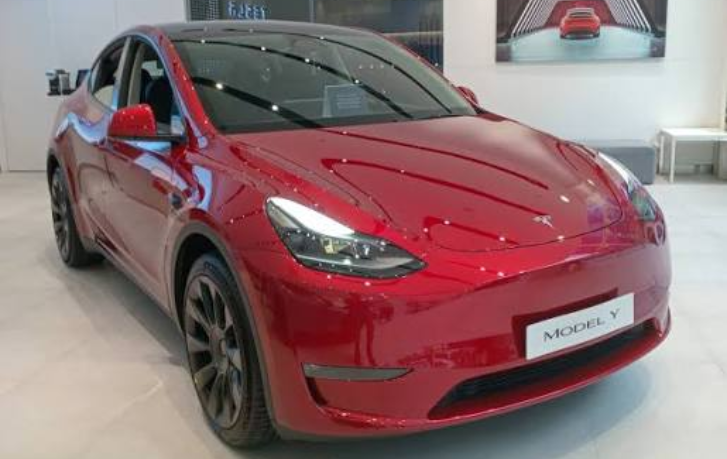
Model 3 and Model Y accounted for 478,237 deliveries, or more than 98% of the total. Tesla grouped every other vehicle into one reporting category: remaining Model S and Model X inventory plus the Cybertruck contributed 8,295 deliveries. The company did not provide a standalone Cybertruck figure, so the performance of that model cannot be isolated from the combined number.
This concentration matters because Model 3 and Model Y are not simply Tesla’s leading products; they effectively carry its current vehicle volume. Both have starting prices in the roughly $37,000-to-$40,000 range, while the discontinued Model S and Model X sold for around $100,000. Ending those premium lines simplifies the portfolio, but it also leaves fewer products contributing meaningful volume while Tesla’s next planned vehicle businesses remain commercially unsettled.
Deliveries beat production as Tesla worked through inventory
Tesla produced 464,391 vehicles during the quarter, approximately 22,000 fewer than it delivered. That difference indicates the company delivered vehicles from inventory in addition to its new quarterly production, although the figures do not establish which models or regions accounted for the reduction.
From a manufacturing and sales-planning perspective, deliveries exceeding production can help reduce finished-vehicle inventory and associated carrying costs. It does not, by itself, demonstrate stronger underlying demand. That distinction is especially important here because the quarterly total was slightly higher than the second quarter’s 480,126 deliveries but below the record 497,099 delivered in the same quarter last year. The latest result therefore represents sequential improvement within a year-over-year decline.
Tesla would need at least 311,448 fourth-quarter deliveries to avoid a third consecutive annual decline. The company has not delivered fewer than that in a quarter since mid-2022, making annual growth attainable if current demand holds. Full quarterly earnings, scheduled for Oct. 21, should provide more information about the revenue and margins associated with the delivery mix.
A smaller decline than the wider U.S. electric-car market
The global result arrived amid a deeper contraction in the United States. Motor Intelligence data show Tesla’s U.S. sales falling 16.2% during the first eight months of 2026 compared with the same period in 2025. Overall U.S. electric-car sales declined 30.4% over the same period.
Tesla nevertheless sold more than half of all electric vehicles purchased in the United States during August. Those figures are not contradictory: a company can regain or expand market share while selling fewer vehicles if the overall market contracts faster. For consumers and the wider industry, the combination shows that Tesla remains the dominant U.S. electric-vehicle manufacturer even as demand across the category weakens.
The geographic picture is also uneven. Improving European demand and stronger exports from Tesla’s Shanghai factory helped support the quarterly result. That makes the global 2% decline milder than the U.S. figures alone would suggest, while underscoring how regional changes can materially affect a manufacturer operating with only two high-volume models.
Robotaxis have not replaced the core vehicle business
Vehicle sales generated 70% of Tesla’s revenue during the first half of the year. That remains the commercial foundation even as Chief Executive Elon Musk describes a shift toward robotaxis and humanoid robots, neither of which is currently offered for sale.
Tesla has introduced Cybercab rides through its Robotaxi app in Austin, Texas, and says it aims to sell the vehicle designed without conventional driver controls to individuals for $30,000 by year-end. The company has not provided detailed timing, however, and regulatory and technological questions remain. A ride service is an operational step, but it is not yet evidence that Cybercab can replace Model 3 or Model Y as a substantial source of vehicle deliveries or revenue.
Tesla’s other business lines are developing: quarterly battery-energy deployment grew 9.6%. Even so, the delivery data show that the near-term automotive system still rests on Model 3 and Model Y. The next concrete checkpoints are an Oct. 15 Roadster demonstration and the Oct. 21 earnings release, when Tesla will have to show what its better-than-expected delivery total produced financially and whether two mass-market vehicles can continue carrying nearly the entire lineup.
| More aerospace and engineering stories, right in your MSN feed. Follow AMI on MSN |
By Thomas Caldwell — AMI’s senior editor for mechanical and mobility engineering, covering vehicle electronics, systems integration, electrification, chassis systems, propulsion, and safety policy.