


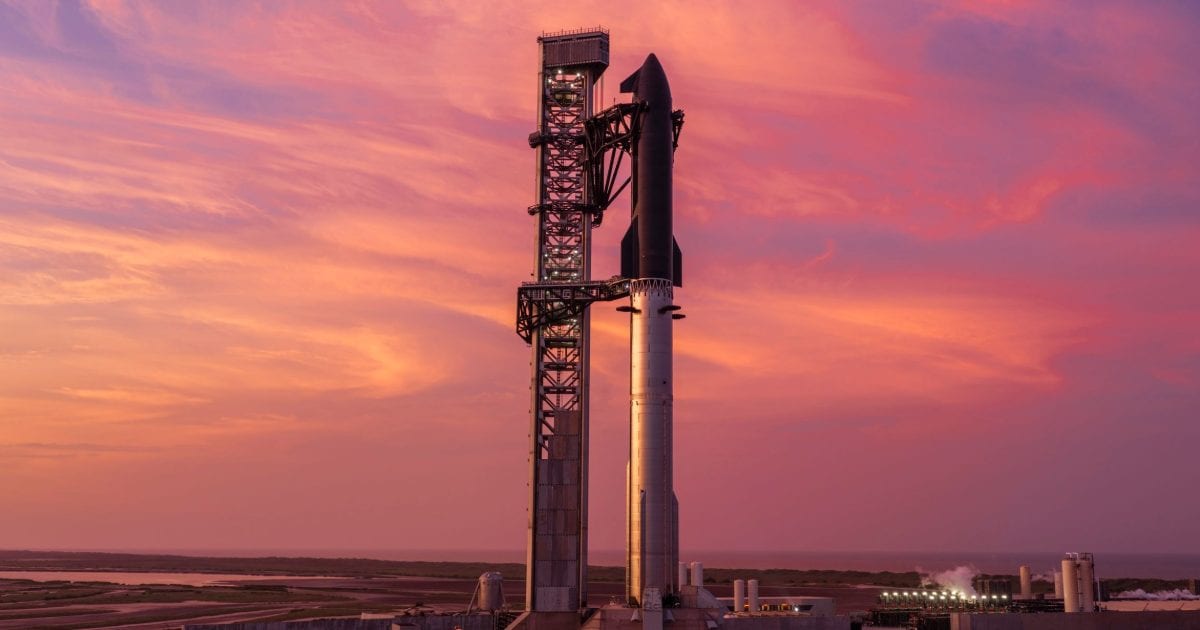
FAA Reviews, but Has Not Approved, SpaceX’s 456-Launch Starbase Plan
SpaceX wants to increase Starbase’s authorized ceiling from 25 launches a year to as many as 456, but that higher rate is not approved. The Federal Aviation Administration has instead opened a broad environmental review covering the cumulative effects of potentially hundreds of annual Starship and Super Heavy operations at the Boca Chica site in Cameron County, Texas.
The FAA’s formal notice begins a Programmatic Environmental Impact Statement and public-scoping process. SpaceX’s proposal would proceed in two phases: first, up to 100 launches and 200 landings annually; later, a maximum of 456 launches and 912 landings. Starbase currently is authorized for 25 launches and 50 landings per year.
The distinction between an analytical ceiling and an operating schedule is critical. The FAA is studying a high-capacity scenario that could establish the environmental basis for later license modifications or renewals. It has not given SpaceX permission to fly 456 times annually, and no completion date or assurance of approval for that maximum has been established.
A reusable rocket creates two operating counts
The proposed landing number is twice the launch ceiling because Starship-Super Heavy has two major flight elements. The maximum includes as many as 456 landings by the Starship upper stage and 456 by the Super Heavy booster. The cap also covers landings at Starbase regardless of where a vehicle launched, so the landing total is not simply a count of vehicles departing Texas and returning there.
Phase 1 would permit launches and landings at any time on any day. Phase 2 launches could occur at any hour but only Monday through Friday. Spreading 456 launches across weekdays produces an average of roughly 1.75 launches per weekday, although an authorization would not require SpaceX to use the full allowance or distribute flights evenly.
That scale explains why the FAA chose a programmatic review rather than evaluating one mission at a time. Individual launches may share the same hardware and site, but recurring operations produce cumulative demands involving noise, air emissions, water, waste, coastal resources, wildlife, temporary airspace restrictions and access around the launch complex. A maximum-rate analysis is intended to bound those combined effects before the agency considers subsequent licensing actions.
Higher capacity depends on more than launch-pad availability
The proposal assumes that vehicle maturity and reliability will support higher rates. FAA documentation notes that Starship and Super Heavy are designed to require minimal post-flight refurbishment. That design goal matters because rapid reuse depends on inspection, servicing and turnaround work remaining manageable across both stages. The environmental process, however, does not certify that SpaceX has achieved the maintenance performance needed to sustain the requested cadence.
The phased structure reflects that gap. A ceiling of 100 annual launches would already quadruple Starbase’s current authorization. The 456-launch phase represents a mature operating scenario that the FAA describes as potentially arriving “within several years,” depending on the review and vehicle development. Studying the maximum now can reduce the need to restart environmental analysis for each intermediate increase, but any unforeseen expansion beyond the analyzed limits would require further review.
Access and environmental effects become operational constraints
Starbase sits beside protected coastal habitat and bird sanctuaries, while launch activity can require road, beach and airspace closures. For nearby residents and businesses, the relevant question is therefore not only how many rockets the site can process. It is how a much higher cadence would affect public access, noise exposure and local activity over a full year.
The FAA plans to examine biological and coastal resources, air quality, noise, water, land use, historical and cultural resources, socioeconomic effects, visual impacts and children’s health and safety risks. It is also consulting federal wildlife and marine-fisheries agencies about protected species. The comparison case is no action, which would leave the present authorization in place rather than shift launches to another site; the FAA determined that other sites do not meet this review’s purpose because Starbase already contains the relevant infrastructure.
Public scoping is the stage at which communities, agencies and organizations can identify issues the environmental statement should address. Comments are due November 30, 2026, with in-person meetings scheduled in Brownsville on November 17 and Port Isabel on November 19, plus a virtual meeting on November 18. A draft environmental statement will follow later for another round of public review.
Until that process is complete and the FAA acts on subsequent licensing changes, Starbase remains authorized for 25 launches and 50 landings annually. The 456-launch figure defines the outer boundary now under examination not SpaceX’s approved flight rate.
| More aerospace and engineering stories, right in your MSN feed. Follow AMI on MSN |
By David Whitaker — Associate editor for AMI’s aerospace and drone systems desk, translating flight systems, aircraft programs, spaceflight, and UAV developments into accessible technical stories.



