


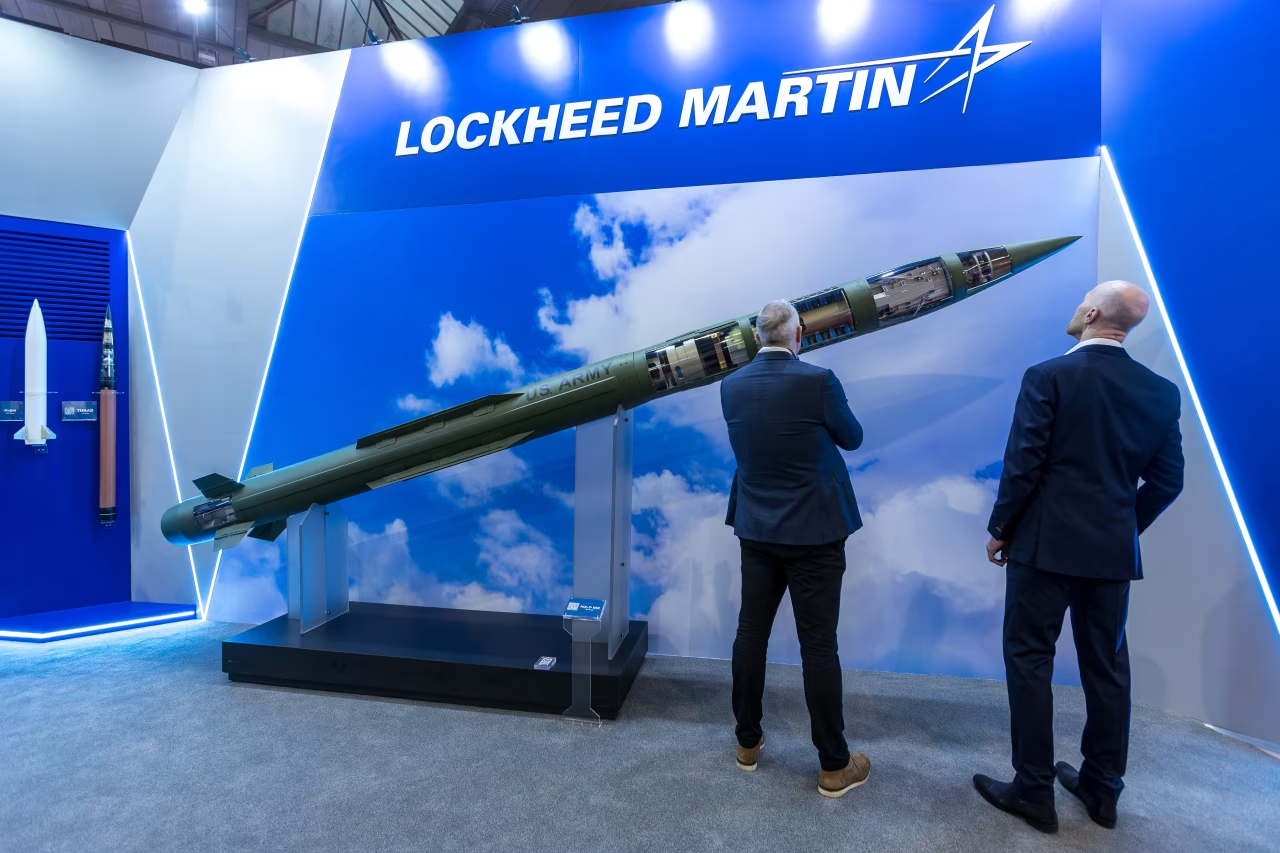
L3Harris Gets $6 Billion Contract to Quadruple Missile-Defense Propulsion
L3Harris Technologies has received an undefinitized seven-year contract from Lockheed Martin valued at more than $6 billion to expand propulsion production for the Terminal High Altitude Area Defense system. The planned fourfold propulsion ramp is a critical part of Lockheed Martin’s goal of raising annual THAAD interceptor output from 96 to 400 over seven years.

L3Harris plans to construct a new facility for THAAD solid rocket boost motors and expand capacity for the interceptor’s liquid divert and attitude-control system. The contract value excludes escalations, and the award remains undefinitized, meaning its final terms and price have not yet been settled. L3Harris also cautioned that continued funding is required for the contract to reach its full stated value.
The scale of the award reflects an industrial constraint that cannot be solved by expanding final assembly alone. An interceptor production line depends on multiple specialized components arriving at compatible rates. If boost-motor output or divert-system capacity trails the rest of the line, a larger assembly plant cannot by itself deliver 400 completed interceptors annually.
Two propulsion streams must scale together
The two L3Harris expansion projects cover distinct jobs within the interceptor. The solid rocket boost motor provides the initial propulsion, while the liquid divert and attitude-control system manages movement during the intercept phase. Increasing production of one without a corresponding increase in the other would leave Lockheed Martin with an unbalanced supply chain rather than a fourfold rise in complete propulsion sets.
That makes the contract more than a large component order. It is also a capacity-building commitment involving a new plant, added equipment and the workforce needed to operate specialized production processes. Those assets take time to construct, qualify and bring to stable output. The seven-year term offers a longer demand signal than a series of short awards, but it does not eliminate execution risk or guarantee that the target rate will be reached on schedule.
The distinction between capacity and deliveries is especially important here. The 400-interceptor annual rate is a future objective, not current production. Independent analysis of the broader munitions pipeline has found that manufacturing accounts for most of the time between an award and first delivery. New contracts can fund expansion, but factories, trained workers and qualified suppliers still have to convert that funding into repeatable output.
Public infrastructure is part of the production system
The propulsion award also sits within a wider manufacturing expansion that includes public support. On Oct. 14, Alabama awarded a $1 million grant for a Pike County water line supporting Lockheed Martin’s Troy facility. Pike County is contributing a $755,000 local match, while Lockheed Martin plans to invest between $35 million and $50 million in its own Troy expansion.
Officials expect that factory project to create 300 jobs. The water upgrade is also expected to improve service for about 900 nearby residents and support two other industrial facilities, giving the project a broader local benefit than a utility connection serving only Lockheed Martin.
Even so, the arrangement puts a clear accountability requirement on the expansion. Federal community-development money and local matching funds are supporting infrastructure associated with a private defense plant, while the stated public return includes employment, improved water service and additional missile-defense production. The available announcement does not provide a construction schedule, hiring timetable or detailed performance conditions attached to the grant.
Those missing details matter because the production increase depends on several investments reaching readiness together. Lockheed Martin’s final-assembly expansion, L3Harris’ two propulsion streams and supporting local infrastructure must all mature at rates consistent with the seven-year plan. A delay in any one layer can limit the output purchased by the others.
The more-than-$6-billion award gives L3Harris a substantial contractual basis for building propulsion capacity, but it does not establish that 400 interceptors a year are already achievable. That result will be measured in qualified facilities, matched component rates and completed deliveries not in announced contract ceilings or factory plans.
| More aerospace and engineering stories, right in your MSN feed. Follow AMI on MSN |
By David Whitaker — Associate editor for AMI’s aerospace and drone systems desk, translating flight systems, aircraft programs, spaceflight, and UAV developments into accessible technical stories.



